What Does “Another Way to Say Thats Good” Mean?
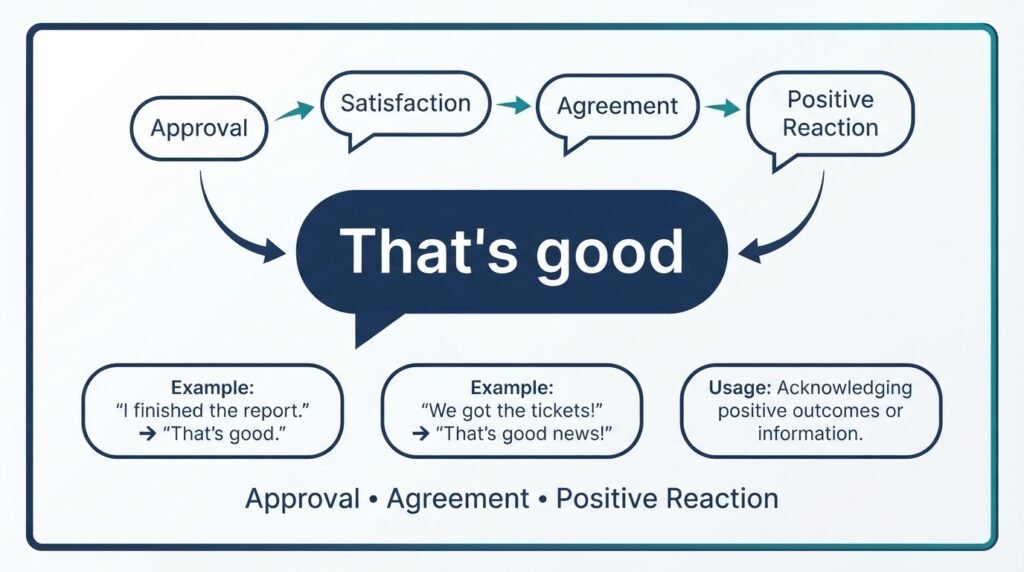
The phrase “another way to say that’s good” means looking for different expressions that communicate approval, satisfaction, agreement, or a positive reaction. The standard spelling is “that’s good,” with an apostrophe in “that’s.”
People often say “that’s good” in everyday American English when they want to show that something is acceptable, pleasing, useful, or positive. However, repeating the same expression can make conversations or writing sound predictable.
You may want a different phrase when replying to a friend, responding to a coworker, giving feedback, or writing a professional message. The right alternative can also communicate more emotion or a more precise meaning.
Why Use Other Ways to Say “Thats Good”?
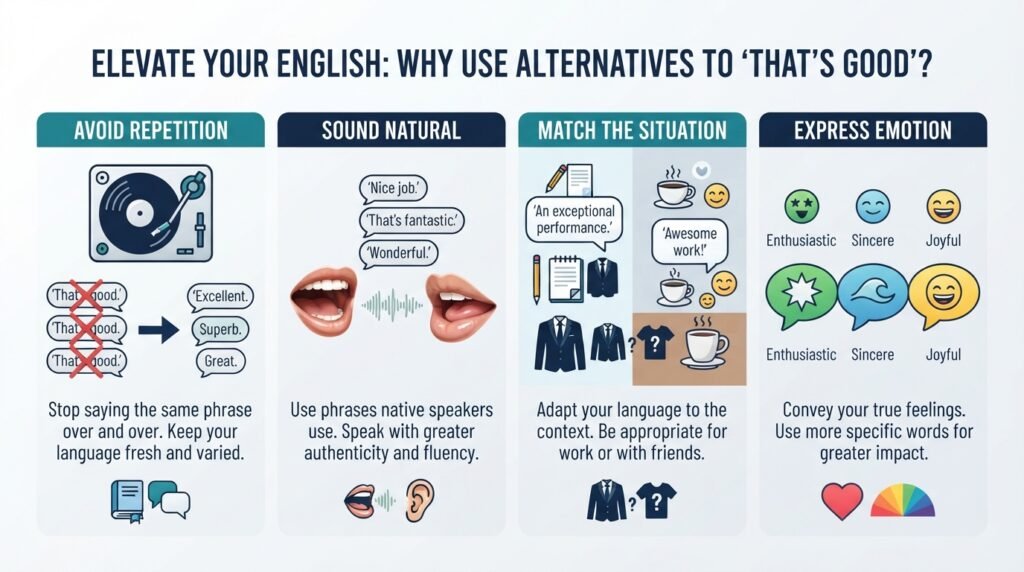
Having several alternatives gives you more control over tone and meaning. For example, “excellent” sounds more enthusiastic than “that’s good,” while “that works for me” specifically communicates agreement.
Using alternatives can help you:
- Avoid repeating the same expression.
- Sound more natural in conversations.
- Show stronger enthusiasm or appreciation.
- Match professional and casual situations.
- Give clearer and more specific feedback.
- Make emails and messages more engaging.
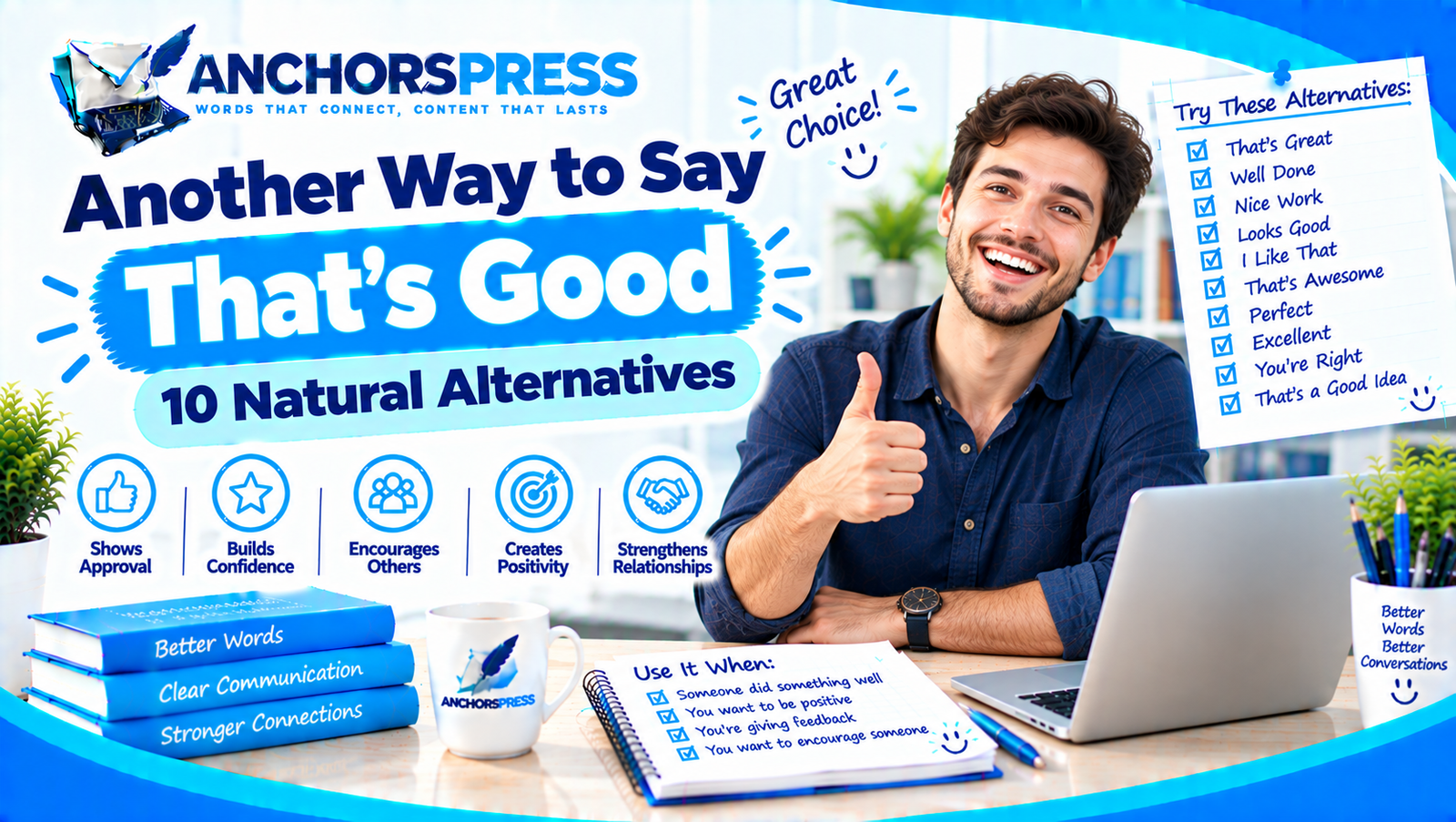
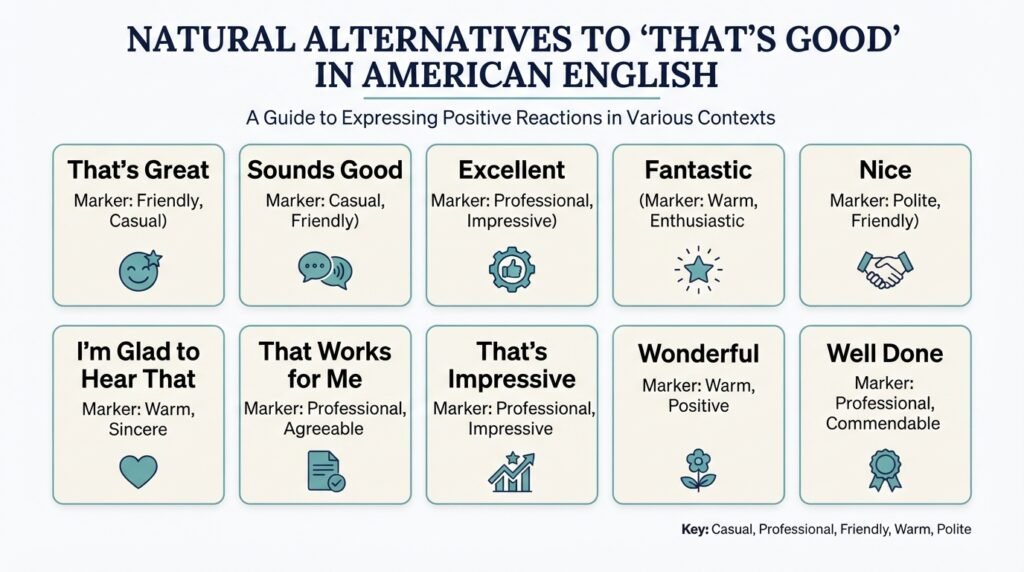
10 Best Other Ways to Say “That’s Good”
1. That’s Great
Meaning
“That’s great” expresses strong approval or happiness about something positive. It is one of the most natural alternatives to “that’s good” in everyday American English.
Best For
- Casual
- Friendly
- Warm
- Polite
Example 1
“That’s great! I’m glad you found a new apartment.”
Example 2
“You finished the project early? That’s great.”
Quick Tip
Use “that’s great” when you want to sound positive without being overly formal.
2. Sounds Good
Meaning
“Sounds good” usually means that you agree with a suggestion, plan, or arrangement. It is especially common in spoken English, texts, workplace chats, and informal emails.
Best For
- Casual
- Friendly
- Professional
Example 1
“Let’s meet at 10 a.m.”
“Sounds good to me.”
Example 2
“I’ll send you the revised file tonight.”
“Sounds good.”
Quick Tip
Use “sounds good” for agreement rather than general praise.
3. Excellent
Meaning
“Excellent” shows strong approval and often suggests that something meets a high standard. It works particularly well when giving feedback or responding to good news.
Best For
- Professional
- Formal
- Polite
Example 1
“Your presentation was excellent and very easy to follow.”
Example 2
“Excellent work on completing the report ahead of schedule.”
Quick Tip
Choose “excellent” when you want your praise to sound confident and professional.
4. Fantastic
Meaning
“Fantastic” communicates a high level of excitement or approval. It is more enthusiastic than simply saying “that’s good.”
Best For
- Casual
- Friendly
- Warm
Example 1
“You’re coming with us on the trip? Fantastic!”
Example 2
“Those concert tickets are fantastic news.”
Quick Tip
Use “fantastic” when the situation genuinely deserves enthusiastic praise.
5. Nice
Meaning
“Nice” is a short, relaxed way to respond positively. Americans frequently use it in casual conversations when reacting to news, achievements, purchases, or ideas.
Best For
- Casual
- Friendly
Example 1
“Nice! You finally got the promotion.”
Example 2
“Nice job fixing the computer yourself.”
Quick Tip
“Nice” is natural with friends and coworkers, but it may sound too casual for formal business writing.
6. I’m Glad to Hear That
Meaning
“I’m glad to hear that” shows that you are pleased about someone else’s situation or news. It adds warmth and personal interest instead of simply expressing approval.
Best For
- Warm
- Friendly
- Polite
- Professional
Example 1
“I’m glad to hear that your mother is feeling better.”
Example 2
“You received positive feedback from the client? I’m glad to hear that.”
Quick Tip
Use this expression when responding to personal updates or good news from another person.
7. That Works for Me
Meaning
“That works for me” means that you accept or agree with a proposed plan, time, date, or arrangement. It is more specific than “that’s good.”
Best For
- Professional
- Casual
- Polite
Example 1
“Can we move the meeting to Thursday afternoon?”
“That works for me.”
Example 2
“If you can send the documents by Friday, that works for me.”
Quick Tip
Use this phrase when you want to confirm that a proposed arrangement is acceptable to you.
8. That’s Impressive
Meaning
“That’s impressive” expresses admiration for an achievement, skill, result, or unusual accomplishment. It suggests that something stands out from the ordinary.
Best For
- Friendly
- Warm
- Professional
- Polite
Example 1
“You learned Spanish in six months? That’s impressive.”
Example 2
“Your team increased sales by 30%. That’s impressive.”
Quick Tip
Choose this phrase when you want to praise the quality or scale of someone’s achievement.
9. Wonderful
Meaning
“Wonderful” expresses warm and sincere approval. It can sound more heartfelt than “that’s good,” making it useful when responding to personal or meaningful news.
Best For
- Warm
- Friendly
- Polite
- Formal
Example 1
“Your daughter got accepted into college? That’s wonderful.”
Example 2
“What a wonderful idea for the community fundraiser.”
Quick Tip
“Wonderful” works especially well when you want your response to feel warm and genuine.
10. Well Done
Meaning
“Well done” directly praises someone for completing something successfully. It focuses on the person’s effort or achievement rather than simply describing the result as positive.
Best For
- Professional
- Formal
- Friendly
- Polite
Example 1
“You handled that difficult customer professionally. Well done.”
Example 2
“You completed the entire assignment ahead of time. Well done.”
Quick Tip
Use “well done” when you are congratulating someone for an accomplishment or successful effort.
Comparison Table
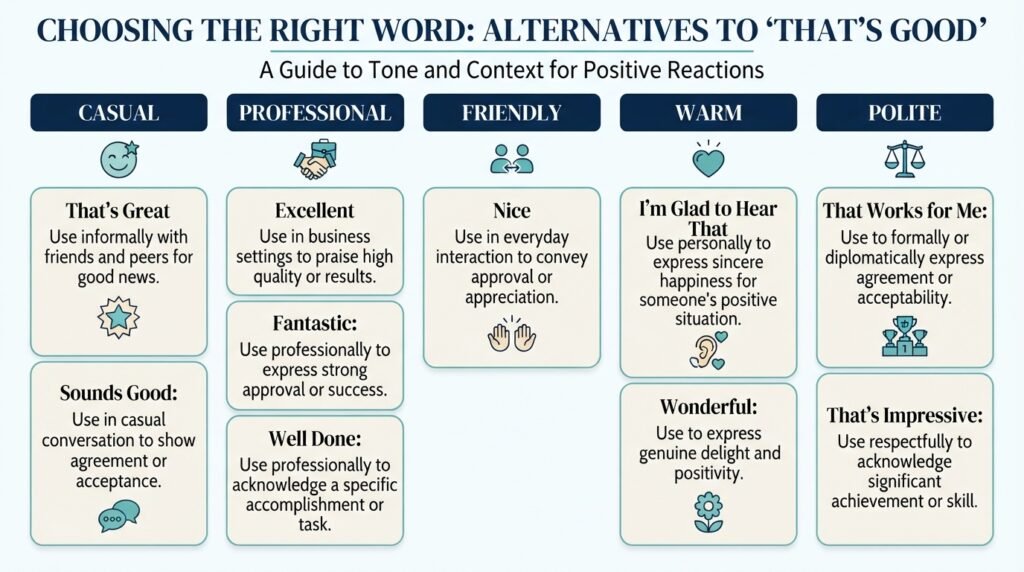
| Alternative | Best Used In | Tone |
| That’s great | Everyday conversations | Positive, friendly |
| Sounds good | Plans and agreements | Casual, agreeable |
| Excellent | Work and feedback | Professional, strong |
| Fantastic | Good news and excitement | Enthusiastic |
| Nice | Casual reactions | Relaxed |
| I’m glad to hear that | Personal or positive news | Warm, caring |
| That works for me | Arrangements and decisions | Practical, polite |
| That’s impressive | Achievements | Admiring |
| Wonderful | Meaningful positive news | Warm, sincere |
| Well done | Accomplishments | Encouraging, approving |
Common Mistakes
- Using casual phrases in professional emails.
Expressions such as “nice” can sound too informal in formal business communication. “Excellent” or “well done” may be more appropriate. - Choosing overly enthusiastic language.
Saying “fantastic” about every small detail can make your response feel exaggerated or insincere. - Repeating the same phrase too often.
Constantly using “that’s good” can make your writing feel repetitive. Choose alternatives that fit the specific situation. - Forgetting context.
“Sounds good” normally expresses agreement, while “that’s impressive” expresses admiration. They are not always interchangeable. - Sounding insincere.
Positive language works best when it matches your real reaction. Choose a simple phrase when strong enthusiasm would feel unnatural.
Frequently Asked Questions
What is the best way to say “that’s good”?
“That’s great” is one of the best general alternatives because it sounds natural, positive, and conversational. However, the best choice depends on your meaning. Use “sounds good” for agreement, “excellent” for professional praise, and “that’s impressive” when you want to recognize an achievement.
What is a professional way to say “that’s good”?
Professional alternatives include “excellent,” “that’s encouraging,” “that’s a positive development,” and “that works well.” These phrases can sound more precise in workplace communication. For example, instead of writing “That’s good news,” you could write, “That’s an encouraging update.”
What is a casual way to say “that’s good”?
For casual conversations, you can say “that’s great,” “nice,” “awesome,” “sounds good,” or “cool.” Your choice depends on how enthusiastic you want to sound. “Nice” is brief and relaxed, while “that’s great” sounds a little warmer.
Is “sounds good” the same as “that’s good”?
Not exactly. “Sounds good” usually means “I agree with that plan or suggestion,” while “that’s good” can simply express approval of something. For example, “Dinner at seven?” — “Sounds good” confirms the plan.
How can I say “that’s good” in an email?
For a professional email, consider phrases such as “That sounds good,” “Excellent,” “That works well,” or “I’m glad to hear that.” Select one based on your purpose. “That works well” is useful for agreement, while “excellent” is better for positive feedback.
What is a stronger word for “good”?
Stronger alternatives include excellent, outstanding, fantastic, wonderful, impressive, and exceptional. Each carries a slightly different tone. “Excellent” is professional, “fantastic” is enthusiastic, and “exceptional” suggests that something is unusually high in quality.
How do you say “that’s good” when someone achieves something?
When someone accomplishes something, “well done,” “that’s impressive,” “excellent work,” or “congratulations” can be more meaningful than “that’s good.” These expressions recognize the person’s effort or success instead of giving only general approval.
Is “that’s good” grammatically correct?
Yes. “That’s good” is grammatically correct and very common in American English. “That’s” is a contraction of “that is.” In informal communication, contractions are natural, while formal writing may sometimes favor the complete form depending on the style and context.
Conclusion
Knowing another way to say that’s good gives you more flexibility in everyday conversations, emails, and professional communication. The best alternative depends on exactly what you want to express.
“The right expression will make your English clearer, more precise, and more natural. For more guidance on natural English expressions, explore ways to express agreement and praise in English.”
Sarah Whitfield is the founder and lead editor of Anchors Press. With a background in copyediting and content strategy, she reviews every guide for accuracy, tone, and everyday usefulness before it’s published.