Another Way to Say How Are You Feeling? 10 Alternatives
If you want another way to say “how are you feeling?”, you have plenty of natural options. The best phrase depends on whether you are talking to a friend, coworker, family member, patient, or someone going through a difficult time.
Some alternatives sound casual and friendly, while others feel warmer, more caring, or more professional. Using different expressions can also help you avoid repeating the same question.
Below are 10 useful alternatives, along with their meanings, best uses, examples, and practical tips.
What Does “How Are You Feeling?” Mean?
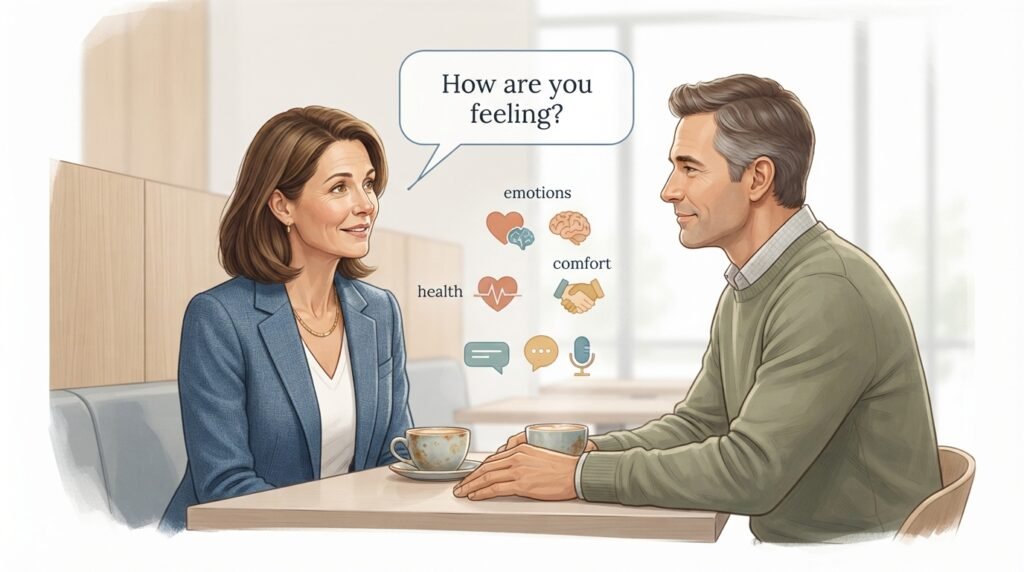
“How are you feeling?” is a common question used to ask about someone’s physical or emotional condition.
People often use it when someone is sick, recovering, stressed, upset, or going through an important experience. It can also be a simple way to show care and concern.
You may hear this phrase in everyday conversations, hospitals, workplaces, schools, and messages between friends or family members.
Why Use Other Ways to Say “How Are You Feeling?”
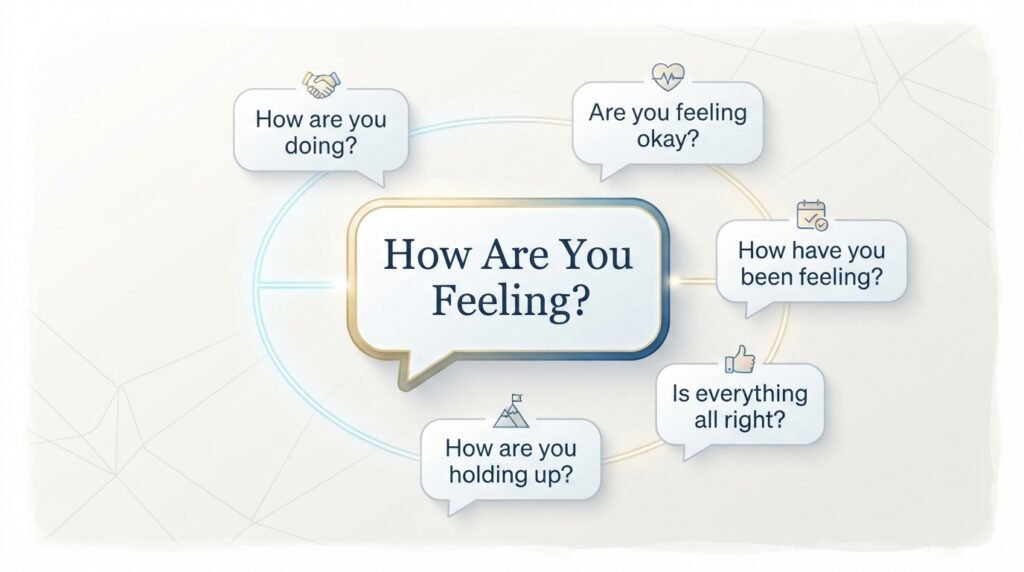
Using alternatives can make your communication sound more natural and better suited to the situation.
Different phrases can also show different levels of concern. For example, you may speak casually with a close friend but choose more polite language with a coworker.
Here are a few benefits:
- Avoid repeating the same phrase.
- Match your tone to the situation.
- Sound more caring and natural.
- Communicate professionally when needed.
- Show genuine interest in someone’s well-being.
10 Best Other Ways to Say “How Are You Feeling?”
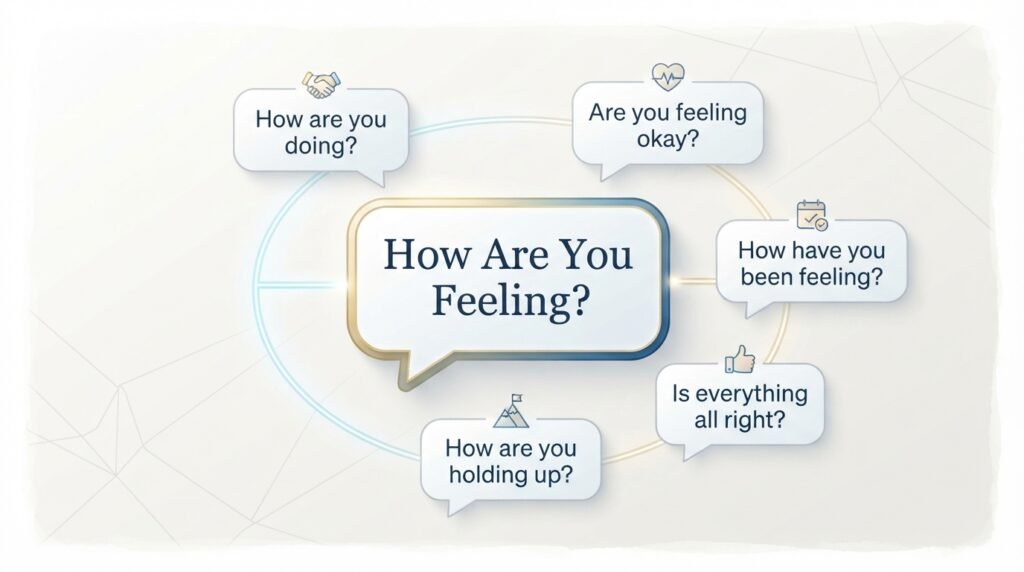
1. How Do You Feel?
Meaning
“How do you feel?” is a direct and simple alternative to “How are you feeling?” It asks about someone’s current physical or emotional state.
Best For
- Casual
- Friendly
- Polite
Example 1
How do you feel after getting some rest?
Example 2
I know the meeting was stressful, so how do you feel about everything now?
Quick Tip
Use this phrase when you want a short, natural question that works in both personal and everyday conversations.
2. Are You Feeling Okay?
Meaning
“Are you feeling okay?” shows concern when someone seems uncomfortable, sick, upset, or different than usual. It is more caring than simply asking how someone feels.
Best For
- Casual
- Friendly
- Warm
Example 1
You seem a little quiet today. Are you feeling okay?
Example 2
Are you feeling okay after the long flight?
Quick Tip
Use this phrase when you notice signs that someone may not be feeling well.
3. How Have You Been Feeling?
Meaning
“How have you been feeling?” asks about someone’s condition over a period of time rather than only at the present moment.
It works especially well when following up after an illness, injury, or emotional challenge.
Best For
- Friendly
- Warm
- Professional
Example 1
How have you been feeling since your doctor adjusted your treatment?
Example 2
You mentioned feeling overwhelmed last week. How have you been feeling lately?
Quick Tip
Choose this phrase when you are checking on someone’s progress over several days or weeks.
4. How Are You Doing?
Meaning
“How are you doing?” is a broad and natural question about someone’s overall well-being. It can refer to both emotional and physical health.
The meaning often depends on the context and your tone of voice.
Best For
- Casual
- Friendly
- Professional
Example 1
Hey, how are you doing after your first week at the new job?
Example 2
I heard about what happened, and I just wanted to ask how you’re doing.
Quick Tip
Use this option when you want to check in without asking specifically about health.
5. How Are Things Going?
Meaning
“How are things going?” is an informal way to ask how someone’s life, work, recovery, or current situation is progressing.
It feels less personal than asking directly about someone’s emotions or health.
Best For
- Casual
- Friendly
- Professional
Example 1
How are things going with your recovery?
Example 2
How are things going at your new office?
Quick Tip
Use this phrase when you want to ask about someone’s overall situation rather than only their feelings.
6. Is Everything All Right?
Meaning
“Is everything all right?” is a polite way to show concern when something appears to be wrong.
It can be used when someone seems upset, uncomfortable, worried, or unusually quiet.
Best For
- Polite
- Professional
- Formal
Example 1
You seem concerned. Is everything all right?
Example 2
Is everything all right, or is there something you need help with?
Quick Tip
This phrase works well when you notice that something may be bothering the other person.
7. Are You Doing Okay?
Meaning
“Are you doing okay?” is a warm and supportive way to check on someone’s overall well-being.
It often sounds especially natural when someone has recently faced a difficult situation.
Best For
- Friendly
- Warm
- Casual
Example 1
That was a lot to handle today. Are you doing okay?
Example 2
I know you’ve had a difficult week, so I wanted to check whether you’re doing okay.
Quick Tip
Use this phrase to sound supportive without being too formal or overly personal.
8. How Are You Holding Up?
Meaning
“How are you holding up?” is often used when someone is going through a stressful, painful, or challenging experience.
The phrase suggests that you understand the person may be having a difficult time.
Best For
- Warm
- Friendly
- Caring
Example 1
You’ve been dealing with a lot lately. How are you holding up?
Example 2
How are you holding up after everything that happened this week?
Quick Tip
Use this phrase when you know someone is facing a difficult situation and want to show empathy.
9. How’s Everything With You?
Meaning
“How’s everything with you?” is a relaxed way to ask about someone’s life and general well-being.
It is broader than asking specifically about physical or emotional feelings.
Best For
- Casual
- Friendly
Example 1
It’s been a while since we talked. How’s everything with you?
Example 2
We’ve talked about work all morning, but how’s everything with you personally?
Quick Tip
This is a good choice when reconnecting with a friend, coworker, or acquaintance.
10. How Are You Feeling Today?
Meaning
“How are you feeling today?” focuses on the person’s current condition. It is commonly used when checking on someone’s physical health or emotional state.
Adding “today” makes the question feel specific and immediate.
Best For
- Professional
- Warm
- Polite
Example 1
How are you feeling today after your appointment yesterday?
Example 2
Before we get started, how are you feeling today?
Quick Tip
Use this phrase when the person’s current condition is more important than how they felt in the past.
Comparison Table
| Alternative | Best Used In | Tone |
| How do you feel? | Everyday conversations | Friendly, polite |
| Are you feeling okay? | Checking on someone | Caring, casual |
| How have you been feeling? | Following up over time | Warm, professional |
| How are you doing? | General check-ins | Friendly, professional |
| How are things going? | Work or everyday life | Casual, friendly |
| Is everything all right? | Concerned situations | Polite, formal |
| Are you doing okay? | Difficult situations | Warm, supportive |
| How are you holding up? | Stressful experiences | Caring, empathetic |
| How’s everything with you? | Casual conversations | Relaxed, friendly |
| How are you feeling today? | Current health or mood | Warm, polite |
Common Mistakes
1. Using a Casual Phrase in a Formal Situation
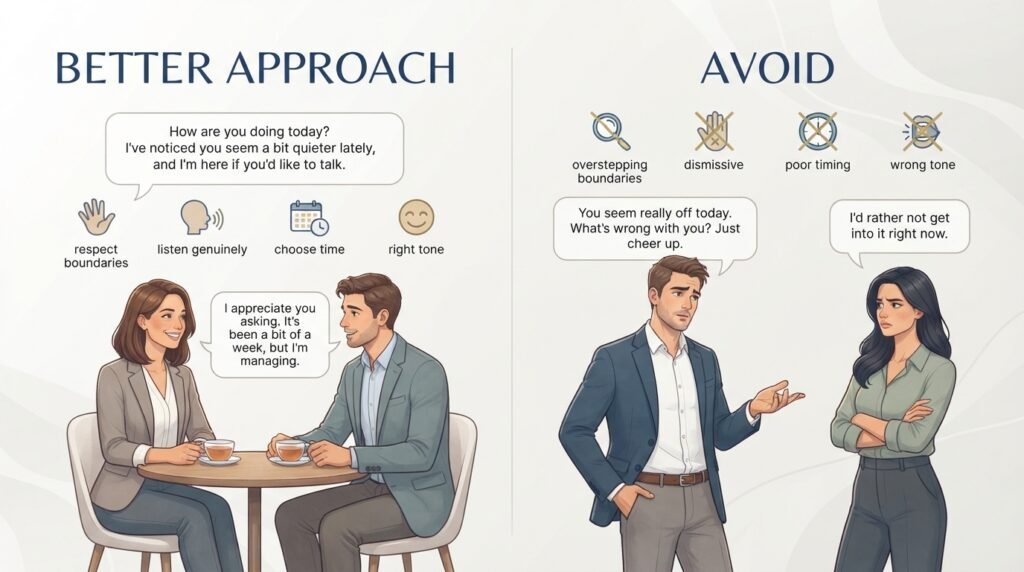
Some phrases may sound too relaxed in professional settings. Consider your relationship with the person before choosing your words.
2. Asking a Question That Is Too Personal
A close friend may welcome a personal question, but a coworker may not. Respect personal boundaries and choose language that fits the relationship.
3. Repeating the Same Phrase
Using “how are you feeling?” in every conversation can sound repetitive. Switching phrases naturally can make your communication feel more genuine.
4. Forgetting the Context
Someone recovering from surgery may need a different question than someone dealing with work stress. Think about why you are checking in.
5. Sounding Insincere
Do not ask about someone’s well-being just to be polite if you immediately change the subject. Listen to the answer and respond with genuine interest.
Frequently Asked Questions
What is another way to ask “How are you feeling?”
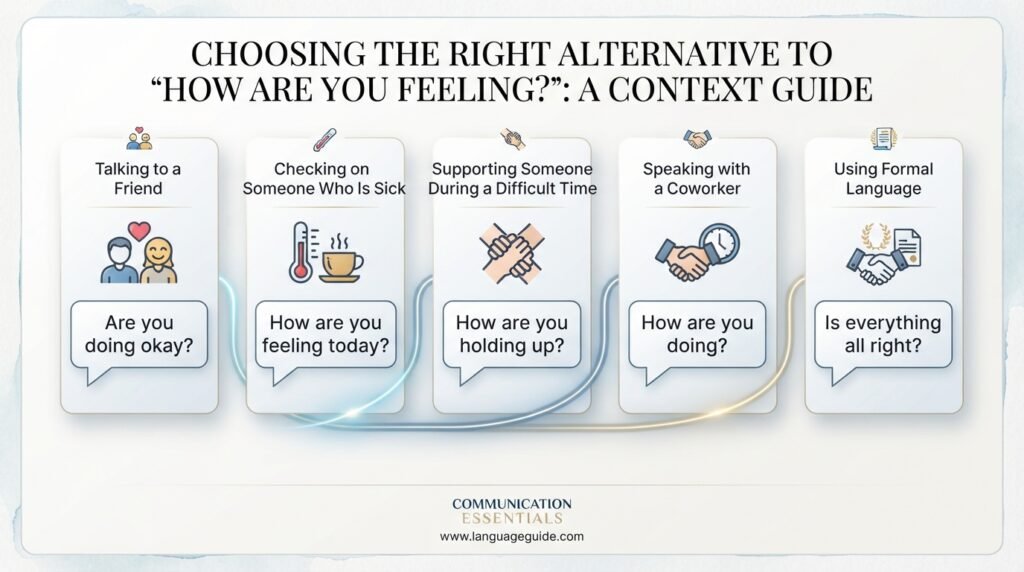
Natural alternatives include “How do you feel?” “Are you feeling okay?” “How are you doing?” and “How have you been feeling?” The best choice depends on whether you are asking about someone’s health, emotions, or general well-being.
How do you politely ask someone how they are feeling?
You can politely say, “How have you been feeling?” or “How are you feeling today?” Both options sound respectful and caring. “Is everything all right?” is another good choice when you are concerned that something may be wrong.
What can I say instead of “How are you feeling?” to a friend?
For a friend, try “Are you doing okay?” “How are you holding up?” or “How are things going?” These phrases sound natural and relaxed while still showing that you care about what the person is experiencing.
How do you ask someone how they feel after surgery?
You can say, “How are you feeling today?” or “How have you been feeling since the surgery?” These questions are clear and considerate. They also give the person an opportunity to explain how their recovery is progressing.
Is “Are you feeling okay?” a polite question?
Yes. “Are you feeling okay?” is generally polite and caring, especially when someone looks uncomfortable or unwell. However, it can sound concerned, so it is best used when you have a reason to think something may be wrong.
What is a professional way to ask about someone’s well-being?
Professional options include “How have you been feeling?” “How are you doing?” and “Is everything all right?” Choose a phrase that fits the relationship and situation. In the workplace, it is usually best to show concern without becoming overly personal.
How can I ask someone about their emotional well-being?
You might ask, “How are you holding up?” or “Are you doing okay?” These phrases work well when someone is dealing with stress or a difficult situation. A gentle tone and willingness to listen can make the question feel more supportive.
Is “How are you doing?” the same as “How are you feeling?”
Not exactly. “How are you feeling?” usually focuses on someone’s physical or emotional state. “How are you doing?” is broader and can refer to their general life, work, situation, or well-being. Context often determines the intended meaning.
Conclusion
Knowing another way to say “how are you feeling?” can help you communicate with more care, variety, and precision. While the original phrase is natural and useful, alternatives such as “How do you feel?” “Are you feeling okay?” “How are you doing?” and “How are you holding up?” can better match different situations.
Knowing another way to say “how are you feeling?” can help you communicate with more care, variety, and precision. While the original phrase is natural and useful, alternatives such as “How do you feel?” “Are you feeling okay?” “How are you doing?” and “How are you holding up?” can better match different situations. For more vocabulary options, you can also explore [feeling synonyms and related words].

Daniel Cho writes about professional communication, drawing on years spent training teams on clear, confident workplace writing — from emails to performance reviews.