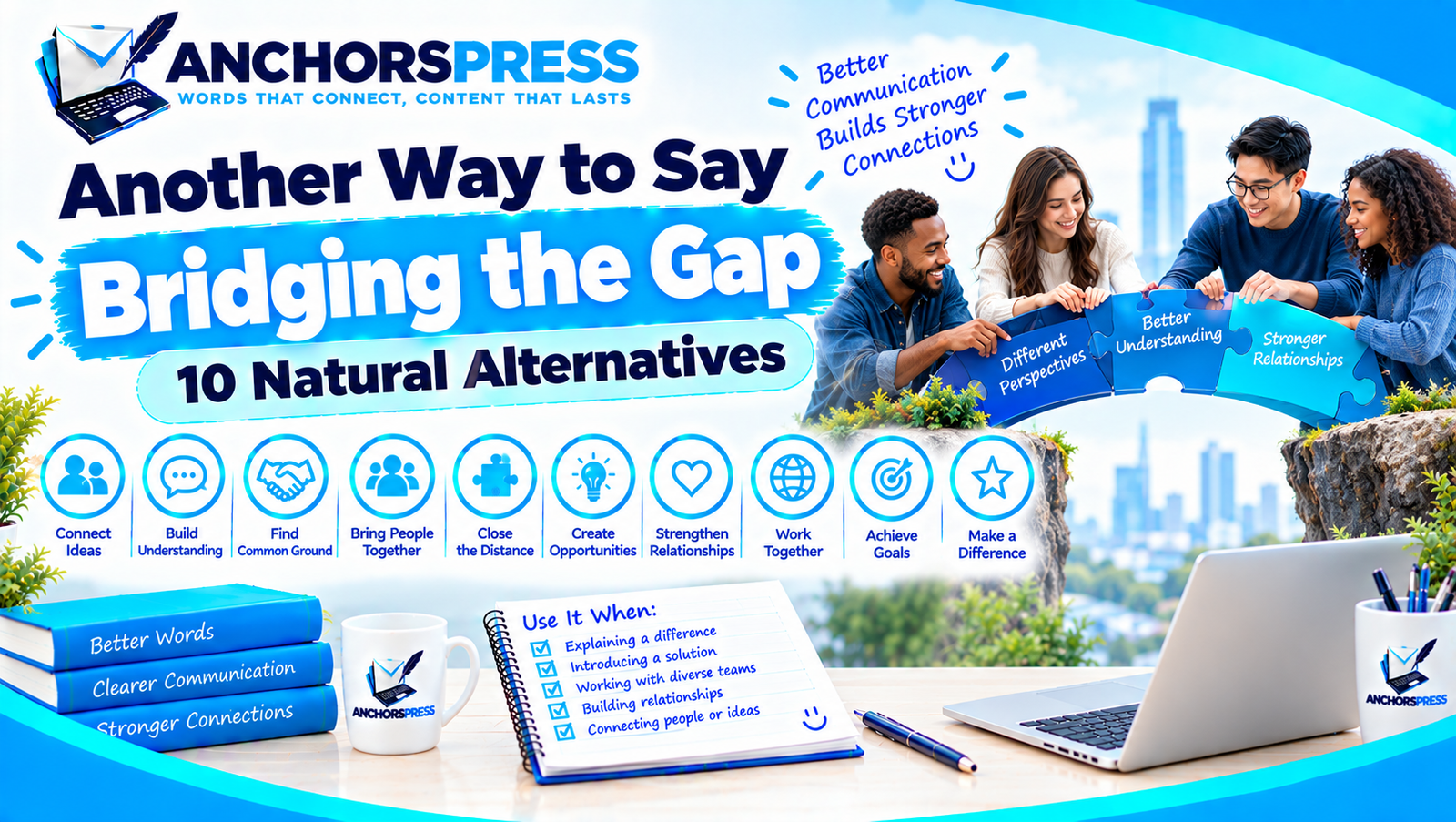
“Bridging the gap” is a common expression used when someone wants to describe reducing a difference, improving understanding, or connecting two groups, ideas, or situations. While the phrase is useful, repeating it too often can make your writing feel predictable.
Fortunately, several natural alternatives can express the same basic idea with slightly different meanings. The right choice depends on whether you are discussing communication, business, relationships, education, culture, or differences in opinions.
What Does “Another Way to Say Bridging the Gap” Mean?

The phrase “bridging the gap” means reducing a difference or separation between two people, groups, ideas, or situations. The “gap” may be physical, emotional, cultural, financial, educational, or related to knowledge or communication.
For example, a company might say that better training can bridge the gap between employees’ current skills and the skills they need. Similarly, two communities may work together to bridge a cultural gap.
People commonly use this expression in business writing, education, politics, relationships, technology, and everyday communication. It usually suggests progress toward greater understanding, cooperation, equality, or connection.
Why Use Other Ways to Say “Bridging the Gap”?
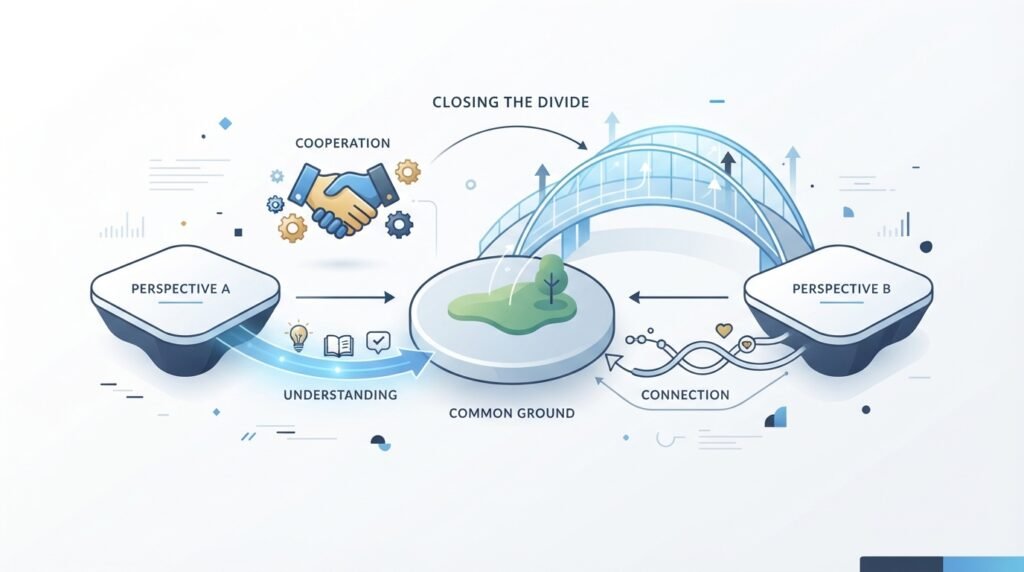
Using alternative phrases can make your writing more precise and prevent the same expression from appearing repeatedly.
Other wording can help you:
- Avoid unnecessary repetition.
- Make your message sound more natural.
- Match formal and casual situations.
- Describe the specific type of difference more clearly.
- Communicate cooperation or understanding more effectively.
- Make professional writing more varied and engaging.
10 Best Other Ways to Say “Bridging the Gap”
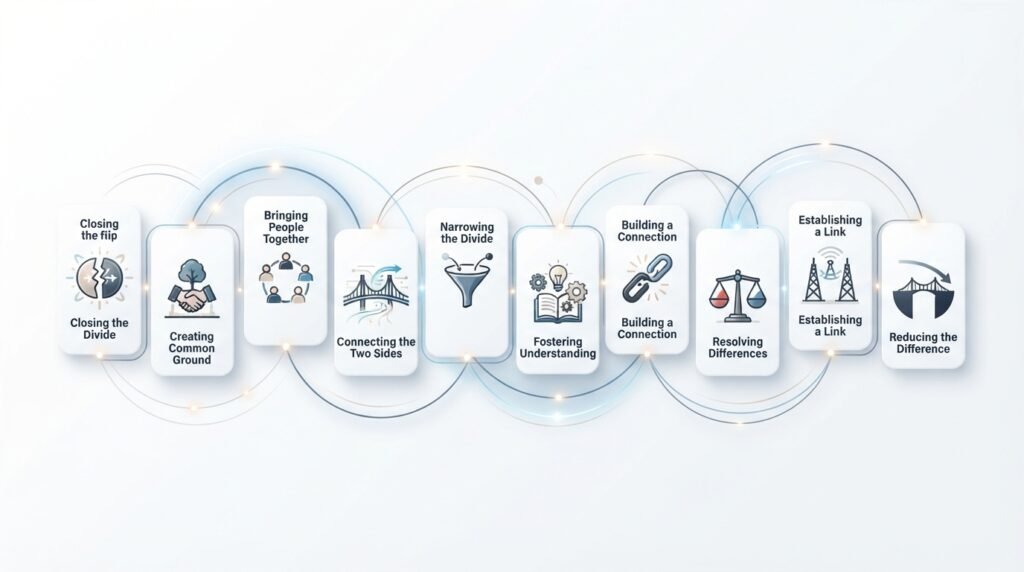
1. Closing the Divide
Meaning
“Closing the divide” means reducing a separation or disagreement between two sides. It often emphasizes bringing people or groups closer despite differences in opinions, experiences, or circumstances.
Best For
- Professional
- Formal
- Polite
Example 1
The new program aims to close the divide between rural and urban students.
Example 2
Open communication can help close the divide between management and employees.
Quick Tip
Use this phrase when the “gap” involves a noticeable separation, disagreement, or inequality.
2. Creating Common Ground
Meaning
“Creating common ground” means finding shared beliefs, interests, goals, or experiences between people who may disagree. It focuses more on mutual understanding than simply reducing a difference.
Best For
- Professional
- Friendly
- Warm
- Polite
Example 1
The two teams created common ground by focusing on their shared goals.
Example 2
Listening carefully can help create common ground during a difficult discussion.
Quick Tip
Choose this expression when cooperation depends on finding something both sides can agree on.
3. Bringing People Together
Meaning
“Bringing people together” describes an effort to create connection, cooperation, or unity. It has a warm and positive tone and works especially well when discussing communities or relationships.
Best For
- Casual
- Friendly
- Warm
- Polite
Example 1
The neighborhood festival is a great way of bringing people together.
Example 2
Shared interests can bring people together even when they come from different backgrounds.
Quick Tip
Use this phrase when your focus is on people and relationships rather than an abstract problem.
4. Connecting the Two Sides
Meaning
“Connecting the two sides” means helping separate groups, viewpoints, or parties communicate or work together. It clearly describes the action of creating a link between two different sides.
Best For
- Professional
- Formal
- Polite
Example 1
The mediator played an important role in connecting the two sides.
Example 2
The new platform is connecting the two sides of the supply chain more efficiently.
Quick Tip
This is a strong choice when your sentence specifically involves two distinct groups or parties.
5. Narrowing the Divide
Meaning
“Narrowing the divide” means making a difference between two sides smaller. Unlike “closing the divide,” it does not suggest that the difference has disappeared completely.
Best For
- Professional
- Formal
Example 1
The initiative is designed to narrow the divide between experienced and new workers.
Example 2
Better access to technology could narrow the divide between different communities.
Quick Tip
Use this phrase when progress has been made but some differences still remain.
6. Fostering Understanding
Meaning
“Fostering understanding” means encouraging people to understand each other’s perspectives, experiences, or needs. It sounds thoughtful and works especially well in professional or educational contexts.
Best For
- Professional
- Formal
- Polite
- Warm
Example 1
The workshop focuses on fostering understanding among employees from different departments.
Example 2
Honest conversations can foster understanding between parents and teenagers.
Quick Tip
Choose this option when the main goal is better understanding rather than agreement.
7. Building a Connection
Meaning
“Building a connection” means developing a meaningful link between people, ideas, organizations, or experiences. It suggests that the relationship develops gradually through interaction or cooperation.
Best For
- Casual
- Friendly
- Warm
- Professional
Example 1
The mentorship program helps students build a connection with experienced professionals.
Example 2
Sharing personal stories can build a connection between coworkers.
Quick Tip
This phrase works best when the connection develops over time rather than happening instantly.
8. Resolving Differences
Meaning
“Resolving differences” means addressing disagreements and working toward a solution. It is more specific than “bridging the gap” because it focuses directly on conflict or opposing views.
Best For
- Professional
- Formal
- Polite
Example 1
The managers met to resolve differences before the project moved forward.
Example 2
Respectful communication can help resolve differences within a team.
Quick Tip
Use this phrase when the gap is caused by disagreement, conflict, or competing opinions.
9. Establishing a Link
Meaning
“Establishing a link” means creating a connection between two things that were previously separate. It has a formal, precise tone and can describe people, systems, ideas, or organizations.
Best For
- Professional
- Formal
Example 1
The research establishes a link between sleep quality and workplace performance.
Example 2
The partnership establishes a link between local businesses and international markets.
Quick Tip
This phrase is especially useful in business, academic, technical, and research writing.
10. Reducing the Difference
Meaning
“Reducing the difference” means making the distance between two conditions, groups, numbers, or viewpoints smaller. It is direct and literal, making it useful when precision matters.
Best For
- Professional
- Formal
- Polite
Example 1
The training program is reducing the difference between expected and actual performance.
Example 2
Additional resources could reduce the difference in educational opportunities between the two districts.
Quick Tip
Use this wording when you want a straightforward alternative without the figurative language of “bridging the gap.”
Comparison Table
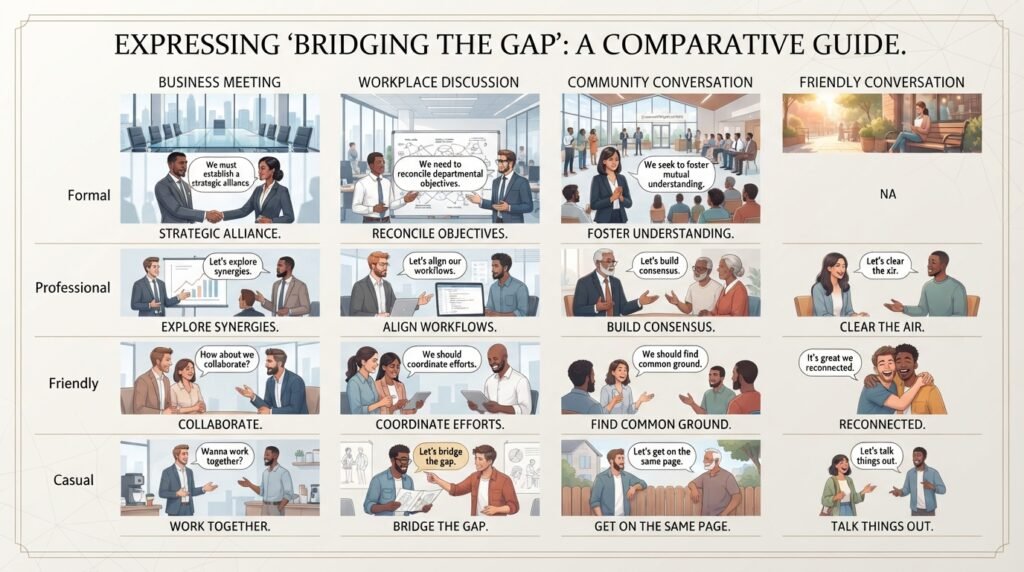
| Alternative | Best Used In | Tone |
| Closing the divide | Business, social issues, formal writing | Formal |
| Creating common ground | Negotiations, relationships, teamwork | Warm |
| Bringing people together | Communities, relationships, events | Friendly |
| Connecting the two sides | Business, mediation, cooperation | Professional |
| Narrowing the divide | Inequality, differences, social issues | Formal |
| Fostering understanding | Education, relationships, workplaces | Thoughtful |
| Building a connection | Relationships, networking, teamwork | Warm |
| Resolving differences | Conflict, disagreements, negotiations | Professional |
| Establishing a link | Research, business, technical writing | Formal |
| Reducing the difference | Data, performance, education | Direct |
Common Mistakes
1. Using Casual Phrases in Professional Emails
Expressions such as “bringing people together” can sound too conversational in highly formal contexts. Consider “fostering understanding” or “closing the divide” when a more professional tone is appropriate.
2. Choosing Overly Formal Language
Not every sentence needs sophisticated wording. Using “establishing a link” in a casual conversation may sound stiff when “building a connection” would feel more natural.
3. Repeating the Same Phrase
Replacing “bridging the gap” with another expression only once does not solve repetition throughout a long article. Vary your wording according to the specific meaning of each sentence.
4. Forgetting Context
Not every alternative has exactly the same meaning. “Resolving differences” suggests conflict, while “creating common ground” emphasizes shared understanding.
5. Sounding Insincere
Some expressions can feel vague if they are not supported by a clear action. Instead of saying a program will “bridge the gap,” explain how it will improve communication, access, skills, or cooperation.
Frequently Asked Questions
What is another way to say “bridging the gap”?
Common alternatives include “closing the divide,” “creating common ground,” “bringing people together,” “connecting the two sides,” and “narrowing the divide.” The best option depends on the context. For example, “creating common ground” works well for disagreements, while “establishing a link” is better for formal or technical writing.
What is a professional way to say “bridging the gap”?
Professional alternatives include “closing the divide,” “narrowing the divide,” “fostering understanding,” and “establishing a link.” These expressions work well in reports, business documents, presentations, and workplace communication. Choose the phrase that describes the specific result you want, rather than replacing the original expression automatically.
What is a simple way to say “bridging the gap”?
A simple alternative is “bringing people together.” You can also say “connecting the two sides” or “reducing the difference.” These options are easy to understand and avoid the figurative language found in “bridging the gap,” making them useful for general audiences.
Is “closing the divide” the same as “bridging the gap”?
The two phrases are very similar, but they can carry slightly different emphasis. “Closing the divide” often focuses on reducing separation or inequality, while “bridging the gap” can describe creating a connection between two things. In many contexts, however, they can be used interchangeably.
How can I say “bridging the gap” in an email?
For a professional email, you could use phrases such as “fostering understanding,” “closing the divide,” or “connecting the two sides.” For example, instead of saying, “This meeting will help bridge the gap,” you could write, “This meeting will help foster understanding between the two teams.”
What is another way to say “bridge the gap” in business?
In business writing, useful alternatives include “close the divide,” “connect the two sides,” “establish a link,” and “narrow the difference.” The best choice depends on the situation. “Establish a link” is particularly useful for partnerships or systems, while “foster understanding” works well for teams and workplace communication.
What is another way to say “bridge the gap” in education?
In education, you can say “reduce the learning gap,” “narrow the divide,” “close the achievement gap,” or “connect students with resources.” The best wording depends on what difference you are discussing. If the issue involves academic performance, a direct phrase such as “reduce the achievement gap” is often clearer.
Can “create common ground” replace “bridging the gap”?
Yes, when the gap involves different opinions, interests, or perspectives. “Create common ground” emphasizes finding shared ideas or goals, whereas “bridging the gap” is broader. If two groups need to cooperate despite disagreement, “creating common ground” may sound more specific and natural.
Conclusion
Knowing another way to say “bridging the gap” gives you more flexibility and precision in your writing. While the original phrase is useful, the best alternative depends on what kind of difference you are describing.
A well-matched phrase does more than avoid repetition—it makes your message clearer, more specific, and easier to understand. Understanding idioms and common expressions can also help you choose language that fits the context naturally.
Daniel Cho writes about professional communication, drawing on years spent training teams on clear, confident workplace writing — from emails to performance reviews.