What Does “Stand Out” Mean?

The phrase “stand out” means to be easily noticed because someone or something is different, impressive, attractive, or better than others.
People commonly use it when talking about job candidates, businesses, products, skills, achievements, clothing, or personal qualities. For example, you might say a strong resume helps an applicant stand out from other candidates.
This phrase is popular because it is simple, flexible, and easy to understand. However, using an alternative can help you match the tone of a specific conversation or piece of writing.
Why Use Other Ways to Say “Stand Out”?

Using another way to say “stand out” can make your communication more precise and engaging. Some alternatives sound more professional, while others feel more casual or expressive.
Different phrases can help you:
- Avoid repeating the same words.
- Match your language to the situation.
- Sound more natural in professional writing.
- Describe success or uniqueness more clearly.
- Add variety and personality to your communication.
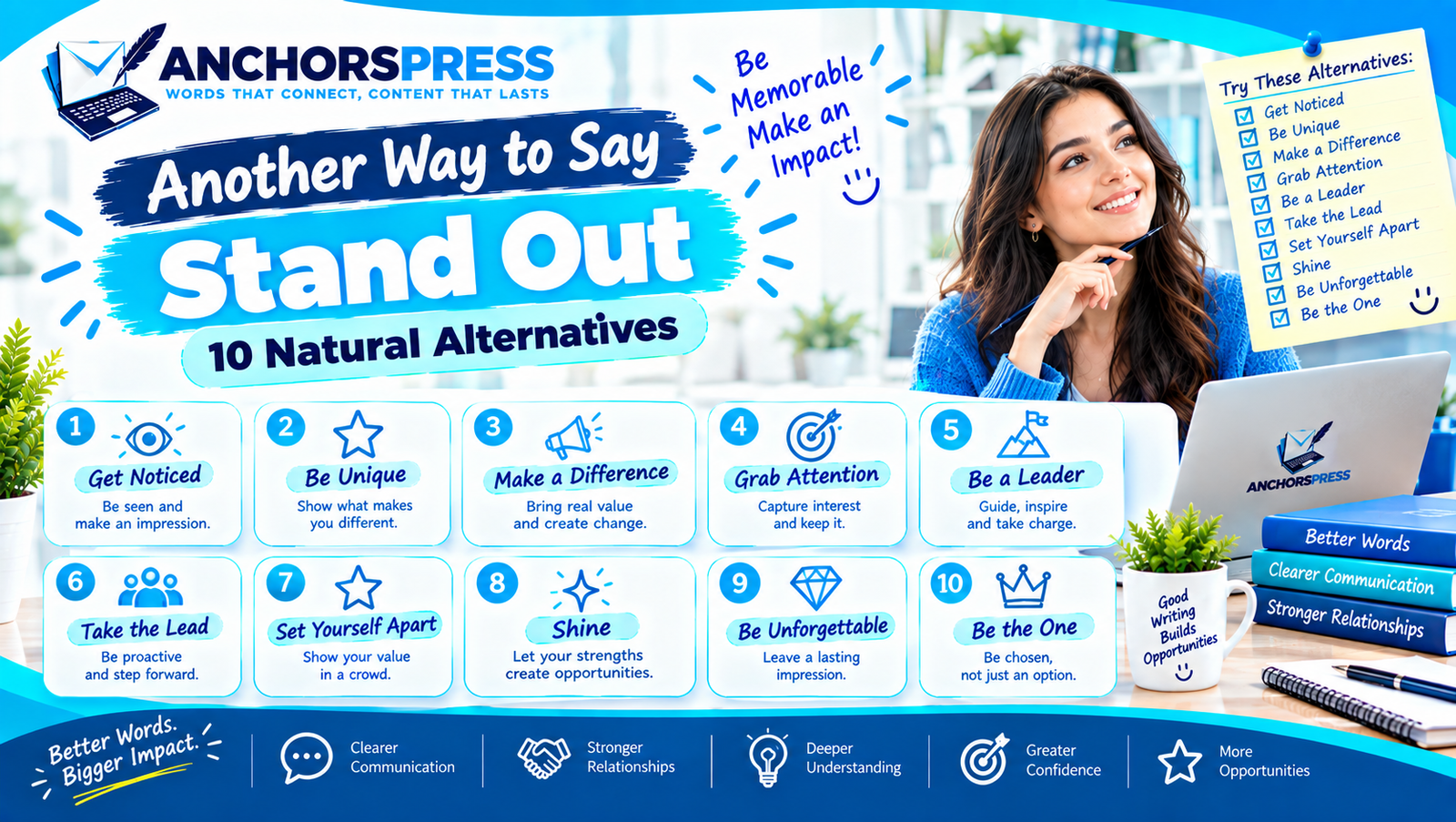
10 Best Other Ways to Say “Stand Out”

1. Set Yourself Apart
Meaning
Set yourself apart means to make yourself noticeably different from others, usually because of a special skill, quality, or achievement. It is a strong choice when talking about professional or personal success.
Best For
- Professional
- Formal
- Polite
Example 1
Your strong communication skills can set you apart from other applicants.
Example 2
The company sets itself apart by providing excellent customer service.
Quick Tip
Use this phrase when you want to emphasize a clear difference between someone or something and its competitors.
2. Distinguish Yourself
Meaning
Distinguish yourself means to become recognized for doing something especially well. It often suggests earning respect or attention through ability, effort, or achievement.
Best For
- Professional
- Formal
Example 1
She distinguished herself through her leadership during the project.
Example 2
Young professionals can distinguish themselves by consistently producing high-quality work.
Quick Tip
This phrase works best when describing achievements, skills, or strong professional performance.
3. Shine
Meaning
Shine means to perform extremely well or show your best qualities. It often has a positive and encouraging tone.
Best For
- Casual
- Friendly
- Warm
Example 1
He really shined during the presentation.
Example 2
Her creativity shines through in every design she creates.
Quick Tip
Use “shine” when discussing talent, personality, creativity, or an impressive performance.
4. Make an Impression
Meaning
Make an impression means to create a strong effect on someone. The impression can be positive, memorable, or powerful depending on the context.
Best For
- Professional
- Casual
- Friendly
Example 1
A confident introduction can help you make a great impression during an interview.
Example 2
The restaurant made a lasting impression on its first-time visitors.
Quick Tip
Add words such as “great,” “strong,” or “lasting” to make the meaning more specific.
5. Rise Above the Rest
Meaning
Rise above the rest means to perform better than others or become more noticeable because of exceptional quality. It creates a strong sense of competition and success.
Best For
- Professional
- Casual
- Friendly
Example 1
Her attention to detail helped her rise above the rest.
Example 2
The brand rose above the rest by offering a simpler customer experience.
Quick Tip
Use this phrase when comparing someone or something with a group of competitors.
6. Catch the Eye
Meaning
Catch the eye means to attract someone’s attention, often because something is visually appealing, unusual, or interesting. It is especially useful when describing design, fashion, advertising, or products.
Best For
- Casual
- Friendly
Example 1
The bright packaging immediately caught my eye at the store.
Example 2
A clean website design can catch the eye of potential customers.
Quick Tip
Use this phrase mainly for things that are visually noticeable.
7. Make Your Mark
Meaning
Make your mark means to achieve something memorable or have a meaningful impact. It often suggests building a reputation or leaving a positive impression over time.
Best For
- Professional
- Friendly
- Warm
Example 1
She is determined to make her mark in the marketing industry.
Example 2
The young athlete made his mark during his first professional season.
Quick Tip
Choose this phrase when talking about long-term success, influence, or reputation.
8. Be Noticeable
Meaning
Be noticeable means to attract attention because of a particular quality, appearance, or behavior. It is a simple and direct alternative to “stand out.”
Best For
- Casual
- Professional
- Polite
Example 1
Your headline should be noticeable without being too flashy.
Example 2
The changes were noticeable after only a few weeks.
Quick Tip
Use this option when you want clear, straightforward language without sounding overly dramatic.
9. Leave a Lasting Impression
Meaning
Leave a lasting impression means to create a memory or effect that people continue to remember. It is stronger than simply being noticed because it suggests a long-term impact.
Best For
- Professional
- Formal
- Warm
Example 1
A thoughtful thank-you note can leave a lasting impression on a client.
Example 2
Her speech left a lasting impression on everyone in the room.
Quick Tip
Use this phrase when the impact continues after the initial interaction ends.
10. Be One of a Kind
Meaning
Be one of a kind means to be truly unique or unlike anything else. It is often used to praise a person, product, experience, or idea.
Best For
- Casual
- Friendly
- Warm
Example 1
Her approach to storytelling is truly one of a kind.
Example 2
We wanted to create a one-of-a-kind experience for our guests.
Quick Tip
Use this phrase when uniqueness is the main quality you want to emphasize.
Comparison Table

| Alternative | Best Used In | Tone |
| Set yourself apart | Resumes, business, careers | Professional |
| Distinguish yourself | Formal and professional writing | Formal |
| Shine | Performance and personal strengths | Warm |
| Make an impression | Interviews and social situations | Friendly |
| Rise above the rest | Competition and achievement | Confident |
| Catch the eye | Design, fashion, and marketing | Casual |
| Make your mark | Career and long-term success | Inspirational |
| Be noticeable | General descriptions | Neutral |
| Leave a lasting impression | Professional and meaningful interactions | Professional |
| Be one of a kind | Unique people, products, and experiences | Warm |
Common Mistakes

1. Using a Phrase That Does Not Match the Context
Some alternatives work better in certain situations. For example, “catch the eye” is ideal for visual design but may not fit when describing someone’s professional achievements.
2. Using Casual Language in a Formal Setting
Phrases like “shine” or “be one of a kind” may sound too informal in a formal business report. Choose language that matches your audience.
3. Repeating the Same Phrase Too Often
Using “stand out” repeatedly can make your writing feel dull. Switch to a natural synonym when the meaning remains clear.
4. Choosing an Overly Dramatic Alternative
Not every situation requires strong language like “rise above the rest.” Sometimes a simpler phrase such as “be noticeable” works better.
5. Forgetting the Intended Meaning
“Stand out” can refer to appearance, performance, success, or uniqueness. Make sure your alternative expresses the exact idea you mean.
Frequently Asked Questions
What is another word for “stand out”?
Another word for “stand out” is “shine,” “excel,” “distinguish yourself,” or “set yourself apart.” The best choice depends on whether you are describing success, appearance, talent, or uniqueness. “Set yourself apart” is often a strong choice for professional situations.
How do you say “stand out” professionally?
You can say “set yourself apart,” “distinguish yourself,” or “differentiate yourself” in professional communication. These phrases work well in resumes, interviews, business writing, and workplace discussions because they sound polished while clearly describing uniqueness or strong performance.
What does “set yourself apart” mean?
Set yourself apart means to make yourself different or more noticeable because of your skills, qualities, experience, or achievements. For example, a candidate with specialized experience may set themselves apart from other people applying for the same position.
Is “stand out” formal or informal?
“Stand out” is generally neutral and can work in both casual and professional communication. However, more formal alternatives such as “distinguish yourself” or “set yourself apart” may be better suited to formal writing, business documents, and professional presentations.
What is a positive way to say “stand out”?
Positive alternatives include “shine,” “make an impression,” “leave a lasting impression,” and “make your mark.” These phrases highlight someone’s strengths or achievements without suggesting unnecessary competition or comparison with others.
What can I say instead of “stand out from the crowd”?
You can say “rise above the rest,” “set yourself apart,” “distinguish yourself,” or “be one of a kind.” Each phrase has a slightly different tone, so choose one that fits the audience and the level of formality you need.
How can a person stand out professionally?
A person can stand out professionally by showing strong skills, reliability, initiative, and clear communication. In writing, phrases such as “distinguish yourself” or “set yourself apart” can describe this idea in a polished and professional way.
What is the opposite of “stand out”?
The opposite of “stand out” is often “blend in” or “go unnoticed.” While “stand out” means being noticeable or different, “blend in” means becoming similar to the people or things around you and attracting little attention.
Conclusion
Knowing another way to say “stand out” can help you communicate with more variety and precision. While “stand out” is clear and versatile, alternatives such as “set yourself apart,” “distinguish yourself,” “shine,” and “make an impression” can better match different situations.
The key is to consider your audience and purpose. The right alternative will make your writing sound more natural while helping your message stand out for the right reasons.

Amara Reyes has taught English to adult learners for over eight years. She focuses on how phrases are actually used in everyday conversation, not just textbook definitions.