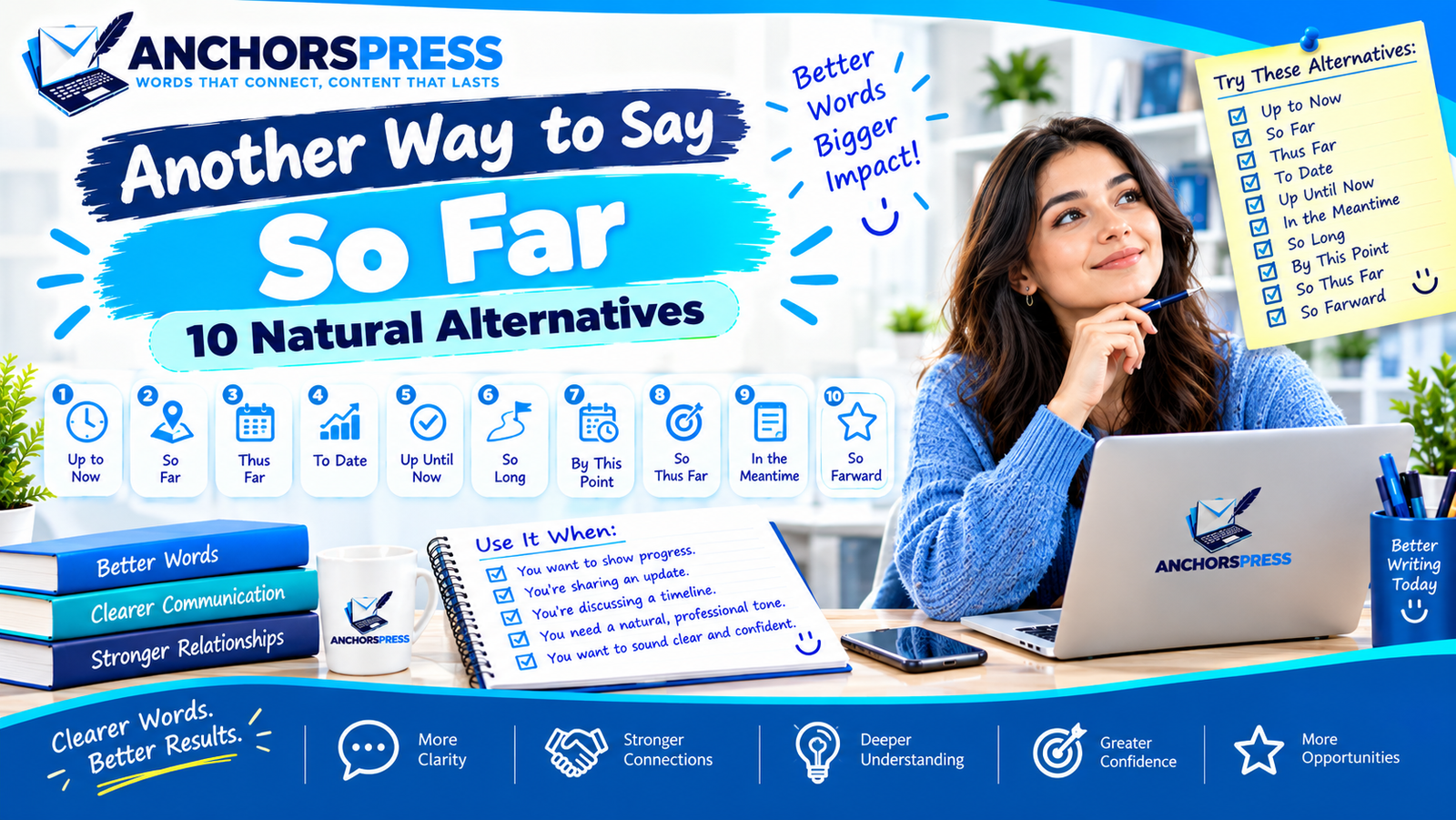
What Does “Another Way to Say So Far” Mean?
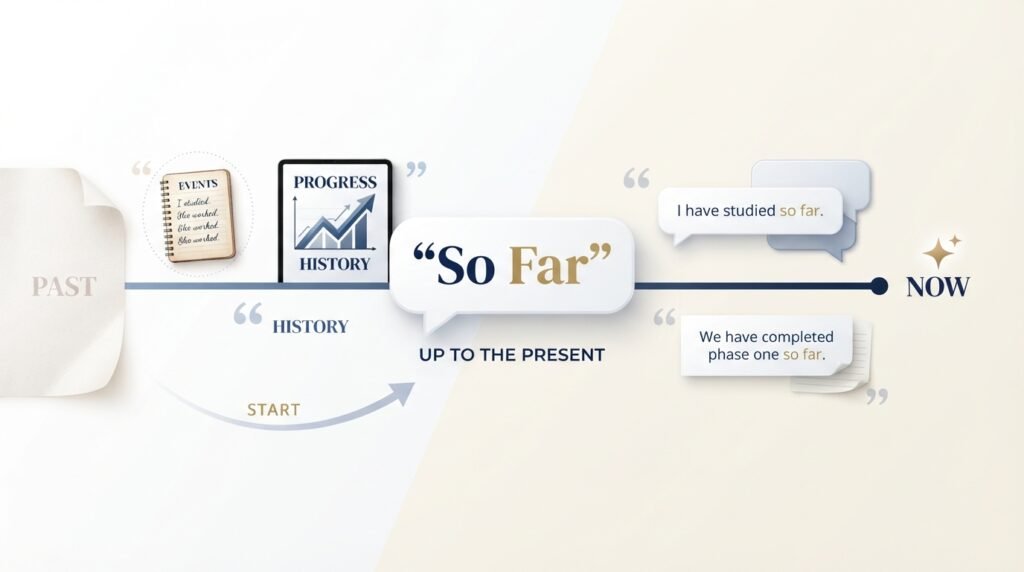
The phrase “so far” means up to this point in time. It is commonly used when talking about progress, experiences, results, events, or situations that have happened from the past until now.
For example, you might say, “The project is going well so far” or “So far, we have received 50 applications.”
People often search for another way to say “so far” because they want to avoid repetition or find wording that sounds more professional, formal, natural, or precise. The phrase appears frequently in conversations, emails, reports, essays, and business communication.
Why Use Other Ways to Say “So Far”?
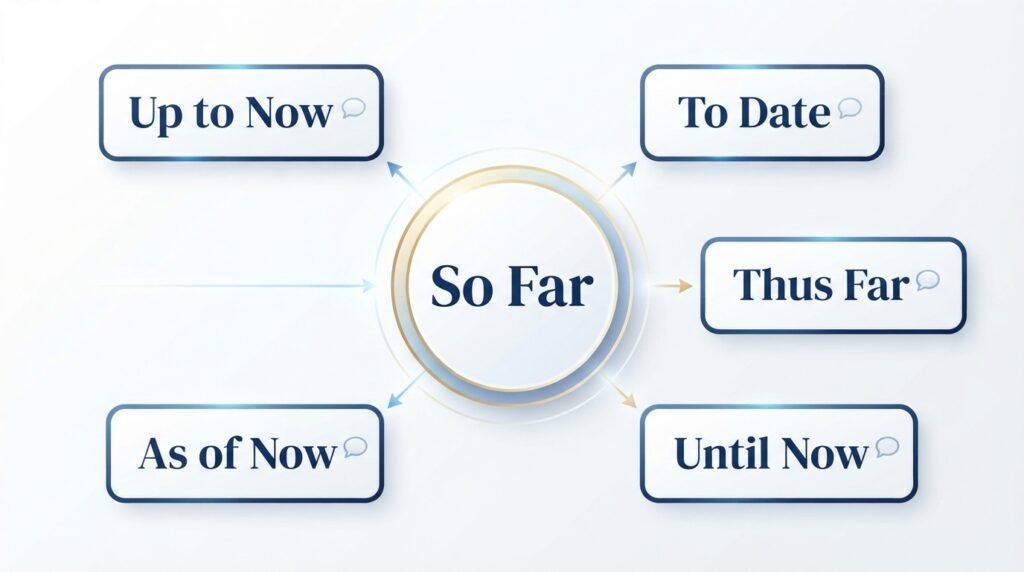
Using alternatives can make your writing more varied and better suited to the situation. While “so far” is perfectly correct, another expression may communicate the same idea with a slightly different tone.
Other ways to say “so far” can help you:
- Avoid repeating the same phrase.
- Make professional writing sound more polished.
- Choose wording that fits formal or casual situations.
- Make reports and updates more precise.
- Add variety to essays, articles, and emails.
- Express progress naturally without sounding repetitive.
10 Best Other Ways to Say “So Far”
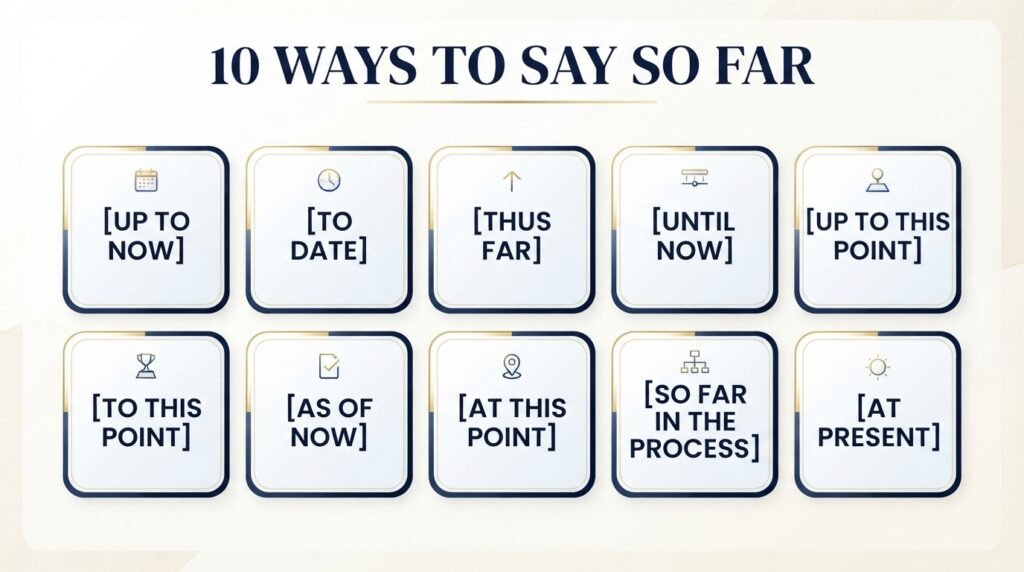
1. Up to Now
Meaning
“Up to now” means from an earlier point in time until the present. It is one of the closest and most natural replacements for “so far.”
Best For
- Casual
- Friendly
- Professional
Example 1
Up to now, we haven’t experienced any major problems with the new system.
Example 2
Up to now, everything has gone according to plan.
Quick Tip
Use “up to now” when you want a simple, conversational alternative that works in most everyday situations.
2. Until Now
Meaning
“Until now” describes something that has been true or has happened before the present moment. It can sometimes suggest that a situation is changing or has changed.
Best For
- Casual
- Professional
- Formal
Example 1
Until now, I had never considered working in another industry.
Example 2
The team had struggled with delays until now.
Quick Tip
Choose “until now” when the sentence emphasizes a change from the past to the present.
3. To Date
Meaning
“To date” means up to the present time. It is especially common in business, reports, research, financial updates, and other professional contexts.
Best For
- Professional
- Formal
Example 1
To date, the company has hired 18 new employees.
Example 2
No complaints have been reported to date.
Quick Tip
Use “to date” in formal documents when you want a concise, professional tone.
4. Thus Far
Meaning
“Thus far” means up to this point. It has the same basic meaning as “so far,” but it sounds more formal and polished.
Best For
- Formal
- Professional
Example 1
Thus far, the research has produced encouraging results.
Example 2
The negotiations have been successful thus far.
Quick Tip
“Thus far” is useful in formal reports and academic-style writing, but it may sound too formal for casual conversation.
5. As of Now
Meaning
“As of now” refers to the current situation or the information available at the present moment. It often highlights the latest status of something.
Best For
- Professional
- Casual
- Formal
Example 1
As of now, the event is still scheduled for Saturday.
Example 2
As of now, we have no reason to change the original plan.
Quick Tip
Use “as of now” when you are giving a current status that could change later.
6. Up to This Point
Meaning
“Up to this point” means from the beginning of a period or situation until the present stage. It draws attention to progress or developments.
Best For
- Professional
- Formal
- Casual
Example 1
Up to this point, the training program has been very effective.
Example 2
Up to this point, we have focused mainly on customer feedback.
Quick Tip
This phrase works well when discussing stages, progress, or events that have developed over time.
7. To This Point
Meaning
“To this point” means up to the current stage or moment. It is useful when reviewing progress, decisions, or developments.
Best For
- Professional
- Formal
Example 1
To this point, the evidence supports our original conclusion.
Example 2
To this point, the project remains within its planned budget.
Quick Tip
Use “to this point” when discussing progress or evidence rather than casual personal experiences.
8. At This Point
Meaning
“At this point” focuses on the current stage of a situation. Although it does not always mean exactly “so far,” it can replace it when the context concerns the present status.
Best For
- Casual
- Professional
- Friendly
Example 1
At this point, we’ve completed most of the design work.
Example 2
At this point, there is no need to make any major changes.
Quick Tip
Use “at this point” when you want to emphasize the situation right now rather than the entire period leading up to it.
9. So Far in the Process
Meaning
“So far in the process” refers specifically to what has happened during an ongoing procedure, project, or series of steps. It provides more context than simply saying “so far.”
Best For
- Professional
- Friendly
- Casual
Example 1
So far in the process, the applicants have responded very well to the new requirements.
Example 2
So far in the process, we’ve identified three areas that need improvement.
Quick Tip
Use this phrase when talking about progress within a clearly defined process or project.
10. At Present
Meaning
“At present” means currently or at the present time. It can sometimes replace “so far” when the sentence focuses on the current state of a situation.
Best For
- Formal
- Professional
Example 1
At present, the company has no plans to expand into another market.
Example 2
At present, we are reviewing all available options.
Quick Tip
“At present” is more focused on the current situation than past-to-present progress, so make sure it fits your intended meaning.
Comparison Table
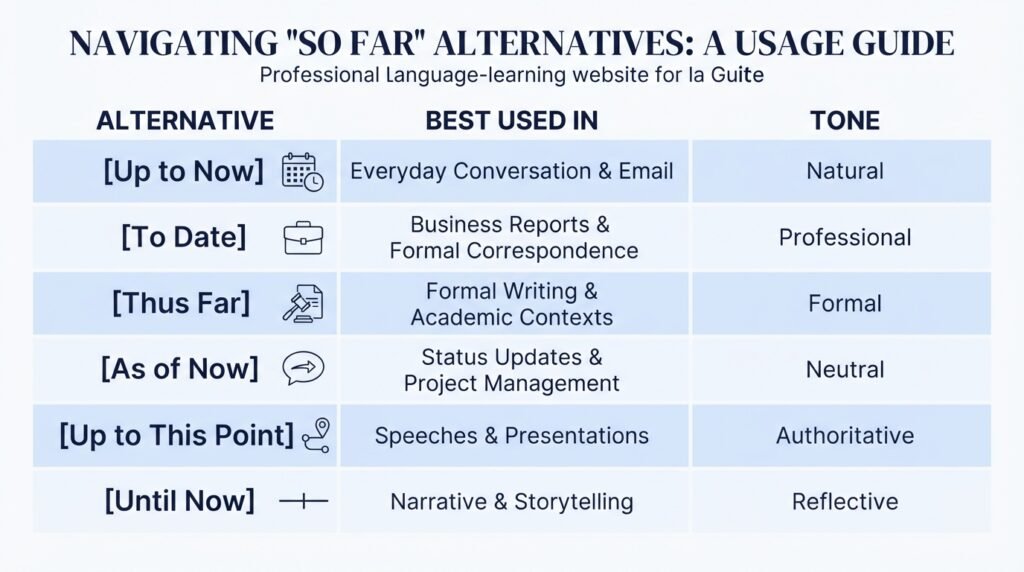
| Alternative | Best Used In | Tone |
| Up to now | Everyday conversations, emails | Natural |
| Until now | Situations involving change | Neutral |
| To date | Reports, business writing | Professional |
| Thus far | Academic and formal writing | Formal |
| As of now | Status updates | Neutral |
| Up to this point | Progress discussions | Professional |
| To this point | Reports and analysis | Formal |
| At this point | Conversations and updates | Natural |
| So far in the process | Projects and procedures | Professional |
| At present | Business and formal writing | Formal |
Common Mistakes
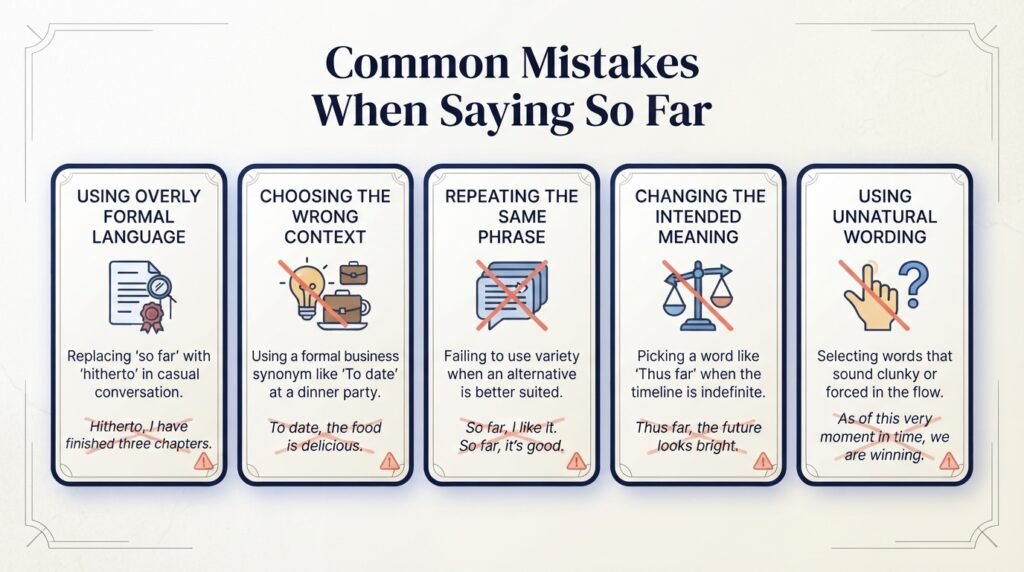
1. Using Casual Phrases in Formal Writing
Words such as “so far” are not wrong in professional writing, but repeatedly using casual wording can make a report less polished. Consider “to date” or “thus far” when the context calls for a formal tone.
2. Choosing an Overly Formal Expression
Not every sentence needs sophisticated wording. Saying “thus far” in a casual text message may sound unnatural when “so far” or “up to now” would be clearer.
3. Repeating “So Far” Too Often
Repetition can make an article, report, or email feel monotonous. Replace some instances with suitable alternatives, but only when the meaning and tone remain accurate.
4. Forgetting the Context
Not every alternative has exactly the same emphasis. “Until now” can suggest a change, while “as of now” focuses more strongly on the current status.
5. Using an Alternative That Changes the Meaning
Some phrases are close to “so far” without being exact synonyms. For example, “at present” usually means “currently,” not necessarily “from the past until now.” Always check the sentence before replacing the original phrase.
Frequently Asked Questions
What is the most common synonym for “so far”?
The most common alternatives include “up to now,” “until now,” “to date,” and “thus far.” For everyday American English, “up to now” is one of the closest replacements. In professional writing, “to date” is often a better choice because it sounds concise and polished.
What is a professional way to say “so far”?
“To date” is one of the best professional alternatives to “so far.” It works particularly well in business reports, project updates, research documents, and formal emails. For example, “To date, we have completed 80% of the project” sounds clear and professional.
Is “thus far” the same as “so far”?
Yes, “thus far” generally has the same meaning as “so far.” Both refer to something that has happened or been true up to the present point. The main difference is tone: “thus far” sounds more formal, while “so far” is more common in everyday American English.
Is “up to now” a good alternative to “so far”?
Yes. “Up to now” is a natural and widely understood alternative to “so far.” It works well in conversations, emails, and general writing. However, if you are writing a formal report, “to date” may sound more polished.
What is a formal way to say “so far”?
Good formal alternatives include “to date,” “thus far,” “to this point,” and “at present,” depending on the sentence. “To date” is especially useful when describing completed work, results, numbers, or progress in a professional setting.
Can I use “until now” instead of “so far”?
Sometimes. “Until now” works best when the sentence suggests that something has changed or is changing. For example, “Until now, we had not received any complaints” implies that the situation may be different now. “So far” is more neutral.
What is another way to say “so far” in an email?
The best option depends on the email’s tone. Use “up to now” for a natural message, “to date” for a formal business email, or “as of now” for a current status update. These choices can make your wording more precise without sounding forced.
How do I avoid repeating “so far” in my writing?
First, decide whether you are describing progress, a current status, or a change. Then choose an alternative that matches that meaning, such as “to date,” “up to now,” “thus far,” or “until now.” Do not replace every occurrence automatically; sometimes “so far” is still the clearest choice.
Conclusion
Knowing another way to say “so far” gives you more flexibility in everyday conversations, professional emails, reports, and academic writing. While “so far” is natural and widely used, alternatives can help you match the tone and meaning of a particular situation.
The key is not to use a synonym simply for variety. Pick the phrase that communicates your intended meaning clearly and sounds natural for your audience.
Sarah Whitfield is the founder and lead editor of Anchors Press. With a background in copyediting and content strategy, she reviews every guide for accuracy, tone, and everyday usefulness before it’s published.