
“Best regards” is a common email closing used to end a message politely and professionally. It communicates goodwill without sounding too formal, which makes it useful for coworkers, clients, managers, customers, and professional contacts.
However, using the same sign-off in every email can feel repetitive. Fortunately, several alternatives can help you match your closing to the situation while keeping your message natural and professional.
What Does “What’s Another Way to Say Best Regards” Mean?
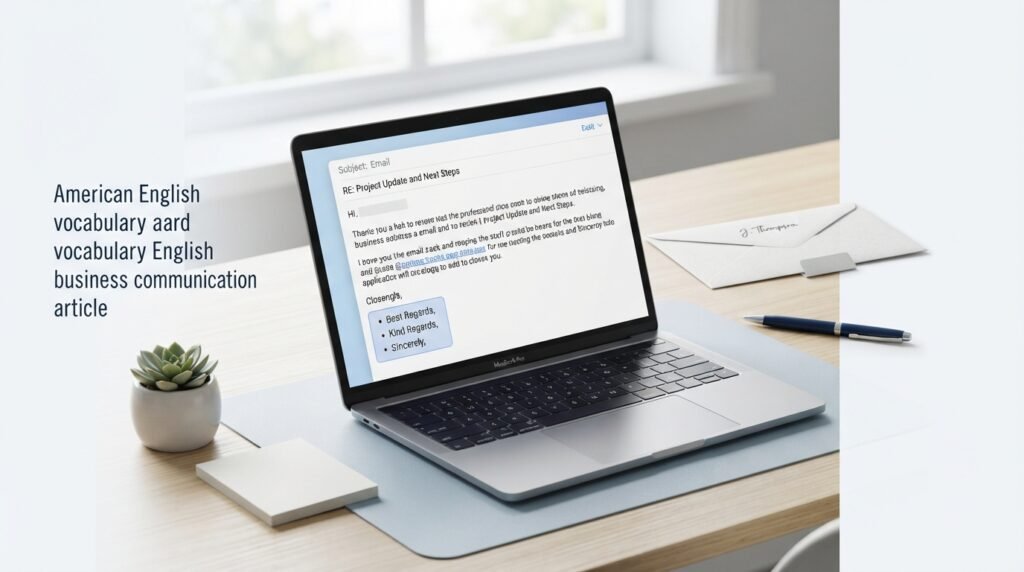
The phrase “what’s another way to say best regards” means you are looking for different words or expressions to use at the end of an email, letter, or professional message.
“Best regards” is polite and widely accepted in American English. People often use it when they want to sound courteous without creating too much emotional distance.
You might search for an alternative when writing to a close colleague, responding to a client, sending a formal letter, or simply trying to avoid repeating the same sign-off.
Common alternatives include kind regards, warm regards, sincerely, all the best, and with appreciation.
Why Use Other Ways to Say “Best Regards”?
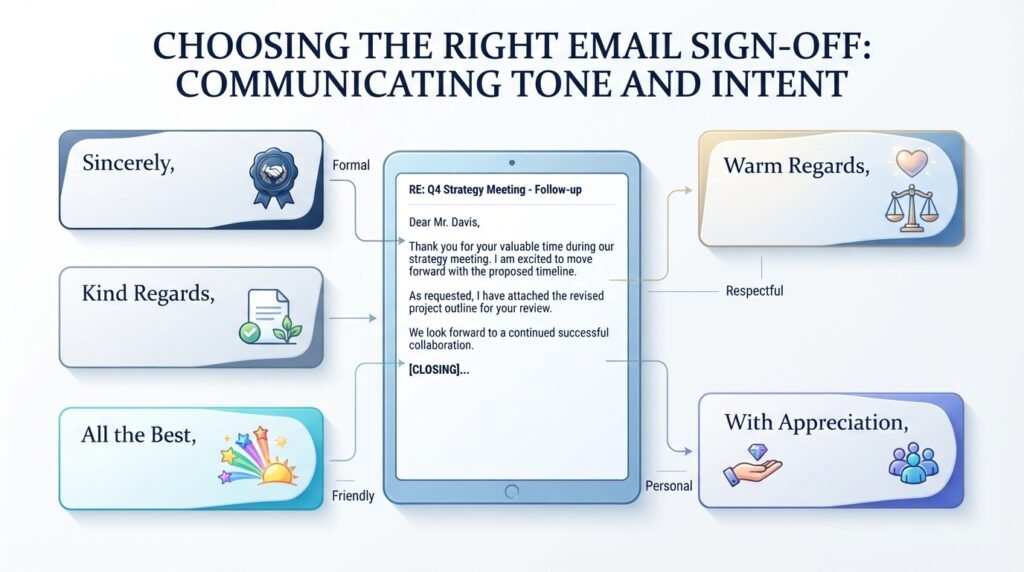
Changing your email closing can make your communication feel more appropriate and natural. The right sign-off can also subtly communicate warmth, respect, gratitude, or formality.
You may want another way to say “best regards” to:
- Avoid repeating the same email closing.
- Match your tone to the recipient.
- Sound warmer or more personable.
- Make a formal message more polished.
- Express gratitude more clearly.
- Create a stronger professional connection.
The key is not to choose the fanciest phrase. Instead, choose the closing that fits the relationship and purpose of your message.
10 Best Other Ways to Say “Best Regards”
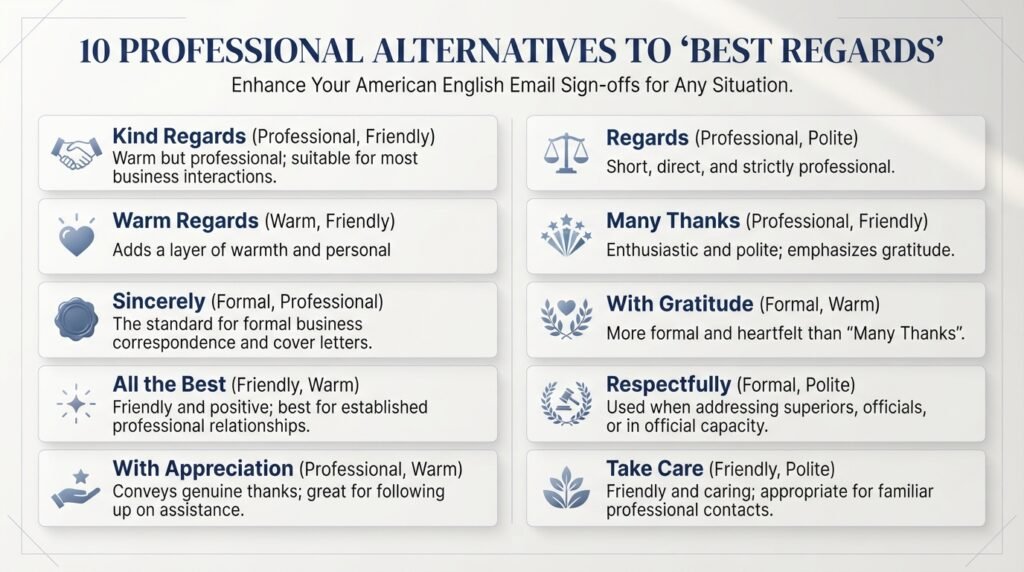
1. Kind Regards
Meaning
“Kind regards” is a polite and professional alternative to “best regards.” It has a slightly warmer feel while remaining appropriate for most workplace emails.
Best For
- Professional
- Polite
- Formal
- Friendly
Example 1
Thank you for reviewing the proposal, and I look forward to hearing your thoughts.
Kind regards,
Michael
Example 2
Please let me know if you need any additional information before Friday.
Kind regards,
Rachel
Quick Tip
Use “kind regards” when you want a dependable professional closing that works in many business situations.
2. Warm Regards
Meaning
“Warm regards” sounds more personal and friendly than “best regards.” It works particularly well when you already have an established relationship with the recipient.
Best For
- Warm
- Friendly
- Professional
- Polite
Example 1
It was wonderful speaking with you about the upcoming project.
Warm regards,
Daniel
Example 2
I appreciate your continued support and look forward to working together again.
Warm regards,
Emily
Quick Tip
Choose “warm regards” when you want your email to feel professional but not distant.
3. Sincerely
Meaning
“Sincerely” is a classic formal sign-off that communicates respect and professionalism. It is especially common in business letters, official correspondence, and messages where a more traditional tone is appropriate.
Best For
- Formal
- Professional
- Polite
Example 1
Thank you for considering my application for the marketing position.
Sincerely,
James Carter
Example 2
I appreciate your time and consideration regarding this request.
Sincerely,
Laura Bennett
Quick Tip
Use “sincerely” when writing a formal letter or communicating with someone you do not know well.
4. All the Best
Meaning
“All the best” is a friendly, relaxed closing that expresses goodwill. It is less formal than “best regards,” making it a good choice for colleagues, clients you know well, or professional contacts with whom you have a comfortable relationship.
Best For
- Casual
- Friendly
- Warm
- Polite
Example 1
Good luck with the presentation tomorrow. I’m sure it will go well.
All the best,
Chris
Example 2
Thanks again for your help with the report. Have a great weekend!
All the best,
Megan
Quick Tip
Use “all the best” when your email is professional but has a relaxed, conversational tone.
5. With Appreciation
Meaning
“With appreciation” clearly expresses gratitude toward the recipient. It is useful when someone has helped you, provided information, or taken time to assist with something important.
Best For
- Professional
- Warm
- Polite
- Formal
Example 1
Thank you for taking the time to explain the new process to our team.
With appreciation,
Kevin
Example 2
Your assistance during the transition has been extremely helpful.
With appreciation,
Sophia
Quick Tip
Use this closing when appreciation is one of the main reasons you are writing.
6. Regards
Meaning
“Regards” is a concise and neutral email sign-off. It is slightly less warm than “best regards,” but it remains appropriate in many professional settings.
Best For
- Professional
- Formal
- Polite
Example 1
I have attached the revised contract for your review.
Regards,
Andrew
Example 2
Please confirm whether the proposed meeting time works for you.
Regards,
Jessica
Quick Tip
“Regards” works best when you want a straightforward, professional ending without adding extra warmth.
7. Many Thanks
Meaning
“Many thanks” is a friendly way to close a message while emphasizing gratitude. It works naturally when the recipient has helped you or when you are asking for assistance.
Best For
- Friendly
- Warm
- Professional
- Polite
Example 1
I appreciate you sending those documents so quickly.
Many thanks,
Oliver
Example 2
Thanks for making time for the call and sharing your recommendations.
Many thanks,
Hannah
Quick Tip
Use “many thanks” when you want your sign-off to acknowledge the recipient’s effort.
8. With Gratitude
Meaning
“With gratitude” is a heartfelt closing that places more emphasis on appreciation than ordinary professional sign-offs. It can work well when someone has provided meaningful assistance or support.
Best For
- Warm
- Formal
- Polite
Example 1
Your guidance made a significant difference during this project.
With gratitude,
Nathan
Example 2
Thank you for your generosity and for taking the time to help our team.
With gratitude,
Claire
Quick Tip
Reserve “with gratitude” for situations where genuine appreciation is central to your message.
9. Respectfully
Meaning
“Respectfully” conveys a strong sense of courtesy and respect. It is more formal than “best regards” and is most appropriate for official, sensitive, or hierarchical communication.
Best For
- Formal
- Professional
- Polite
Example 1
Thank you for considering my request and reviewing the supporting documents.
Respectfully,
Thomas Reed
Example 2
I appreciate your consideration of the concerns outlined above.
Respectfully,
Maria Lopez
Quick Tip
Use “respectfully” sparingly because its formal tone may feel too serious for an ordinary workplace email.
10. Take Care
Meaning
“Take care” is a warm and informal closing that expresses friendly goodwill. It is usually better suited to people you know rather than highly formal business contacts.
Best For
- Casual
- Friendly
- Warm
Example 1
It was great catching up with you. Let’s talk again next week.
Take care,
Ben
Example 2
Thanks for your help today. I hope you have a relaxing weekend.
Take care,
Samantha
Quick Tip
Use “take care” when the relationship is friendly and the email does not require a formal business tone.
Comparison Table
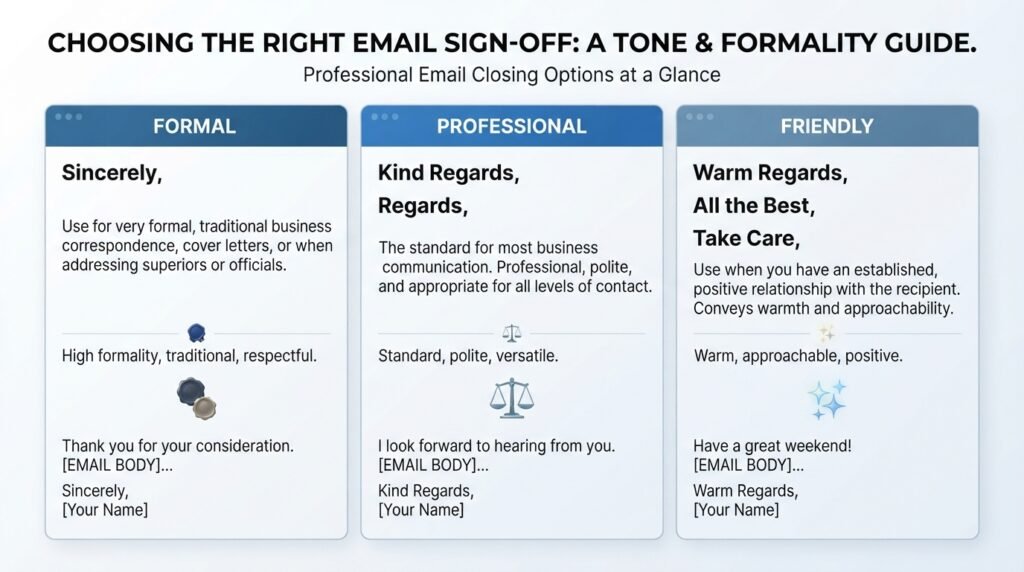
| Alternative | Best Used In | Tone |
| Kind regards | Professional emails | Polite, friendly |
| Warm regards | Professional relationships | Warm, personable |
| Sincerely | Formal letters and applications | Formal, respectful |
| All the best | Friendly professional emails | Casual, warm |
| With appreciation | Thank-you messages | Grateful, professional |
| Regards | Routine business emails | Neutral, professional |
| Many thanks | Requests and thank-you emails | Friendly, appreciative |
| With gratitude | Meaningful thank-you messages | Warm, heartfelt |
| Respectfully | Formal or sensitive correspondence | Very formal, respectful |
| Take care | Informal professional relationships | Casual, friendly |
Common Mistakes

1. Using Casual Phrases in Formal Emails
Closings such as “take care” may sound too relaxed in a formal application, legal letter, or first-contact business email. When the situation is formal, choose “sincerely,” “kind regards,” or “respectfully.”
2. Choosing Overly Formal Language
The opposite problem can also make an email feel unnatural. Using “respectfully” with a close coworker may sound unnecessarily stiff when “all the best” would feel more comfortable.
3. Repeating the Same Phrase
Using “best regards” in every email is not technically wrong, but it can become repetitive. Rotate your closing when the relationship or purpose of the message changes.
4. Forgetting the Context
A sign-off should match the rest of your message. A warm thank-you email may benefit from “with appreciation,” while a formal application may call for “sincerely.”
5. Sounding Insincere
Do not choose an emotional closing simply because it sounds sophisticated. “With gratitude” should communicate genuine appreciation, not serve as decoration at the end of an ordinary message.
Frequently Asked Questions
What is the best alternative to “best regards”?
For most professional emails, “kind regards” is an excellent alternative to “best regards.” It sounds polished, courteous, and friendly without becoming overly formal. If you want something warmer, try “warm regards” or “all the best.” For formal letters, “sincerely” is often a better choice.
Is “kind regards” better than “best regards”?
Neither phrase is universally better. “Kind regards” tends to sound slightly warmer and more personable, while “best regards” is neutral and widely accepted. Both are appropriate for professional communication, so your choice can depend on the relationship and overall tone of the email.
Can I use “warm regards” in a professional email?
Yes, “warm regards” can work very well in professional emails. It is especially suitable when you already know the recipient or want to sound friendly and appreciative. However, for a very formal first contact, “sincerely” or “kind regards” may be a safer choice.
Is “sincerely” too formal for an email?
“Sincerely” is somewhat more formal than common email closings such as “best regards” or “kind regards,” but it is not inappropriate. It works particularly well for job applications, official correspondence, business letters, and messages to people you do not know personally.
What can I say instead of “best regards” to a colleague?
For a colleague, you have several natural choices. “Kind regards” is professional, while “all the best,” “many thanks,” or “take care” can sound more relaxed. Choose based on your relationship and the tone of the conversation rather than trying to make every message sound formal.
What is a friendly alternative to “best regards”?
“All the best” is one of the most natural friendly alternatives. “Warm regards” is another good choice when you want to maintain a professional tone while adding a personal touch. “Take care” is even more casual and is best for people you already know well.
What should I use instead of “best regards” in a thank-you email?
For a thank-you email, “with appreciation” or “many thanks” can work especially well because the closing reinforces the purpose of your message. “With gratitude” is another option when the recipient provided meaningful or personal support.
Is “regards” professional?
Yes. “Regards” is a professional and neutral email closing. It is concise and works well for routine workplace communication, especially when you want to keep your message straightforward. However, it may feel slightly less warm than “best regards” or “kind regards.”
Conclusion
Knowing what’s another way to say best regards gives you more flexibility when writing professional emails and everyday messages. The right closing depends on your relationship with the recipient, the purpose of your message, and the tone you want to create.
Choose “kind regards” for a reliable professional option, “sincerely” for formal correspondence, and “warm regards” when you want to sound more personal. For a relaxed email, “all the best” works naturally, while “with appreciation” and “with gratitude” are useful when you want to emphasize thanks.
Sarah Whitfield is the founder and lead editor of Anchors Press. With a background in copyediting and content strategy, she reviews every guide for accuracy, tone, and everyday usefulness before it’s published.