
Finding another way to say “I completely understand” can make your conversations sound more natural, thoughtful, and appropriate for the situation.
The phrase is useful when you want to show that you understand someone’s feelings, explanation, opinion, or point of view. However, using the same wording repeatedly can make your communication feel predictable.
The good news is that English offers many natural alternatives. Some sound professional, while others are warmer, more casual, or more empathetic.
What Does “Another Way to Say I Completely Understand” Mean?
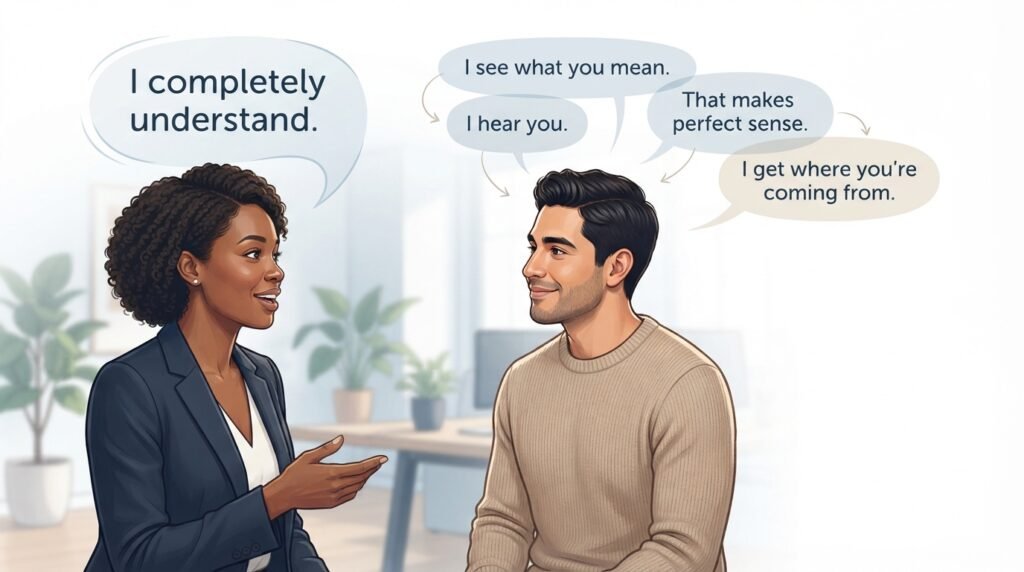
The phrase “I completely understand” means that you fully grasp what another person is saying, feeling, or experiencing.
People commonly use it when responding to an explanation, concern, disagreement, request, or personal situation. For example, you might say it to a coworker explaining a problem or to a friend sharing something difficult.
An alternative can help you communicate the same basic idea while adding a specific tone, such as empathy, agreement, reassurance, or professionalism.
Why Use Other Ways to Say “I Completely Understand”?
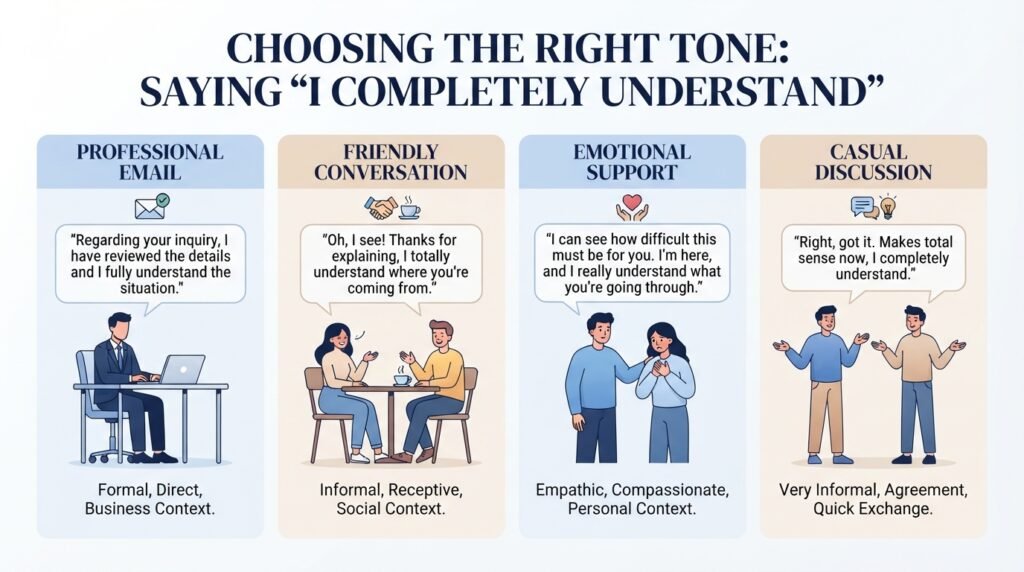
Different situations call for different levels of warmth and formality. Saying “I completely understand” every time may also sound repetitive.
Using alternatives can help you:
- Avoid repeating the same phrase.
- Sound more natural in everyday conversations.
- Show empathy more clearly.
- Communicate professionally without sounding stiff.
- Express agreement or understanding more precisely.
- Adapt your tone to the person and situation.
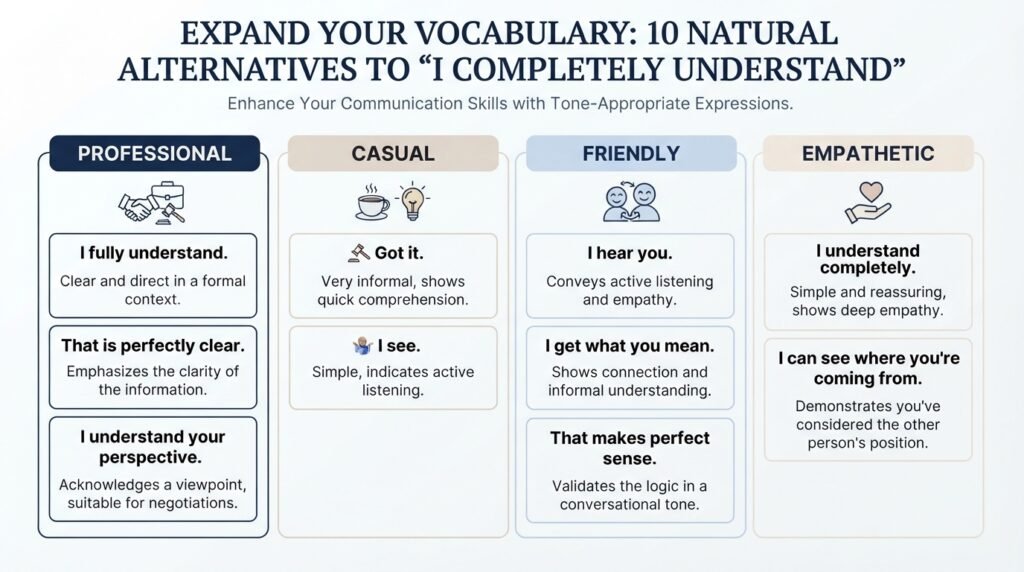
10 Best Other Ways to Say “I Completely Understand”
1. I Fully Understand
Meaning
“I fully understand” communicates that you have a complete understanding of someone’s explanation, concern, or position. It is very close in meaning to “I completely understand” but can sound slightly more polished.
Best For
- Professional
- Formal
- Polite
Example 1
I fully understand your concern about the project deadline.
Example 2
I fully understand why you need more time to review the proposal.
Quick Tip
Use this phrase in workplace conversations and emails when you want to sound clear, respectful, and professional.
2. I Understand Where You’re Coming From
Meaning
This phrase shows that you understand another person’s perspective, even if you do not necessarily agree with it. It often communicates empathy and respect.
Best For
- Friendly
- Warm
- Polite
- Professional
Example 1
I understand where you’re coming from, especially after what happened last week.
Example 2
I understand where you’re coming from, but I think we may have another option.
Quick Tip
This is especially useful during disagreements because it acknowledges someone’s perspective without automatically agreeing with them.
3. I See What You Mean
Meaning
“I see what you mean” means that you now understand someone’s point or explanation. It is natural and widely used in everyday American English.
Best For
- Casual
- Friendly
- Polite
Example 1
Oh, I see what you mean about making the headline shorter.
Example 2
I see what you mean—the new layout does make the page easier to read.
Quick Tip
Use it when someone has explained an idea and you want to show that their point has become clear.
4. That Makes Perfect Sense
Meaning
“That makes perfect sense” tells someone that their explanation or reasoning is clear and logical. It often communicates both understanding and agreement.
Best For
- Casual
- Friendly
- Warm
- Professional
Example 1
That makes perfect sense. We should finish the urgent tasks before starting anything new.
Example 2
That makes perfect sense, given how much traffic the website received yesterday.
Quick Tip
Use this when you want to reassure someone that their reasoning is understandable and reasonable.
5. I Totally Understand
Meaning
“I totally understand” is an informal and friendly version of “I completely understand.” It emphasizes strong understanding while keeping the conversation relaxed.
Best For
- Casual
- Friendly
- Warm
Example 1
I totally understand why you don’t want to make a decision right now.
Example 2
I totally understand—you’ve had a lot going on lately.
Quick Tip
Because “totally” is conversational, choose a more formal alternative for business letters or highly professional communication.
6. I Hear You
Meaning
“I hear you” can mean more than simply listening. In many conversations, it communicates that you recognize and acknowledge someone’s feelings, concerns, or frustration.
Best For
- Casual
- Friendly
- Warm
Example 1
I hear you, and I know this situation has been frustrating.
Example 2
I hear you. You want a solution that works for everyone on the team.
Quick Tip
Use this phrase when emotional acknowledgment matters more than simply confirming that you understood the facts.
7. I Understand Completely
Meaning
“I understand completely” has almost the same meaning as “I completely understand,” but the word order changes the emphasis slightly. It is direct, clear, and neutral.
Best For
- Professional
- Formal
- Polite
Example 1
I understand completely why the schedule needs to change.
Example 2
I understand completely and appreciate you explaining the situation.
Quick Tip
This is a safe alternative when you want to stay close to the original phrase without sounding overly casual.
8. I Know Exactly What You Mean
Meaning
“I know exactly what you mean” emphasizes that you understand someone’s specific point or experience. It can create a strong sense of connection when you have experienced something similar.
Best For
- Casual
- Friendly
- Warm
Example 1
I know exactly what you mean when you say the instructions are confusing.
Example 2
I know exactly what you mean—I had the same reaction when I first saw the results.
Quick Tip
Use this when you genuinely understand the person’s point. Avoid it when you cannot confidently relate to their experience.
9. I Understand Your Perspective
Meaning
“I understand your perspective” focuses on recognizing someone’s viewpoint. It sounds measured and respectful, making it useful when people have different opinions.
Best For
- Professional
- Formal
- Polite
Example 1
I understand your perspective and appreciate you explaining your concerns.
Example 2
I understand your perspective, although I reached a different conclusion.
Quick Tip
This phrase works particularly well in professional discussions where you want to acknowledge someone’s opinion without implying agreement.
10. I Get It
Meaning
“I get it” is a short, informal way to say that you understand. Depending on your tone, it can sound supportive and friendly or slightly impatient.
Best For
- Casual
- Friendly
Example 1
I get it—you want to make sure everything is ready before the launch.
Example 2
I get it. You’ve been waiting for an answer for several days.
Quick Tip
Use “I get it” with people you know well. In formal settings, choose “I fully understand” or “I understand your perspective” instead.
Comparison Table
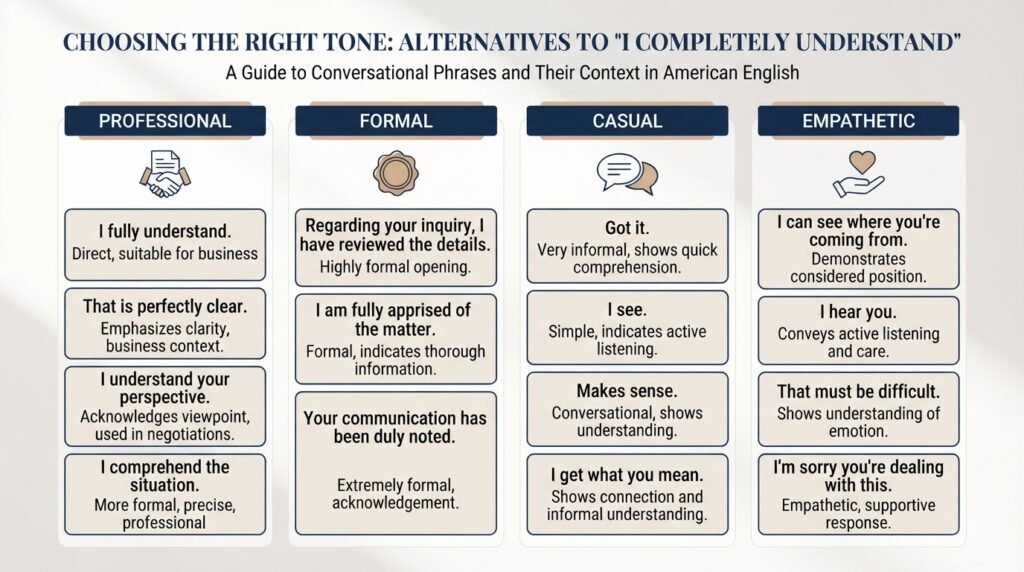
| Alternative | Best Used In | Tone |
| I Fully Understand | Work emails, professional discussions | Professional, polite |
| I Understand Where You’re Coming From | Disagreements, personal conversations | Empathetic, respectful |
| I See What You Mean | Everyday conversations | Casual, natural |
| That Makes Perfect Sense | Explanations and agreements | Positive, reassuring |
| I Totally Understand | Informal conversations | Friendly, casual |
| I Hear You | Emotional or supportive conversations | Warm, empathetic |
| I Understand Completely | Professional and formal settings | Neutral, polished |
| I Know Exactly What You Mean | Personal conversations | Friendly, relatable |
| I Understand Your Perspective | Workplace disagreements | Professional, respectful |
| I Get It | Casual conversations | Informal, direct |
Common Mistakes
1. Using Casual Phrases in Professional Emails
Phrases such as “I get it” and “I totally understand” can sound too informal in some business settings. Use “I fully understand” or “I understand your perspective” when professionalism matters.
2. Choosing Overly Formal Language
Not every conversation needs polished corporate language. Saying “I understand your perspective” to a close friend may feel unnecessarily formal when “I see what you mean” would sound more natural.
3. Repeating the Same Phrase
Using “I completely understand” several times in the same conversation can become repetitive. Vary your wording based on whether you want to express understanding, empathy, or agreement.
4. Forgetting Context
Understanding someone’s argument is not always the same as agreeing with it. For example, “I understand where you’re coming from” can acknowledge a viewpoint without saying that you share it.
5. Sounding Insincere
Avoid saying you completely understand when you have not actually understood the person’s situation. A genuine response is more effective than an automatic phrase.
Frequently Asked Questions
What is a professional way to say “I completely understand”?
“I fully understand” is one of the best professional alternatives. You can also say “I understand your perspective” when responding to someone’s viewpoint or concern. Both options sound respectful without being overly casual, making them suitable for workplace conversations, business emails, and professional discussions.
What is a casual way to say “I completely understand”?
“I get it,” “I totally understand,” and “I see what you mean” are natural casual alternatives. They work well with friends, family members, and people you know comfortably. “I get it” is especially short and conversational, while “I totally understand” adds stronger emphasis.
How can I say “I understand” in an empathetic way?
“I hear you” and “I understand where you’re coming from” are strong choices when you want to show empathy. These phrases recognize the person’s feelings or perspective rather than simply confirming that you understood their words. They are useful during emotional conversations or disagreements.
Is “I understand where you’re coming from” the same as “I agree”?
No. “I understand where you’re coming from” means you recognize someone’s reasoning or perspective, but it does not necessarily mean you agree. This makes it especially useful during disagreements because you can acknowledge another person’s position while still expressing your own opinion.
What is another way to say “I completely understand” in an email?
For a professional email, try “I fully understand,” “I understand your perspective,” or “I understand completely.” These phrases maintain a respectful tone without sounding too casual. The best option depends on whether you are acknowledging a concern, responding to an explanation, or discussing a difference of opinion.
Can I say “I totally understand” at work?
Yes, but context matters. “I totally understand” is acceptable in relaxed workplaces and friendly conversations with coworkers, but it may sound informal in formal correspondence. If you are writing to a client, manager, or executive, “I fully understand” is usually a safer choice.
What can I say instead of “I completely understand your feelings”?
You could say “I hear you,” “I understand how you feel,” or “I understand where you’re coming from.” Each phrase has a slightly different focus. “I hear you” emphasizes acknowledgment, while “I understand where you’re coming from” focuses more on the person’s perspective.
Is “I see what you mean” a good alternative to “I completely understand”?
Yes. “I see what you mean” is a natural choice when someone has explained an idea, argument, or point that was not immediately clear. It is more conversational than “I fully understand,” so it works particularly well in everyday American English.
Conclusion
Knowing another way to say “I completely understand” gives you more flexibility in conversations, emails, and professional communication. The best alternative depends on what you want to communicate beyond basic understanding.
The key is to match your words to the situation and use language that genuinely reflects your response. For more help with understanding English expressions, Cambridge Dictionary is a useful reference.
Sarah Whitfield is the founder and lead editor of Anchors Press. With a background in copyediting and content strategy, she reviews every guide for accuracy, tone, and everyday usefulness before it’s published.