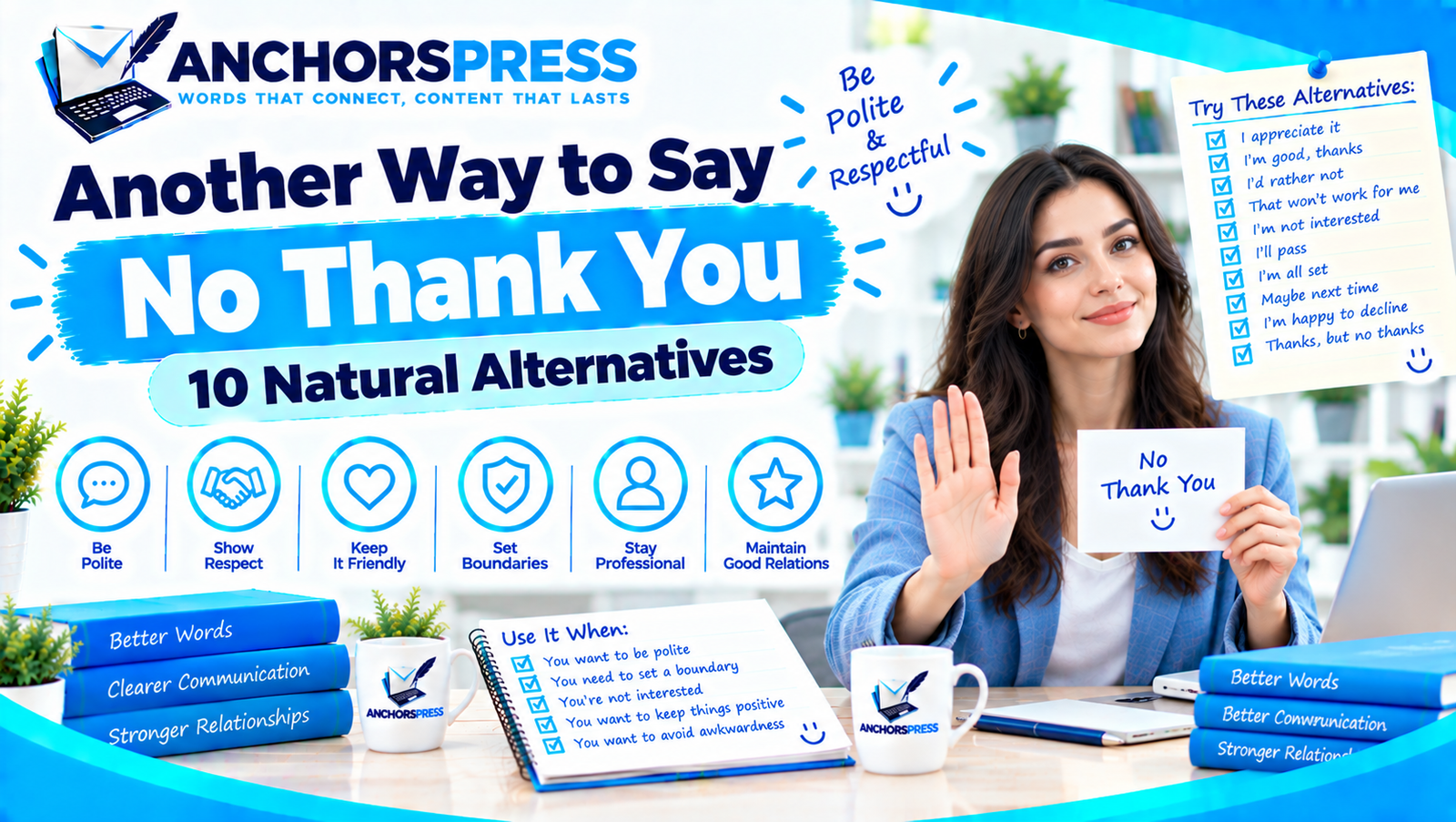
Sometimes, a simple “no thank you” is exactly right. However, repeating the same phrase can make your conversations sound predictable, especially when you communicate often at work, with friends, or in social situations.
Knowing different ways to decline an offer lets you choose words that fit the moment. You might want to sound warm, appreciative, casual, firm, or professional without being rude.
What Does “Another Way to Say No Thank You” Mean?
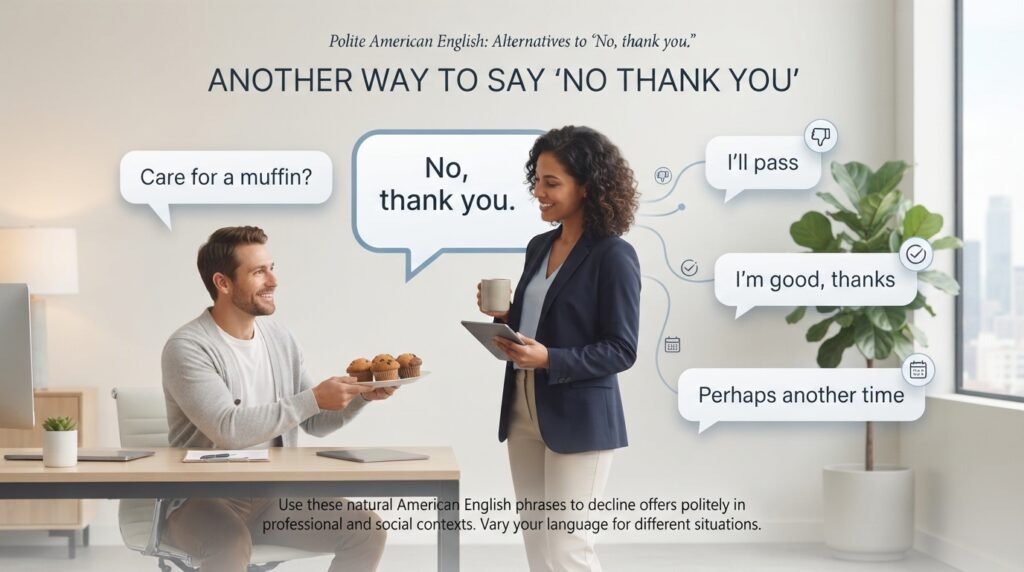
“Another way to say no thank you” means a different phrase you can use to politely reject an offer, invitation, suggestion, or request.
People commonly use alternatives when someone offers food, assistance, an invitation, a service, or an opportunity they do not want. The right expression can help you communicate your decision while maintaining a respectful tone.
For example, “I’ll pass” sounds casual, while “I appreciate the offer, but I’ll decline” sounds more professional.
Why Use Other Ways to Say “No Thank You”?
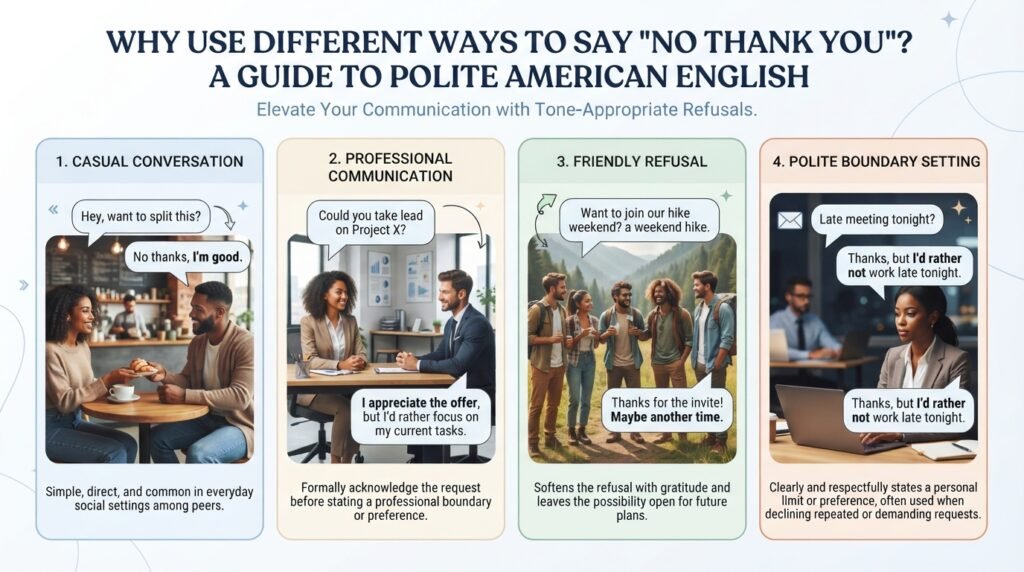
Using different expressions can make your communication more natural and appropriate for different situations.
Other phrases can help you:
- Avoid repeating the same expression.
- Sound more conversational.
- Show appreciation while declining.
- Adjust your tone for work or social settings.
- Make a refusal sound softer when needed.
- Give a clear response without sounding unnecessarily harsh.
10 Best Other Ways to Say “No Thank You”
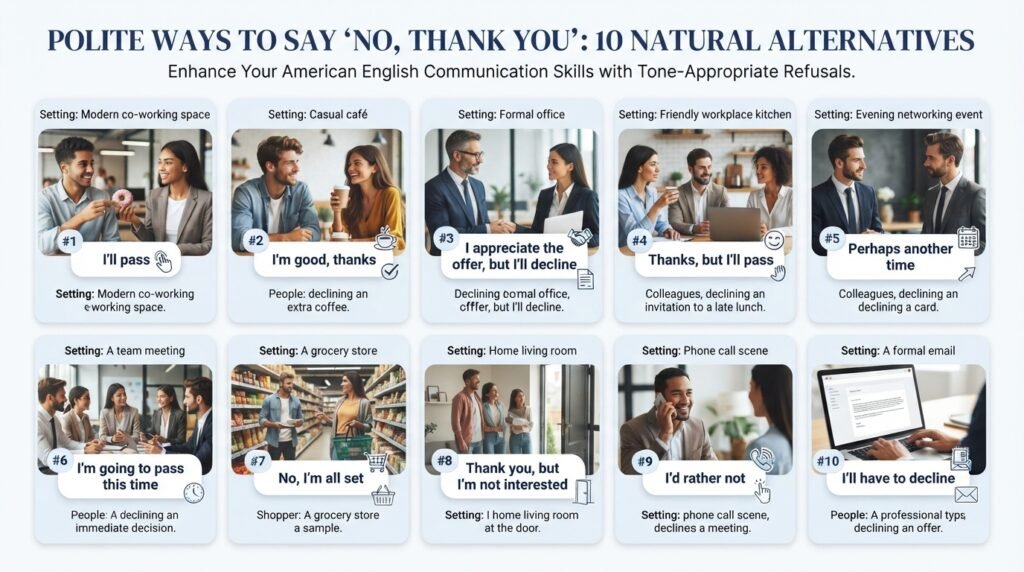
1. I’ll Pass
Meaning
“I’ll pass” is a short, natural way to decline something you do not want. It is common in everyday American English and usually sounds relaxed rather than rude.
Best For
- Casual
- Friendly
- Polite
Example 1
“Thanks for offering another slice, but I’ll pass.”
Example 2
“Everyone is going out after work, but I’ll pass tonight.”
Quick Tip
Use “I’ll pass” with friends, family, or familiar coworkers. For formal situations, choose a more polished expression.
2. I’m Good, Thanks
Meaning
“I’m good, thanks” politely indicates that you do not need or want what someone is offering. It sounds friendly and conversational.
Best For
- Casual
- Friendly
- Warm
- Polite
Example 1
“Would you like some more coffee?”
“I’m good, thanks.”
Example 2
“Do you need a ride home?”
“I’m good, thanks. I can walk from here.”
Quick Tip
This phrase works especially well when you want to decline without making the situation feel formal.
3. I Appreciate the Offer, but I’ll Decline
Meaning
This expression combines appreciation with a clear refusal. It is respectful and professional without sounding overly stiff.
Best For
- Professional
- Formal
- Polite
Example 1
“I appreciate the offer, but I’ll decline the additional assignment.”
Example 2
“I appreciate the offer, but I’ll decline the invitation this time.”
Quick Tip
Use this phrase when you want your refusal to sound thoughtful and respectful in workplace communication.
4. Thanks, but I’ll Pass
Meaning
“Thanks, but I’ll pass” adds appreciation to a casual refusal. It feels warmer than simply saying “no.”
Best For
- Casual
- Friendly
- Warm
- Polite
Example 1
“Want to try the new restaurant tonight?”
“Thanks, but I’ll pass.”
Example 2
“Would you like to join us for the game?”
“Thanks, but I’ll pass tonight.”
Quick Tip
This is a useful everyday option when you want to decline while keeping your response friendly.
5. Perhaps Another Time
Meaning
“Perhaps another time” politely suggests that you are declining now but may be interested later. It can soften a refusal when you do not want to sound final.
Best For
- Formal
- Friendly
- Warm
- Polite
Example 1
“Thank you for inviting me to dinner. Perhaps another time.”
Example 2
“I can’t attend the event this weekend, but perhaps another time.”
Quick Tip
Use it when you genuinely want to leave the possibility open. Avoid it if you have no interest in accepting later.
6. I’m Going to Pass This Time
Meaning
“I’m going to pass this time” gives a clear but relatively gentle refusal. Adding “this time” can make the response sound less absolute.
Best For
- Casual
- Friendly
- Polite
Example 1
“Thanks for asking me to join the trip, but I’m going to pass this time.”
Example 2
“I’m going to pass this time, but I hope you all have fun.”
Quick Tip
This works well when you want to decline one opportunity without suggesting that you will always say no.
7. No, I’m All Set
Meaning
“No, I’m all set” means you have everything you need and do not require what someone is offering. It is especially common in everyday American conversations.
Best For
- Casual
- Friendly
- Polite
Example 1
“Do you need another bag?”
“No, I’m all set.”
Example 2
“Would you like me to print another copy?”
“No, I’m all set, thanks.”
Quick Tip
This phrase is ideal when declining an offer of help, an extra item, or something you simply do not need.
8. Thank You, but I’m Not Interested
Meaning
This phrase clearly communicates that you do not want an offer or opportunity. It remains polite because it begins with appreciation.
Best For
- Professional
- Formal
- Polite
Example 1
“Thank you, but I’m not interested in changing my current service plan.”
Example 2
“Thank you for reaching out, but I’m not interested at this time.”
Quick Tip
Use this when you want your refusal to be clear. It is especially useful for sales offers and unsolicited proposals.
9. I’d Rather Not
Meaning
“I’d rather not” is a gentle way to say that you do not want to do something. It focuses on your preference instead of criticizing the offer.
Best For
- Casual
- Friendly
- Polite
- Warm
Example 1
“Would you like to discuss the issue right now?”
“I’d rather not, if that’s okay.”
Example 2
“Do you want to share your plans with everyone?”
“I’d rather not.”
Quick Tip
This expression is useful when you want to set a boundary without giving a long explanation.
10. I’ll Have to Decline
Meaning
“I’ll have to decline” is a clear and courteous way to reject an invitation, request, or opportunity. It sounds more formal than everyday expressions such as “I’ll pass.”
Best For
- Professional
- Formal
- Polite
Example 1
“Thank you for the invitation, but I’ll have to decline.”
Example 2
“I appreciate you thinking of me, but I’ll have to decline the project.”
Quick Tip
Choose this phrase for professional emails, formal invitations, or situations where a straightforward but respectful refusal is appropriate.
Comparison Table
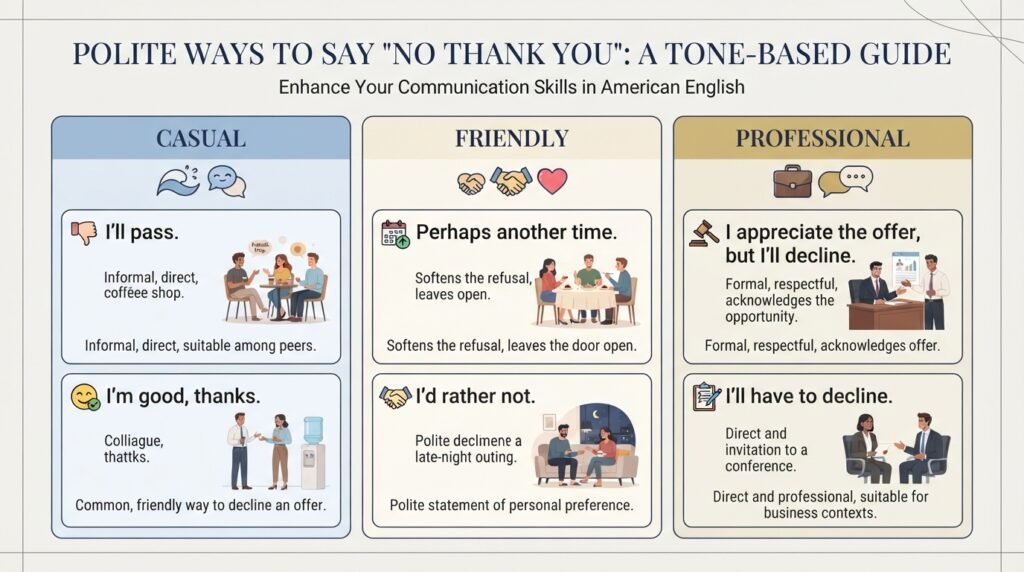
| Alternative | Best Used In | Tone |
| I’ll pass | Everyday conversations | Casual |
| I’m good, thanks | Offers and everyday situations | Friendly |
| I appreciate the offer, but I’ll decline | Workplace communication | Professional |
| Thanks, but I’ll pass | Social conversations | Warm |
| Perhaps another time | Invitations | Polite |
| I’m going to pass this time | Casual refusals | Friendly |
| No, I’m all set | Offers of help or extras | Relaxed |
| Thank you, but I’m not interested | Offers and sales | Clear |
| I’d rather not | Personal boundaries | Gentle |
| I’ll have to decline | Formal invitations or requests | Formal |
Common Mistakes
1. Using Casual Phrases in Professional Emails
Expressions such as “I’ll pass” may sound too relaxed in certain workplace situations. A phrase like “I’ll have to decline” is usually more appropriate for formal communication.
2. Choosing Overly Formal Language
You do not need to sound stiff when talking to friends or family. Saying “I’ll have to decline your generous proposal” in a casual conversation can feel unnatural.
3. Repeating the Same Phrase
Using “no thank you” every time you decline can make your communication repetitive. Having a few alternatives gives you more flexibility.
4. Forgetting the Context
The same refusal can sound different depending on the situation. Consider whether you are responding to a coworker, friend, salesperson, family member, or stranger.
5. Sounding Insincere
Adding “thanks” does not automatically make a refusal warm. Your tone and body language should match your words, especially during face-to-face conversations.
Frequently Asked Questions
What is another way to say “no thank you” politely?
Some polite alternatives include “I appreciate the offer, but I’ll decline,” “perhaps another time,” “I’m good, thanks,” and “I’ll have to decline.” Your choice depends on the situation. For professional communication, use a more polished phrase, while casual conversations allow shorter expressions such as “I’ll pass.”
What is a casual way to say “no thank you”?
“I’ll pass” and “I’m good, thanks” are two natural casual alternatives. They work well when talking with friends, family, or people you know. “Thanks, but I’ll pass” is another friendly option when you want to acknowledge the offer before declining it.
How do you say “no thank you” professionally?
For professional situations, try “I appreciate the offer, but I’ll decline” or “I’ll have to decline.” These phrases communicate your decision clearly while maintaining a respectful tone. They work well in workplace conversations, professional emails, invitations, and responses to business proposals.
Is “I’ll pass” rude?
Usually, “I’ll pass” is not rude, especially in casual American English. However, tone and context matter. Saying it warmly can sound perfectly natural, while using it abruptly with a client, manager, or stranger may seem dismissive. In formal settings, choose a more courteous alternative.
What is a softer way to say “no thank you”?
“Perhaps another time” is one of the softer alternatives because it can leave the door open for a future opportunity. “I’d rather not” can also soften a refusal by presenting it as a personal preference rather than a rejection of the person making the offer.
How do you politely decline an invitation?
You can say “Thank you for inviting me, but I’ll have to decline” or “I really appreciate the invitation, but I can’t make it.” If you may be interested in attending another time, “Perhaps another time” is a warm way to keep the response positive.
What is another way to say “no thanks” in an email?
In an email, you can write “Thank you for the offer, but I’ll decline,” “I appreciate you reaching out, but I’m not interested,” or “Thank you for considering me, but I’ll have to pass.” Choose the wording based on how formal your relationship with the recipient is.
How can I say no without sounding rude?
Start by acknowledging the offer when appropriate, then give a clear but respectful refusal. Phrases such as “I appreciate the offer, but I’ll decline” or “I’m good, thanks” can communicate your decision without sounding unnecessarily harsh. You do not always need to provide a detailed explanation.
Conclusion
Knowing another way to say “no thank you” gives you more flexibility in everyday conversations, professional communication, and social situations. The best phrase depends on how direct, warm, or formal you want to sound.
The key is to match your words to the situation. A clear refusal can still be kind, respectful, and natural when you choose the right expression and deliver it sincerely. For more guidance on polite ways to communicate, explore English communication resources from the British Council.

Daniel Cho writes about professional communication, drawing on years spent training teams on clear, confident workplace writing — from emails to performance reviews.