
What Does “Another Way to Say Straight to the Point” Mean?

“Straight to the point” describes communication that focuses on the main idea without unnecessary information, side comments, or long explanations. A person who speaks this way gets to the important part quickly.
The phrase is common in everyday conversations, business emails, presentations, meetings, and writing. Someone might say, “Let me get straight to the point,” before explaining the main issue or request.
Looking for another way to say straight to the point can help you vary your language while keeping your message clear and focused.
Why Use Other Ways to Say “Straight to the Point”?
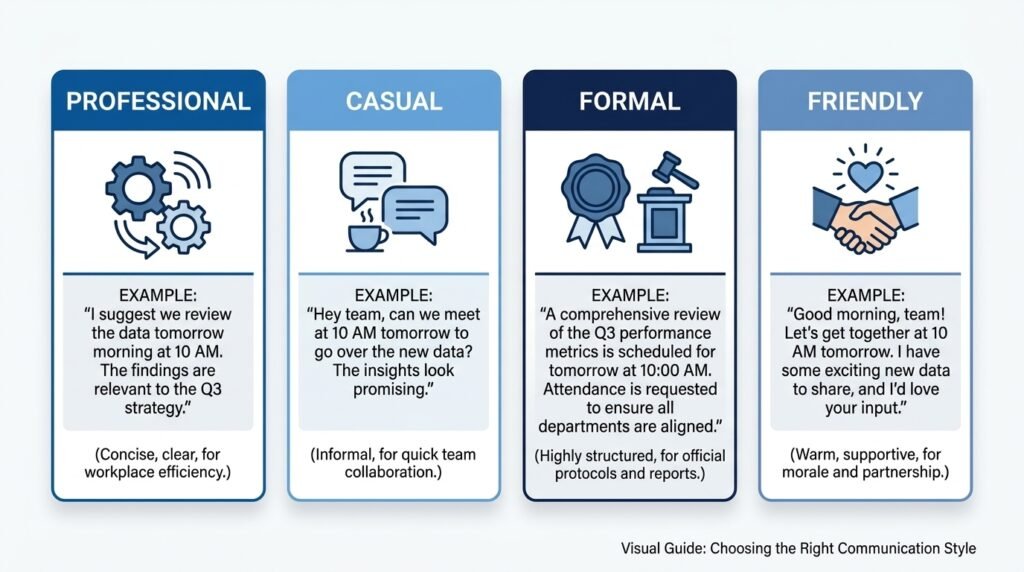
Different situations call for different levels of directness. While “straight to the point” is natural and widely understood, another expression may sound more polished, precise, or appropriate for your audience.
Using alternatives can help you:
- Avoid repeating the same phrase.
- Make professional writing more polished.
- Sound natural in casual conversations.
- Match the tone to your audience.
- Communicate ideas more efficiently.
- Show confidence and clarity.
10 Best Other Ways to Say “Straight to the Point”
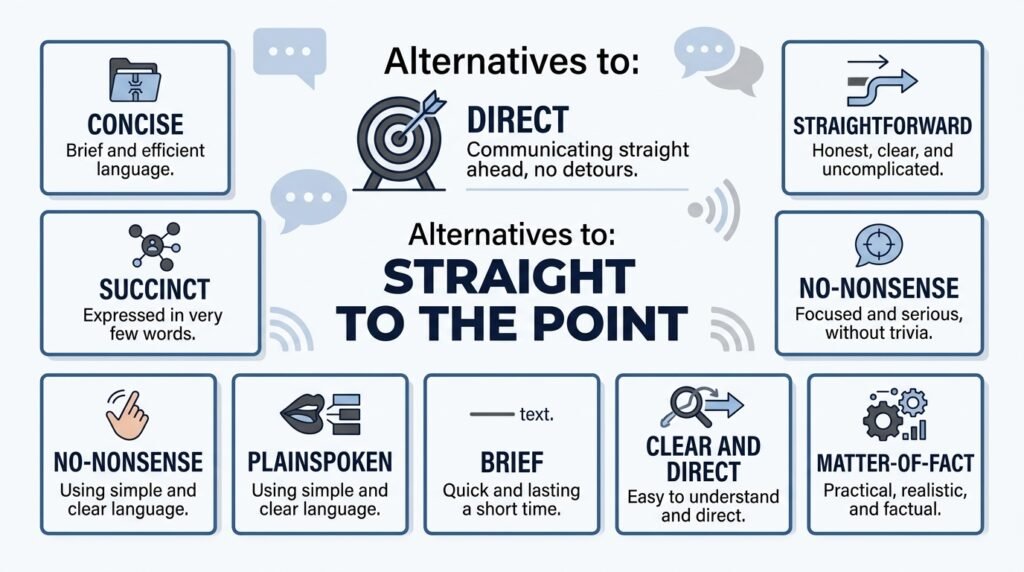
1. Concise
Meaning
“Concise” means expressing an idea clearly in few words without leaving out important information. It is one of the best choices for professional writing because it sounds polished without being overly formal.
Best For
- Professional
- Formal
- Polite
Example 1
Please keep your response concise so the team can review the main points quickly.
Example 2
Her concise explanation made the complicated proposal much easier to understand.
Quick Tip
Use “concise” when discussing writing, presentations, reports, emails, or explanations.
2. Direct
Meaning
“Direct” describes communication that clearly states what someone means without unnecessary wording or indirect hints. It can suggest confidence and honesty.
Best For
- Professional
- Formal
- Casual
- Polite
Example 1
I appreciate your direct answer because it helps me understand the situation.
Example 2
His direct communication style makes meetings shorter and more productive.
Quick Tip
Choose “direct” when clarity and honesty matter more than softness.
3. Straightforward
Meaning
“Straightforward” means simple, clear, and easy to understand. It can describe both communication and information that does not contain unnecessary complexity.
Best For
- Professional
- Casual
- Friendly
- Polite
Example 1
She gave me a straightforward explanation of how the new process works.
Example 2
We need a straightforward answer before we make the final decision.
Quick Tip
“Straightforward” is a safe all-purpose alternative that works in many situations.
4. Succinct
Meaning
“Succinct” means expressing something clearly and completely in very few words. It is especially useful when you want to emphasize efficiency and precision.
Best For
- Professional
- Formal
Example 1
The manager gave a succinct summary of the quarterly results.
Example 2
His succinct response answered every question without unnecessary detail.
Quick Tip
Use “succinct” when describing polished writing, summaries, answers, or presentations.
5. To the Point
Meaning
“To the point” is almost interchangeable with “straight to the point.” It means focusing on the relevant information and avoiding unnecessary details.
Best For
- Casual
- Friendly
- Professional
- Polite
Example 1
Her presentation was short and to the point.
Example 2
I like emails that are clear and to the point.
Quick Tip
This is the easiest replacement when you want a natural phrase with nearly the same meaning.
6. No-Nonsense
Meaning
“No-nonsense” describes someone or something practical, direct, and free from unnecessary complications. It often carries a confident or slightly informal tone.
Best For
- Casual
- Friendly
- Professional
Example 1
Our new supervisor has a no-nonsense approach to solving problems.
Example 2
She gave me a no-nonsense explanation of what needed to change.
Quick Tip
Use “no-nonsense” carefully in formal settings because it can sound more forceful than “concise” or “straightforward.”
7. Plainspoken
Meaning
“Plainspoken” describes language that is simple, honest, and easy to understand. It suggests that someone avoids complicated words or indirect language.
Best For
- Friendly
- Casual
- Polite
Example 1
His plainspoken advice helped me see the problem more clearly.
Example 2
The author uses a plainspoken style that makes the subject accessible to everyone.
Quick Tip
“Plainspoken” is a strong choice when you want to emphasize honesty and simplicity.
8. Brief
Meaning
“Brief” means short in length or duration. It can describe an answer, conversation, explanation, meeting, or message that does not take more time than necessary.
Best For
- Professional
- Formal
- Casual
- Polite
Example 1
I’ll give you a brief update before we start the meeting.
Example 2
The client asked for a brief explanation of the proposed changes.
Quick Tip
Use “brief” when the main idea is keeping something short rather than emphasizing bluntness.
9. Clear and Direct
Meaning
“Clear and direct” emphasizes two qualities at once: easy-to-understand language and an obvious statement of the main point. It works particularly well when discussing communication style.
Best For
- Professional
- Formal
- Polite
Example 1
Please give the customer a clear and direct explanation of the policy.
Example 2
Her clear and direct feedback helped the team correct the issue quickly.
Quick Tip
Use this phrase when you want to praise communication that is both understandable and unambiguous.
10. Matter-of-Fact
Meaning
“Matter-of-fact” describes a calm, practical way of communicating information without excessive emotion or unnecessary commentary. It focuses on the facts.
Best For
- Professional
- Formal
- Casual
Example 1
He gave a matter-of-fact explanation of what went wrong.
Example 2
Her matter-of-fact response kept the discussion focused on the actual problem.
Quick Tip
Use “matter-of-fact” when the tone is calm and factual, rather than simply short.
Comparison Table
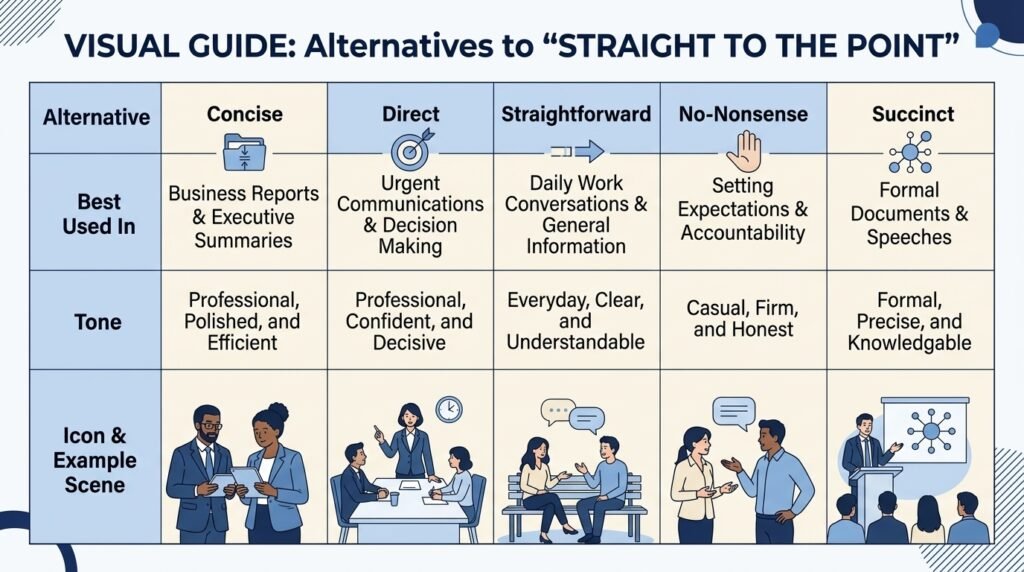
| Alternative | Best Used In | Tone |
| Concise | Emails, reports, business writing | Professional |
| Direct | Conversations, feedback, decisions | Confident |
| Straightforward | Everyday and professional communication | Clear |
| Succinct | Reports, summaries, presentations | Formal |
| To the point | Conversations, emails, presentations | Natural |
| No-nonsense | Practical conversations and workplace settings | Firm |
| Plainspoken | Advice, explanations, everyday speech | Honest |
| Brief | Messages, updates, meetings | Neutral |
| Clear and direct | Feedback, instructions, business communication | Professional |
| Matter-of-fact | Factual discussions and explanations | Calm |
Common Mistakes
- Using casual phrases in professional emails
Expressions such as “no-nonsense” may sound too informal for certain business situations. “Concise” or “straightforward” is often safer. - Choosing overly formal language
Words such as “succinct” may sound unnatural in a casual conversation. Use simpler alternatives when speaking with friends or coworkers. - Assuming every alternative means exactly the same thing
“Brief” focuses on length, while “direct” emphasizes clarity. “Matter-of-fact” focuses more on emotional tone. - Forgetting the audience
A phrase that works well with a close colleague may not be appropriate when speaking with a customer, manager, or client. - Sounding too blunt
Being direct does not mean being rude. Add polite language when delivering criticism, requests, or sensitive information.
Frequently Asked Questions
What is another way to say “straight to the point”?
Common alternatives include “concise,” “direct,” “straightforward,” “succinct,” “to the point,” and “clear and direct.” The best choice depends on the context. For professional writing, “concise” and “straightforward” are especially useful, while “no-nonsense” works better when you want a stronger, more casual tone.
What is a professional way to say “straight to the point”?
“Concise,” “direct,” “straightforward,” and “succinct” are strong professional alternatives. For example, you could say, “Please provide a concise summary,” instead of asking someone to be “straight to the point.” These options sound polished and work well in emails, reports, meetings, and business documents.
What is a polite way to say “straight to the point”?
“Clear and direct” is a polite alternative because it emphasizes effective communication rather than bluntness. “Straightforward” is another good choice. For example, saying “Thank you for your straightforward explanation” can sound positive while recognizing that someone communicated clearly.
Is “concise” the same as “straight to the point”?
The two expressions are closely related, but they are not identical. “Concise” means using few words while retaining the important information. “Straight to the point” focuses more on getting directly to the main subject without unnecessary discussion or detours.
What is a casual way to say “straight to the point”?
“To the point,” “direct,” and “no-nonsense” can work well in casual communication. “To the point” is the closest natural replacement, while “no-nonsense” adds a stronger sense of practicality and confidence.
What does it mean when someone is straight to the point?
When someone is straight to the point, they communicate the main idea quickly and clearly. They usually avoid unnecessary explanations, small talk, or indirect language. This style can be useful in meetings and decision-making, although being too direct may sometimes come across as blunt.
Is “straightforward” a good synonym for “straight to the point”?
Yes. “Straightforward” is one of the most useful alternatives because it suggests that something is clear, simple, and easy to understand. However, it does not always mean short. A straightforward explanation can still contain several details if those details are useful.
What is another word for someone who gets straight to the point?
“Direct” is one of the best words for describing someone who gets straight to the point. Depending on the situation, you could also use “concise,” “plainspoken,” or “no-nonsense.” The right choice depends on whether you want to emphasize brevity, honesty, or a practical communication style.
Conclusion
Knowing another way to say straight to the point gives you more flexibility when communicating in professional, casual, and everyday situations. While “straight to the point” is perfectly natural, alternatives can help you express the exact quality you want.
Choose “concise” when you want to emphasize brevity, especially in professional writing. Use “direct” when clarity and honesty matter most, or “straightforward” for a versatile option that works almost anywhere. “Succinct” is ideal for polished formal communication, while “no-nonsense” adds a more confident and informal feel.
Sarah Whitfield is the founder and lead editor of Anchors Press. With a background in copyediting and content strategy, she reviews every guide for accuracy, tone, and everyday usefulness before it’s published.