
What Does “Another Way to Say Good Luck on Your Exam” Mean?

“Good luck on your exam” is a common way to encourage someone before a test. It shows that you hope they perform well and feel confident when the exam begins.
People often look for another way to say this phrase because they want their message to sound more personal or less repetitive. You might use a different expression in a text to a friend, a note to a student, or a professional message to a colleague.
The right alternative can also communicate more than luck. Some phrases focus on confidence, while others recognize preparation, effort, or emotional support.
Why Use Other Ways to Say “Good Luck on Your Exam”?
Using different expressions can make your encouragement feel more natural and appropriate to the situation.
- Avoid repetition: You can vary your wording when supporting several people.
- Sound more personal: A thoughtful phrase can feel more sincere than a standard expression.
- Match the situation: Some alternatives are better for friends, students, coworkers, or family members.
- Show encouragement: Certain phrases emphasize confidence rather than luck.
- Recognize effort: You can acknowledge the person’s preparation and hard work.
10 Best Other Ways to Say “Good Luck on Your Exam”
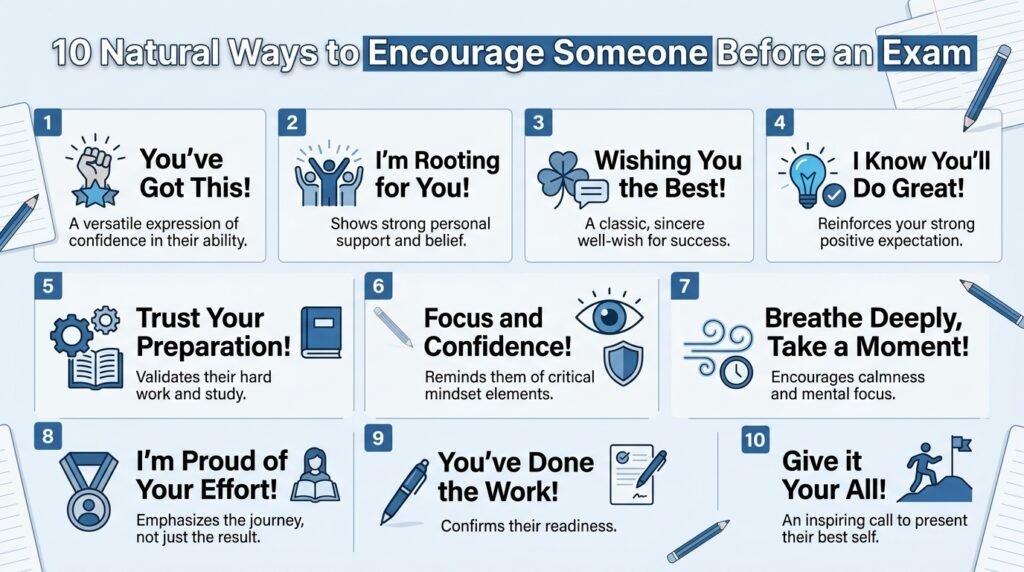
1. You’ve Got This
Meaning
“You’ve got this” is a confident and encouraging way to tell someone that you believe they can handle their exam. It shifts the focus from luck to the person’s ability and preparation.
Best For
- Casual
- Friendly
- Warm
Example 1
You’ve got this! Trust what you studied and take the exam one question at a time.
Example 2
You’ve got this, Sarah. You’ve prepared for weeks, so go in there with confidence.
Quick Tip
Use this phrase when you want to give someone a quick confidence boost before the exam.
2. I’m Rooting for You
Meaning
“I’m rooting for you” expresses personal support and shows that you genuinely want the person to succeed. It sounds warmer and more personal than simply wishing someone luck.
Best For
- Casual
- Friendly
- Warm
Example 1
I’m rooting for you on your chemistry exam tomorrow. I know how hard you’ve worked.
Example 2
No matter how nervous you feel, remember that I’m rooting for you.
Quick Tip
This is especially effective when you have a close relationship with the person taking the exam.
3. Wishing You the Best on Your Exam
Meaning
This is a polite and versatile alternative to “good luck.” It communicates positive wishes without sounding overly casual or emotional.
Best For
- Professional
- Formal
- Polite
- Friendly
Example 1
Wishing you the best on your exam tomorrow. I hope all your preparation pays off.
Example 2
Wishing you the best on your final exam and continued success in your studies.
Quick Tip
Choose this option when you need a safe expression that works in both personal and professional communication.
4. I Hope Your Exam Goes Well
Meaning
“I hope your exam goes well” is simple, natural, and sincere. Instead of directly telling someone to have good luck, it expresses your positive hope for their experience and results.
Best For
- Professional
- Polite
- Casual
- Friendly
Example 1
I hope your exam goes well tomorrow. Take a deep breath and trust your preparation.
Example 2
I hope your exam goes well and that you feel confident with the material.
Quick Tip
Use this phrase when you want your message to sound supportive without being overly enthusiastic.
5. Best of Luck With Your Exam
Meaning
“Best of luck with your exam” is a slightly more polished variation of the familiar “good luck.” It remains friendly while sounding appropriate for many different relationships.
Best For
- Polite
- Friendly
- Casual
Example 1
Best of luck with your exam on Friday. I hope everything goes smoothly.
Example 2
Best of luck with your statistics exam! You’ve put in a lot of time preparing for it.
Quick Tip
This is a straightforward choice when you want something familiar but slightly different from the original phrase.
6. I Hope All Your Hard Work Pays Off
Meaning
This expression recognizes the effort someone has already invested in studying. It offers encouragement while reminding them that their preparation matters.
Best For
- Warm
- Friendly
- Polite
Example 1
I hope all your hard work pays off when you take your biology exam tomorrow.
Example 2
You’ve spent so much time reviewing the material, and I hope all your hard work pays off.
Quick Tip
Use this when you know the person has been studying seriously and want to acknowledge their effort.
7. Go Show Them What You Know
Meaning
“Go show them what you know” is an upbeat way to encourage someone before an exam. It suggests confidence and reminds the person that the test is an opportunity to demonstrate their knowledge.
Best For
- Casual
- Friendly
- Warm
Example 1
Go show them what you know on that history exam tomorrow!
Example 2
You’ve studied hard, so go show them what you know and do your best.
Quick Tip
This energetic phrase works best with friends, family members, or students you know well.
8. I Know You’ll Do Great
Meaning
“I know you’ll do great” communicates confidence in another person’s ability. It can feel especially reassuring when someone is nervous about an important test.
Best For
- Friendly
- Warm
- Casual
Example 1
I know you’ll do great on your nursing exam. Stay calm and trust yourself.
Example 2
You’ve prepared carefully, and I know you’ll do great on the test.
Quick Tip
Use this when you want to reassure someone who needs confidence more than a traditional good-luck message.
9. Sending You Positive Thoughts for Your Exam
Meaning
This phrase offers gentle emotional support before an exam. It sounds thoughtful without making a strong promise about the person’s result.
Best For
- Warm
- Polite
- Friendly
Example 1
Sending you positive thoughts for your exam tomorrow. I hope you feel calm and prepared.
Example 2
I’m sending you positive thoughts as you head into your final exam this afternoon.
Quick Tip
This works well when you want your message to feel caring and supportive rather than energetic.
10. Go Into Your Exam With Confidence
Meaning
“Go into your exam with confidence” encourages someone to trust their preparation and abilities. It focuses on mindset rather than luck.
Best For
- Formal
- Professional
- Warm
- Polite
Example 1
You’ve prepared thoroughly, so go into your exam with confidence and take your time.
Example 2
Go into your exam with confidence, read each question carefully, and trust what you know.
Quick Tip
This is a strong choice for teachers, mentors, parents, or anyone giving serious encouragement.
Comparison Table
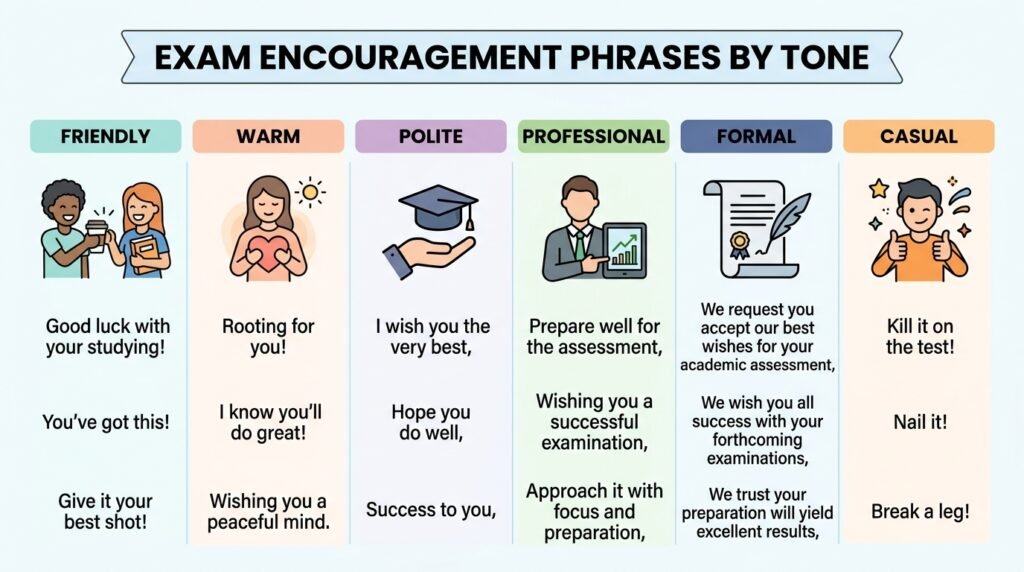
| Alternative | Best Used In | Tone |
| You’ve Got This | Texts, casual conversations | Encouraging |
| I’m Rooting for You | Personal messages | Warm |
| Wishing You the Best on Your Exam | Emails, notes, general messages | Polite |
| I Hope Your Exam Goes Well | Professional or personal messages | Sincere |
| Best of Luck With Your Exam | Everyday communication | Friendly |
| I Hope All Your Hard Work Pays Off | Personal encouragement | Supportive |
| Go Show Them What You Know | Messages to friends or family | Energetic |
| I Know You’ll Do Great | Personal messages | Confident |
| Sending You Positive Thoughts for Your Exam | Supportive notes and texts | Warm |
| Go Into Your Exam With Confidence | Mentoring or professional settings | Motivational |
Common Mistakes

1. Using Casual Phrases in Professional Emails
Expressions such as “You’ve got this!” can work with a close coworker but may sound too informal in a formal email. Consider “Wishing you the best on your exam” for a more polished tone.
2. Choosing Overly Formal Language
A message to your best friend does not need to sound like a business letter. Simple expressions often feel more genuine in personal conversations.
3. Repeating the Same Phrase
If you regularly encourage students, friends, or coworkers, repeating “good luck on your exam” can become predictable. Using a few natural alternatives keeps your messages fresh.
4. Forgetting the Context
Think about who you are speaking to before choosing an expression. “Go show them what you know” may suit a friend but may not be appropriate for a formal academic message.
5. Sounding Insincere
Avoid adding exaggerated praise that does not fit your relationship with the person. A short, honest message such as “I hope your exam goes well” can be more meaningful than an overly dramatic statement.
Frequently Asked Questions
What is a better way to say “good luck on your exam”?
A good alternative is “You’ve got this” when speaking to a friend or classmate. For a more polite message, try “Wishing you the best on your exam.” If you want to recognize someone’s preparation, “I hope all your hard work pays off” is a thoughtful choice.
How do you wish someone luck before an exam?
You can say “I’m rooting for you,” “I know you’ll do great,” or “I hope your exam goes well.” The best expression depends on your relationship with the person. For a close friend, a confident phrase can feel natural, while a polite wish may work better for a coworker or student.
What can I say instead of “good luck” to a student?
Try “You’ve got this,” “Go into your exam with confidence,” or “I hope all your hard work pays off.” These phrases encourage the student while focusing on preparation and confidence rather than luck alone.
What is a professional way to say good luck on an exam?
“Wishing you the best on your exam” is a professional and flexible option. You can also say, “I hope your exam goes well.” Both expressions are respectful and appropriate for an email, workplace message, academic setting, or professional relationship.
What can I text a friend before their exam?
For a friend, keep the message natural and encouraging. “You’ve got this!” and “I’m rooting for you!” are both strong choices. You could also write, “You’ve worked hard for this—go show them what you know!”
How do you encourage someone who is nervous about an exam?
Focus on their preparation and abilities instead of simply wishing them luck. Saying “Trust yourself,” “You’ve prepared for this,” or “I know you’ll do great” can help reinforce confidence and make the message feel more personal.
Is “best of luck with your exam” correct?
Yes. “Best of luck with your exam” is grammatically correct and commonly understood in American English. It is a natural alternative to “good luck on your exam” and works well in friendly, polite, and everyday communication.
What is a warm way to wish someone luck on an exam?
“I hope all your hard work pays off” is a warm choice because it recognizes the person’s effort. “I’m rooting for you” is another personal option that communicates genuine support without sounding overly formal.
Conclusion
Knowing another way to say good luck on your exam gives you more ways to encourage someone in a natural and meaningful way. The best expression depends on your relationship with the person, the setting, and the kind of support you want to provide.
“A short, sincere message can often provide more encouragement than a complicated one. For students preparing for important tests, practical exam preparation and study tips can also help build confidence.”

Sarah Whitfield is the founder and lead editor of Anchors Press. With a background in copyediting and content strategy, she reviews every guide for accuracy, tone, and everyday usefulness before it’s published.