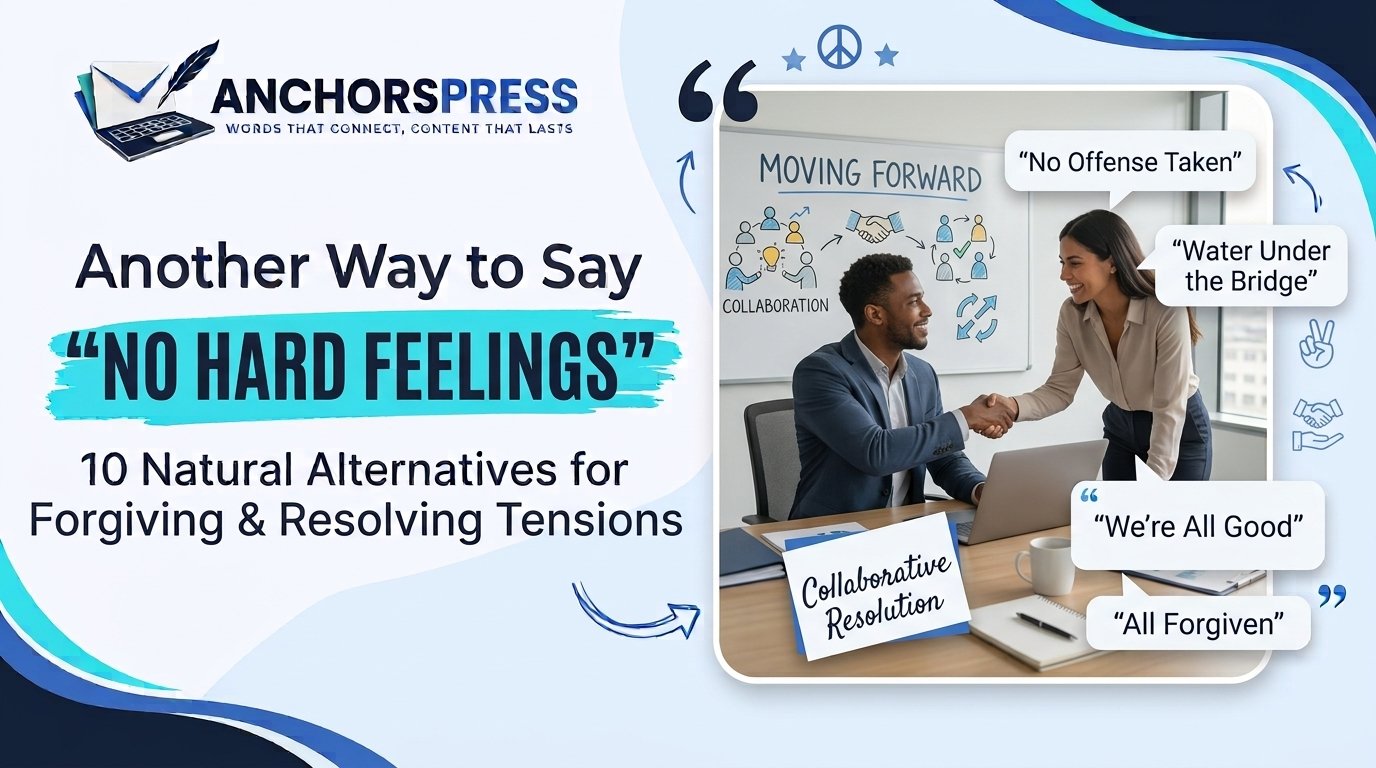
What Does “Another Way to Say No Hard Feelings” Mean?

The phrase “no hard feelings” is used to show that you are not angry, offended, or resentful after a disagreement, mistake, rejection, or difficult situation.
For example, if a friend cancels plans or a coworker disagrees with your idea, you might say, “No hard feelings.” It reassures the other person that the situation has not damaged your relationship.
People often look for another way to say “no hard feelings” because the original phrase can feel repetitive or too casual. A different expression can make your message sound warmer, more professional, or more sincere.
Why Use Other Ways to Say “No Hard Feelings”?
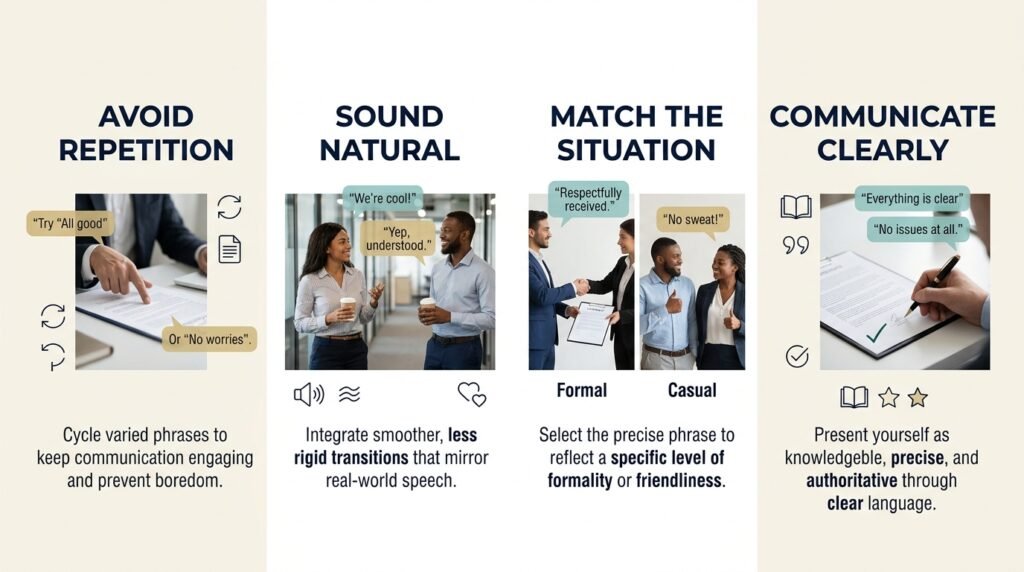
Using an alternative can help you communicate the same idea while matching the situation more accurately.
You may want another expression to:
- Avoid repeating the same phrase.
- Sound more natural in conversation.
- Make a professional message more appropriate.
- Show genuine forgiveness.
- Reassure someone after a disagreement.
- Express warmth without sounding overly casual.
The key is to choose a phrase that reflects how you actually feel. A simple “we’re good” can sound friendly, while “I have no resentment toward you” carries a much more serious tone.
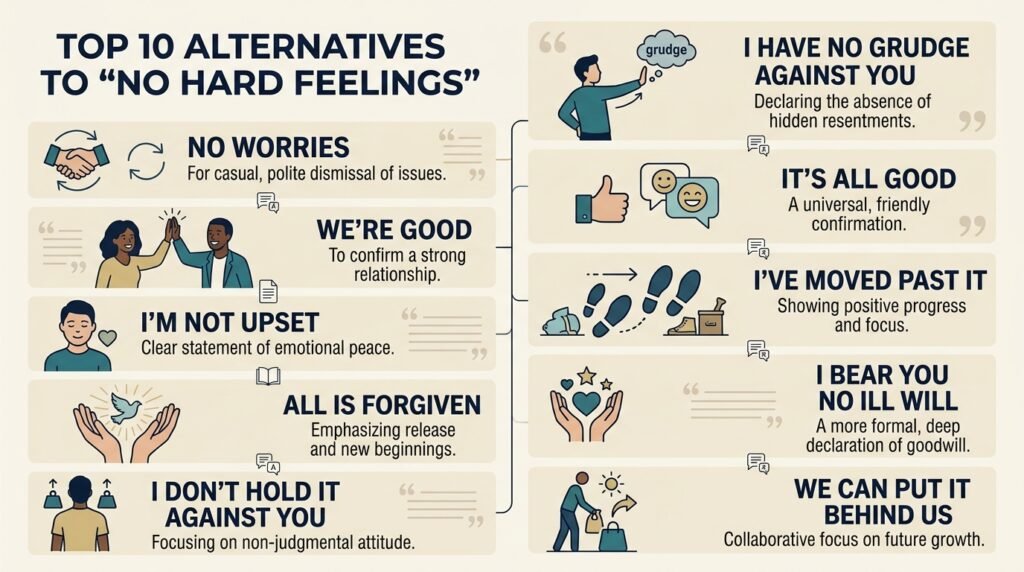
10 Best Other Ways to Say “No Hard Feelings”
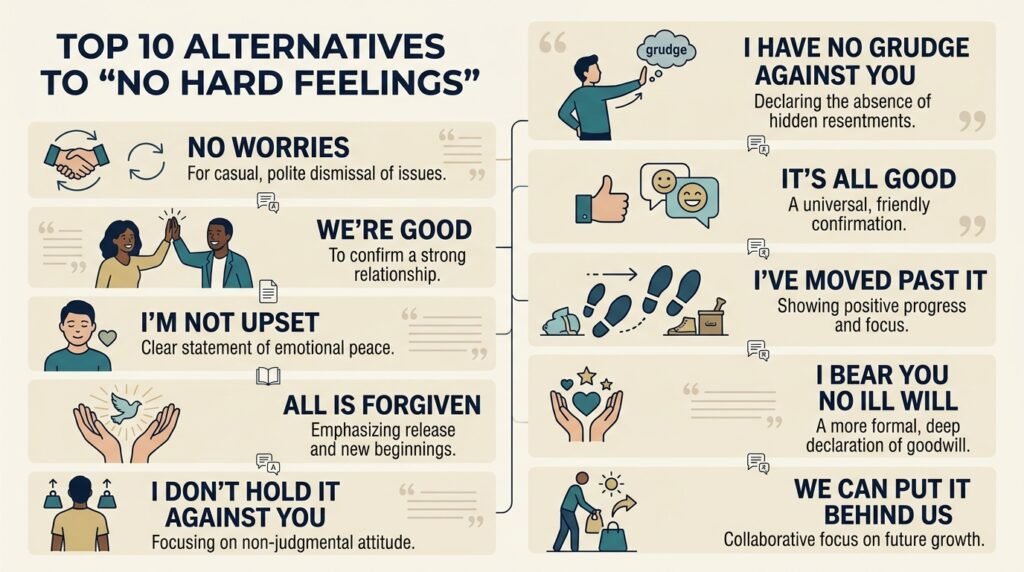
1. No Worries
Meaning
“No worries” tells someone that you are not upset about what happened. It is relaxed, friendly, and commonly used in everyday American English.
Best For
- Casual
- Friendly
- Polite
Example 1
“No worries about missing the meeting; I understand that things came up.”
Example 2
“You chose the other restaurant? No worries, we can try it next time.”
Quick Tip
Use “no worries” when the situation is minor and you want to keep the conversation light.
2. We’re Good
Meaning
“We’re good” is a short, reassuring way to say that there is no lingering problem between you and another person. It often suggests that you have moved past the disagreement.
Best For
- Casual
- Friendly
- Warm
Example 1
“You apologized, and I appreciate it. We’re good.”
Example 2
“I know you didn’t mean to leave me out. We’re good.”
Quick Tip
This phrase works especially well when someone is worried that a disagreement has affected your relationship.
3. I’m Not Upset
Meaning
“I’m not upset” directly tells someone that their actions did not leave you angry. It is clear and straightforward without sounding overly formal.
Best For
- Friendly
- Casual
- Polite
Example 1
“I’m not upset about the change of plans, so please don’t worry.”
Example 2
“I’m not upset that you disagreed with me. I understand your point.”
Quick Tip
Choose this phrase when you want to remove doubt about your feelings.
4. All Is Forgiven
Meaning
“All is forgiven” communicates that you have chosen to forgive someone for something they did. It can sound warm, but depending on the context, it may also have a slightly dramatic or playful feel.
Best For
- Warm
- Friendly
- Formal
Example 1
“You admitted what happened and apologized, so all is forgiven.”
Example 2
“You ate the last slice, but all is forgiven after bringing dessert today.”
Quick Tip
Use it when forgiveness is the main point rather than simply saying that you are not angry.
5. I Don’t Hold It Against You
Meaning
“I don’t hold it against you” means you will not allow someone’s past action to affect how you feel about them. It is useful when the situation was somewhat serious.
Best For
- Friendly
- Warm
- Polite
Example 1
“You made a difficult decision, but I don’t hold it against you.”
Example 2
“You had to choose another candidate, and I don’t hold it against you.”
Quick Tip
This expression is especially useful when someone feels guilty about a decision they made.
6. I Have No Grudge Against You
Meaning
This phrase clearly communicates that you do not have lasting anger or resentment toward someone. It is more serious and formal than “no hard feelings.”
Best For
- Formal
- Professional
- Polite
Example 1
“We disagreed during the negotiations, but I have no grudge against you.”
Example 2
“You made the decision I disagreed with, but I have no grudge against you.”
Quick Tip
Because “grudge” sounds serious, reserve this phrase for situations involving genuine conflict or tension.
7. It’s All Good
Meaning
“It’s all good” is a relaxed expression meaning that everything is fine and there is no remaining problem. It is common in casual American conversations.
Best For
- Casual
- Friendly
- Warm
Example 1
“You forgot to call me back, but it’s all good.”
Example 2
“We had different opinions, but it’s all good now.”
Quick Tip
Use this with friends, family, or familiar coworkers rather than in highly formal correspondence.
8. I’ve Moved Past It
Meaning
“I’ve moved past it” indicates that you have stopped focusing on a previous problem. It emphasizes emotional closure rather than simply saying that you are not angry.
Best For
- Warm
- Polite
- Formal
Example 1
“I was disappointed at first, but I’ve moved past it.”
Example 2
“We had a difficult conversation last month, but I’ve moved past it.”
Quick Tip
This phrase is a good choice when the original situation was meaningful or emotionally difficult.
9. I Bear You No Ill Will
Meaning
“I bear you no ill will” is a formal way to say that you do not wish someone harm or hold negative feelings toward them. It sounds more serious and deliberate than everyday alternatives.
Best For
- Formal
- Professional
- Polite
Example 1
“Although we reached different conclusions, I bear you no ill will.”
Example 2
“Our business relationship ended, but I bear you no ill will.”
Quick Tip
Use this expression sparingly because it can sound formal or literary in ordinary conversation.
10. We Can Put It Behind Us
Meaning
“We can put it behind us” suggests that both people are ready to stop dwelling on a disagreement and move forward. It focuses on rebuilding the relationship.
Best For
- Warm
- Friendly
- Professional
Example 1
“We both said things we didn’t mean, but we can put it behind us.”
Example 2
“The project was stressful, but we can put the disagreement behind us and move forward.”
Quick Tip
Choose this phrase when you want to emphasize moving forward together.
Comparison Table
| Alternative | Best Used In | Tone |
| No worries | Everyday conversations | Casual, friendly |
| We’re good | Reassuring someone | Casual, warm |
| I’m not upset | Direct reassurance | Polite, friendly |
| All is forgiven | Forgiveness | Warm, playful |
| I don’t hold it against you | Personal or difficult situations | Warm, understanding |
| I have no grudge against you | Serious disagreements | Formal, serious |
| It’s all good | Casual conversations | Relaxed, friendly |
| I’ve moved past it | Emotional or personal situations | Mature, calm |
| I bear you no ill will | Formal situations | Formal, serious |
| We can put it behind us | Resolving conflict | Warm, constructive |
Common Mistakes
1. Using Casual Phrases in Professional Emails
Phrases such as “it’s all good” or “we’re good” may sound too relaxed in a formal email. A more professional option, such as “I have no hard feelings” or “I’m happy to move forward,” may fit better.
2. Choosing Overly Formal Language
“I bear you no ill will” is grammatically correct, but it can sound unusually formal in a normal conversation. Match your wording to the relationship and setting.
3. Repeating the Same Phrase
Using “no hard feelings” in every situation can make your communication feel predictable. Varying your language helps you express the exact emotion you intend.
4. Forgetting the Context
Not every alternative has the same meaning. “I’ve moved past it” suggests emotional closure, while “no worries” usually suggests that the problem was minor.
5. Sounding Insincere
Saying “all is forgiven” or “we’re good” when you are still genuinely upset can create confusion. Choose wording that honestly reflects your feelings.
Frequently Asked Questions
What is a polite way to say “no hard feelings”?
A polite way to say “no hard feelings” is “I’m not upset” or “I don’t hold it against you.” Both expressions reassure the other person without sounding too casual. In a professional situation, you could also say, “I’m happy to move forward” when you want to emphasize resolving the issue.
What is another way to say “no hard feelings” professionally?
For professional communication, try “I have no issue with it,” “I don’t hold it against you,” or “We can move forward.” These phrases are generally more appropriate for workplace conversations because they sound calm and mature without being overly personal or informal.
How do you say “no hard feelings” in a friendly way?
For a friendly conversation, “No worries,” “We’re good,” and “It’s all good” are natural choices. These expressions reassure someone that you are not angry and help keep the conversation relaxed. “We’re good” is particularly useful after a small disagreement or misunderstanding.
What is a formal way to say “no hard feelings”?
A formal alternative is “I bear you no ill will.” Another option is “I have no resentment toward you.” These expressions are appropriate when you need to communicate that a serious disagreement has not created lasting hostility.
How do you say “no hard feelings” after an argument?
After an argument, you can say “I’ve moved past it,” “We can put it behind us,” or “I don’t hold it against you.” These phrases show that you are ready to stop focusing on the disagreement and move forward. Choose the one that best matches the seriousness of the conflict.
Is “no worries” the same as “no hard feelings”?
“No worries” and “no hard feelings” can have similar meanings, but they are not always interchangeable. “No worries” often means that something is not a problem, while “no hard feelings” specifically addresses anger, resentment, or hurt feelings after an event or disagreement.
Can I say “we’re good” after a disagreement?
Yes. “We’re good” is a natural way to reassure someone that the disagreement has not damaged your relationship. It is especially common in casual American English. However, it may be too informal for a serious professional dispute or formal written communication.
What is the best alternative to “no hard feelings”?
The best alternative depends on the situation. Use “no worries” for casual situations, “I don’t hold it against you” for sincere forgiveness, and “we can put it behind us” when both people need to move forward after a disagreement.
Conclusion
Knowing another way to say no hard feelings gives you more control over tone and meaning. While “no hard feelings” is natural and widely understood, another expression may better fit the situation.
Choose “no worries” for casual reassurance, “we’re good” for a quick friendly response, and “I don’t hold it against you” when you want to communicate genuine understanding. For more serious or formal situations, “I bear you no ill will” or “I’ve moved past it” may be more appropriate.

Sarah Whitfield is the founder and lead editor of Anchors Press. With a background in copyediting and content strategy, she reviews every guide for accuracy, tone, and everyday usefulness before it’s published.