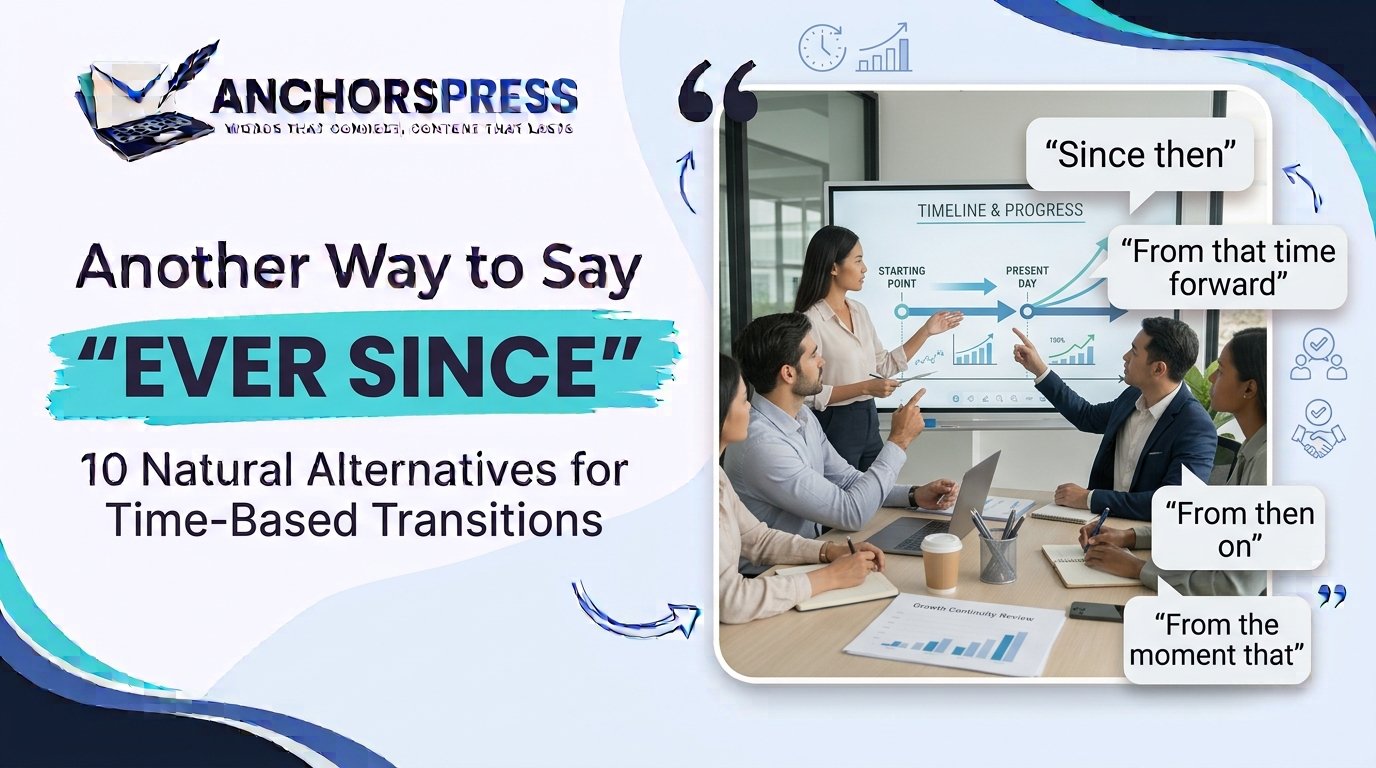
What Does “Another Way to Say Ever Since” Mean?

“Ever since” means continuously from a particular time in the past until now, or until another point being discussed. It usually connects a past event or starting point with an action, condition, or situation that continued afterward.
For example, you might say, “I moved to Chicago in 2020, and I’ve lived here ever since.” The phrase shows that the person has continued living in Chicago from 2020 up to the present.
People often look for another way to say “ever since” because they want to avoid repetition, make their writing sound smoother, or choose wording that better fits a particular context.
Why Use Other Ways to Say “Ever Since”?
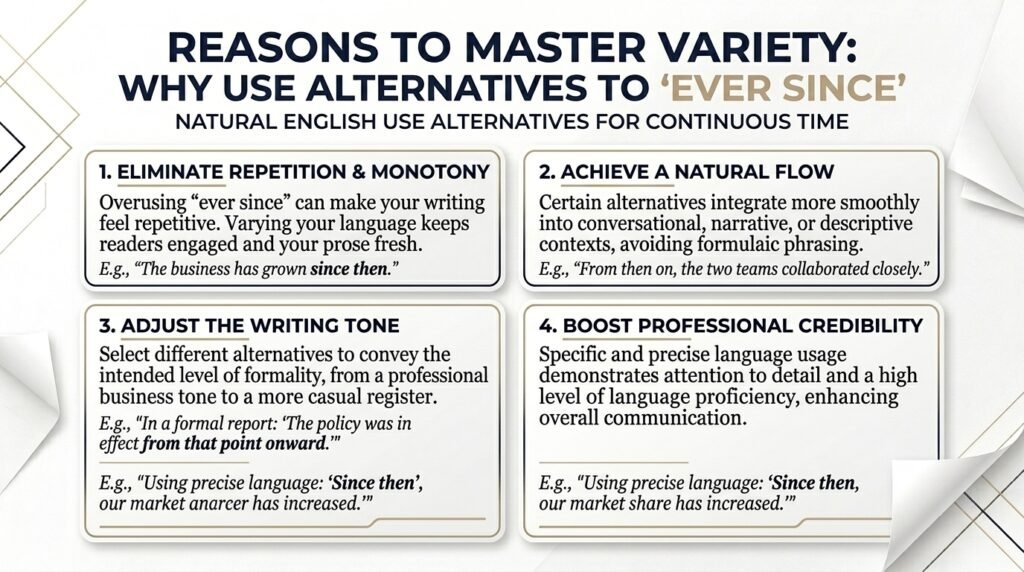
Using alternatives can make your English more flexible and precise. While “ever since” is completely natural, another expression may fit better depending on the sentence.
Other options can help you:
- Avoid repeating the same phrase.
- Make your writing sound more natural.
- Adjust your tone for formal or casual situations.
- Emphasize the starting point of an ongoing situation.
- Make professional writing clearer and more polished.
- Add variety to essays, emails, articles, and conversations.
10 Best Other Ways to Say “Ever Since”
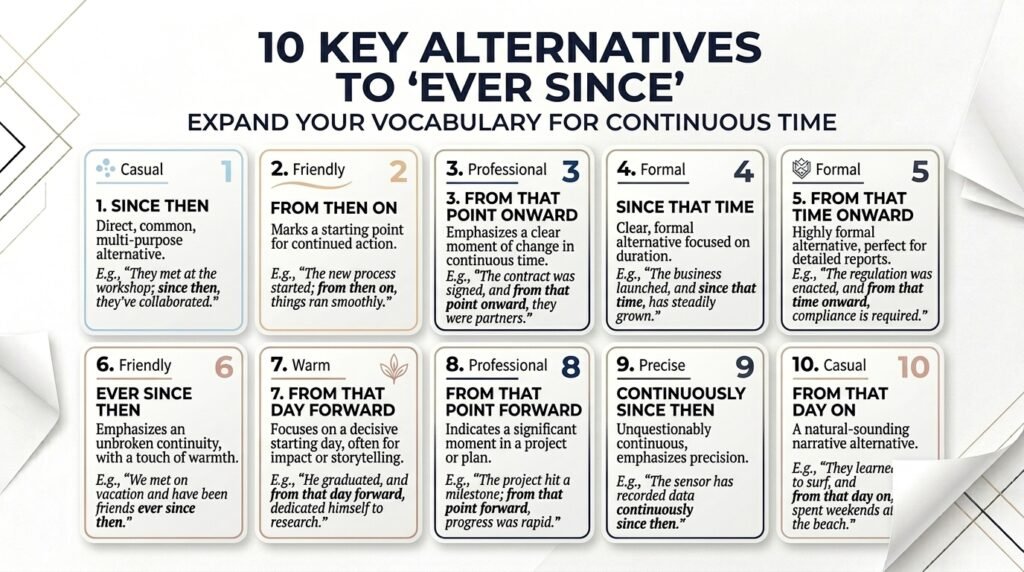
1. Since Then
Meaning
“Since then” is one of the closest and most natural alternatives to “ever since.” It refers to the period between a previously mentioned event and the present or another point in time.
Best For
- Casual
- Friendly
- Professional
Example 1
I started working remotely in 2022, and I’ve been much happier since then.
Example 2
She moved to Seattle last year and has made several close friends since then.
Quick Tip
Use “since then” when the starting point has already been clearly mentioned.
2. From Then On
Meaning
“From then on” emphasizes that something continued after a particular event or moment. It often focuses more strongly on what happened following that point.
Best For
- Casual
- Friendly
- Warm
Example 1
He apologized sincerely, and from then on, we had a better understanding of each other.
Example 2
After she received the promotion, she took her responsibilities more seriously from then on.
Quick Tip
Choose this phrase when you want to highlight a change or ongoing pattern that began after an event.
3. From That Point Onward
Meaning
“From that point onward” clearly marks a specific moment as the beginning of an ongoing situation. It sounds slightly more formal than “since then.”
Best For
- Professional
- Formal
Example 1
The company changed its privacy policy in 2024 and followed stricter standards from that point onward.
Example 2
Once the new manager joined the team, communication improved from that point onward.
Quick Tip
This is a strong choice for reports, business writing, and formal explanations.
4. Since That Time
Meaning
“Since that time” means from a previously mentioned period until the present or another specified point. It is a straightforward alternative that works well when clarity matters.
Best For
- Formal
- Professional
- Polite
Example 1
The museum reopened in May, and visitor numbers have increased since that time.
Example 2
We introduced the new system last summer and have received positive feedback since that time.
Quick Tip
Use this phrase when you want a clear, neutral tone without sounding overly conversational.
5. From That Time Onward
Meaning
“From that time onward” describes something that began at a particular time and continued after it. It is especially useful when the sentence emphasizes a lasting change.
Best For
- Formal
- Professional
Example 1
The organization adopted new safety procedures and followed them from that time onward.
Example 2
She began keeping detailed records and relied on them from that time onward.
Quick Tip
Use it when the specific starting period is important to the meaning of the sentence.
6. Ever Since Then
Meaning
“Ever since then” is very close to “ever since” and places extra emphasis on the continuation of something. It works naturally when a previous event has already been mentioned.
Best For
- Casual
- Friendly
- Warm
Example 1
We met during college, and we’ve stayed in touch ever since then.
Example 2
He discovered his love of photography as a teenager and has pursued it ever since then.
Quick Tip
“Ever since then” can sound slightly more emphatic than simply saying “since then.”
7. From That Day Forward
Meaning
“From that day forward” refers to an ongoing situation beginning on a particular day. It can sound more emotional or memorable than ordinary alternatives.
Best For
- Warm
- Friendly
- Formal
Example 1
They adopted their dog in 2019 and considered him part of the family from that day forward.
Example 2
After their conversation, she decided to be more honest with herself from that day forward.
Quick Tip
Use this phrase when the starting day has emotional or personal significance.
8. From That Point Forward
Meaning
“From that point forward” indicates that something continued or changed beginning at a specific moment. It is useful when the starting point is an event rather than a particular date.
Best For
- Professional
- Formal
- Neutral
Example 1
The team identified the problem and monitored the system more carefully from that point forward.
Example 2
After the policy was introduced, employees received regular training from that point forward.
Quick Tip
This phrase works especially well when describing decisions, processes, policies, or changes.
9. Continuously Since Then
Meaning
“Continuously since then” strongly emphasizes that something has continued without interruption from a previous event or time. It is more explicit than ordinary conversational alternatives.
Best For
- Formal
- Professional
Example 1
The facility has operated continuously since then despite several changes in ownership.
Example 2
The organization has provided the service continuously since then to residents across the county.
Quick Tip
Use this wording when uninterrupted continuation is important to the point you are making.
10. From That Day On
Meaning
“From that day on” means that something started on a particular day and continued afterward. It sounds natural and slightly more conversational than “from that day forward.”
Best For
- Casual
- Friendly
- Warm
Example 1
They promised to support each other, and from that day on, they stayed close.
Example 2
She started writing in a journal, and from that day on, it became part of her routine.
Quick Tip
Use “from that day on” when you are telling a story and want to connect a specific day with what happened afterward.
Comparison Table
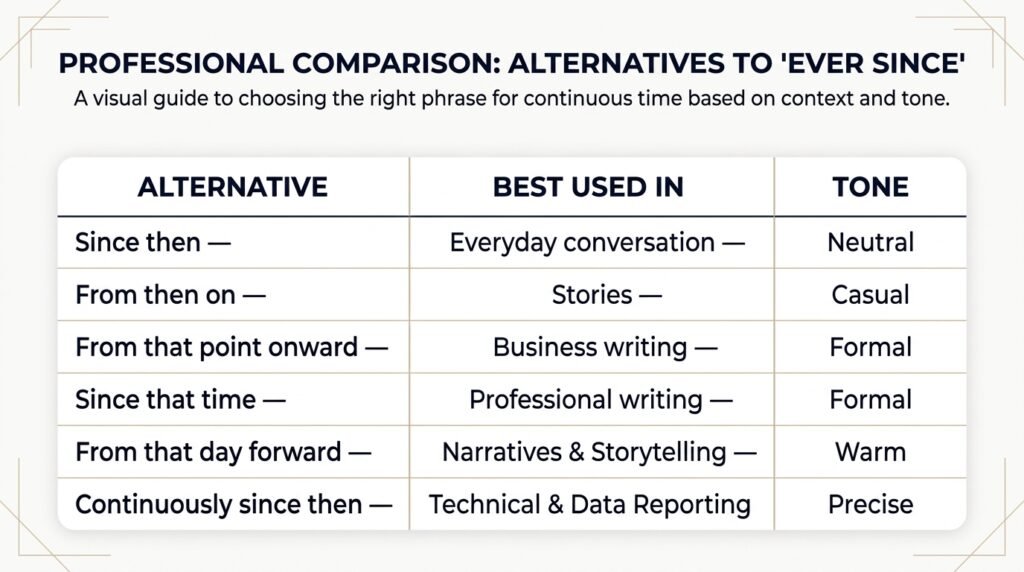
| Alternative | Best Used In | Tone |
| Since then | Everyday conversation, emails | Neutral |
| From then on | Stories, conversations | Casual |
| From that point onward | Reports, business writing | Formal |
| Since that time | Professional explanations | Formal |
| From that time onward | Reports and formal writing | Formal |
| Ever since then | Personal conversations | Warm |
| From that day forward | Personal stories | Warm |
| From that point forward | Business and professional writing | Formal |
| Continuously since then | Reports and factual writing | Professional |
| From that day on | Stories and personal writing | Friendly |
Common Mistakes
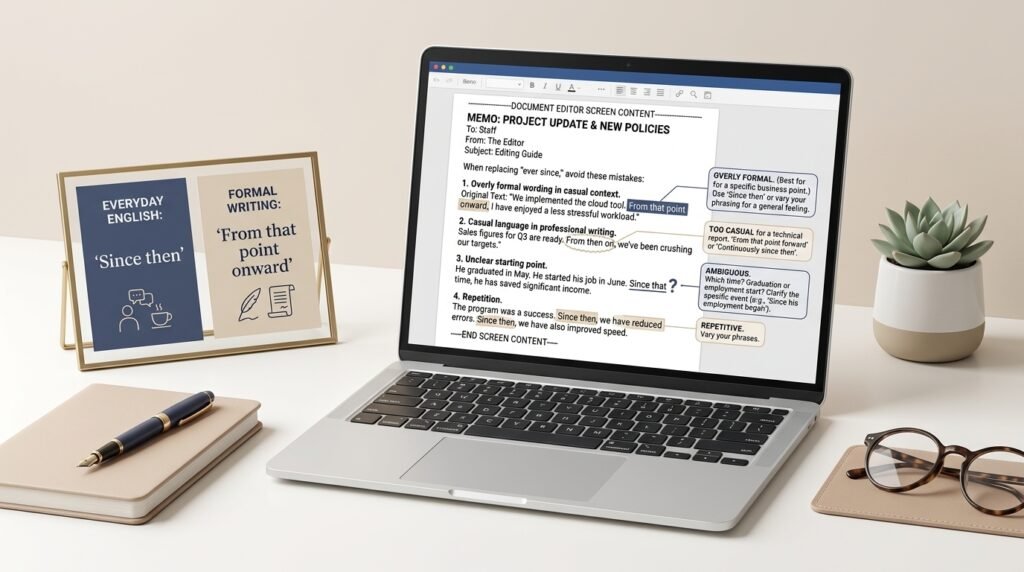
1. Using a Casual Phrase in Formal Writing
Phrases such as “from then on” can work in professional writing, but more formal alternatives may sound better in reports, research, or business documents.
2. Changing the Meaning
Not every phrase that refers to a later time means continuous action. “After that,” for example, can simply describe what happened next, while “ever since” usually suggests ongoing continuity.
3. Repeating the Same Expression
Using “ever since” several times in the same paragraph can make your writing feel repetitive. Alternate between natural options when the meaning remains clear.
4. Forgetting the Starting Point
Many alternatives depend on a previously mentioned event or time. Without that context, phrases such as “since then” or “from that point onward” may leave readers wondering what “then” or “that point” refers to.
5. Choosing a Phrase That Sounds Too Formal
“From that point onward” may sound unnecessarily formal in a casual conversation. In everyday American English, “since then” is often the cleaner and more natural choice.
Frequently Asked Questions
What is the best alternative to “ever since”?
“Since then” is usually the best alternative because it sounds natural in both conversation and writing. It clearly refers to the period beginning at a previously mentioned time or event. For more formal writing, “from that point onward” or “since that time” may be better choices.
Is “since then” the same as “ever since”?
They are very similar, but “ever since” can place slightly more emphasis on continuous duration. For example, “I have lived here ever since” strongly emphasizes the entire period, while “I have lived here since then” sounds more neutral and conversational.
What is another way to say “ever since then”?
Good alternatives include “since then,” “from then on,” “from that point forward,” “from that day onward,” and “since that time.” The best choice depends on the sentence. “Since then” is generally the simplest option for everyday American English.
Can I use “from then on” instead of “ever since”?
Yes, but the two expressions are not always interchangeable. “From then on” emphasizes what continued after a particular event, while “ever since” often connects a past starting point directly to the present. Context determines which one sounds more accurate.
What is a formal way to say “ever since”?
For formal writing, consider “since that time,” “from that point onward,” “from that point forward,” or “continuously since then.” These expressions can make reports, professional documents, and formal explanations sound more precise without changing the basic meaning.
What is a casual way to say “ever since”?
“Since then” is the most common casual alternative. Depending on the context, you can also use “from then on” or “from that day on.” These expressions fit naturally into everyday conversations, personal stories, and informal writing.
Is “ever since then” grammatically correct?
Yes, “ever since then” is grammatically correct. However, it can sometimes feel slightly repetitive because both “ever since” and “since then” already express an ongoing period. Use it when you want extra emphasis on the continuation.
What is the difference between “since then” and “from then on”?
“Since then” usually looks backward from a later point, often the present, and describes what has happened during that period. “From then on” focuses more on what happened after the starting event. Both can describe continuation, but their emphasis is slightly different.
Conclusion
Knowing another way to say “ever since” gives you more flexibility when writing and speaking American English. Although “ever since” is completely correct, alternatives can help you avoid repetition, adjust your tone, and make your meaning more precise.
For everyday communication, “since then” is usually the easiest replacement. If you want to emphasize what happened after an event, “from then on” works well. For professional or formal writing, “from that point onward,” “since that time,” or “from that point forward” may sound more polished.
Daniel Cho writes about professional communication, drawing on years spent training teams on clear, confident workplace writing — from emails to performance reviews.