What Does “Another Way to Say Awesome” Mean?
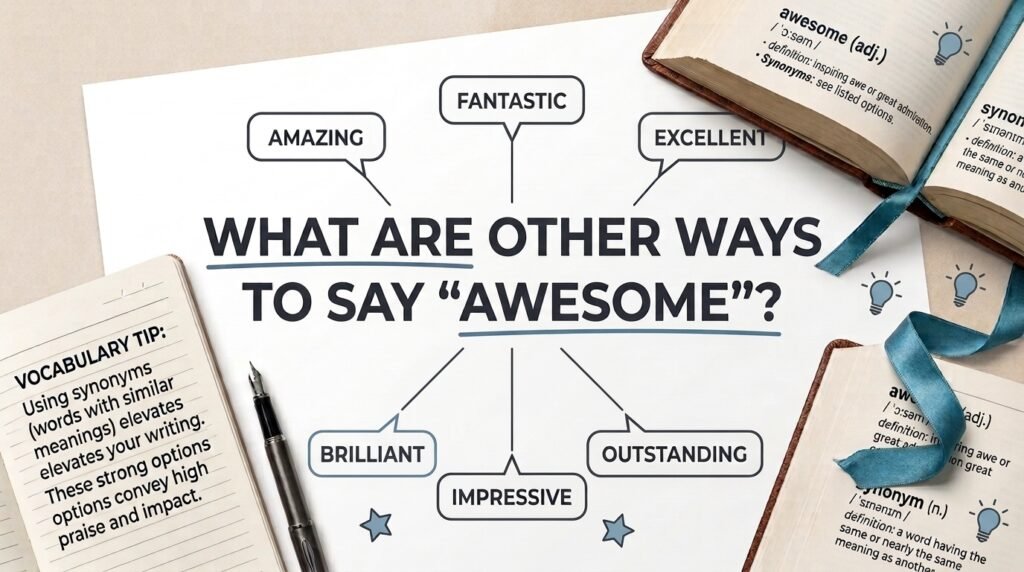
The phrase “another way to say awesome” refers to finding different words or expressions that communicate strong approval, excitement, admiration, or enthusiasm.
“Awesome” is common in American English and can describe almost anything positive, from a great movie or meal to an impressive achievement. However, repeating it too often can make your writing sound predictable.
People often look for alternatives to “awesome” when writing emails, reviews, social media posts, school assignments, workplace messages, or everyday conversations. A more precise synonym can also help you match the tone of your message.
Why Use Other Ways to Say “Awesome”?
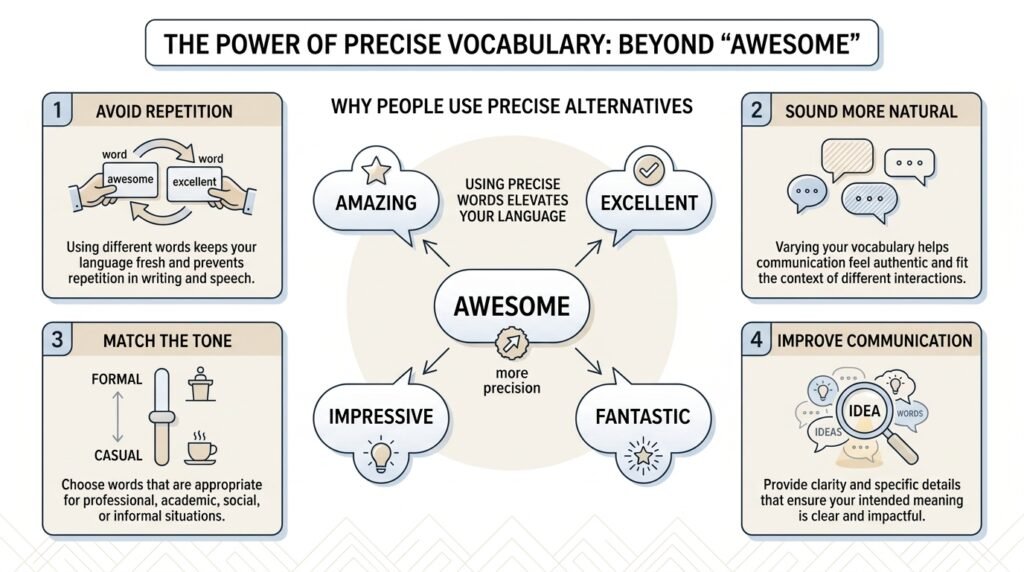
Using different words instead of “awesome” can make your communication more specific and natural. The right alternative can show exactly how strongly you feel about something.
Here are a few reasons to choose another expression:
- Avoid repetition: Keep your writing fresh and varied.
- Sound more natural: Use language that fits the situation.
- Match the tone: Choose casual, friendly, formal, or professional wording.
- Show precise emotion: Some words express admiration more strongly than others.
- Improve professional communication: Replace informal language with polished alternatives when needed.
10 Best Other Ways to Say “Awesome”
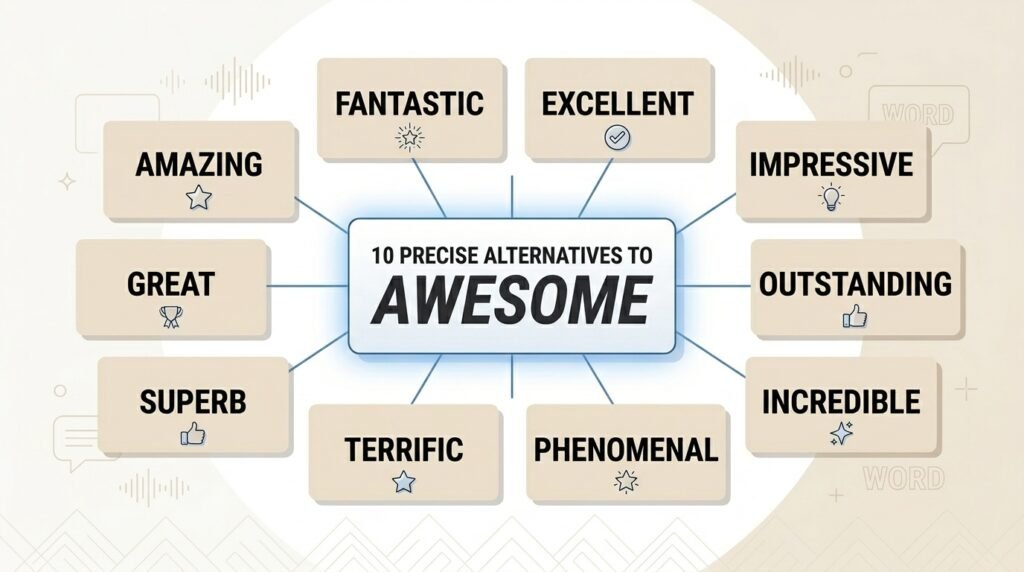
1. Amazing
Meaning
Amazing describes something that causes surprise, admiration, or excitement. It is one of the most natural substitutes for “awesome” because it works in both casual conversations and general writing.
Best For
- Casual
- Friendly
- Warm
Example 1
That was an amazing performance from the entire team.
Example 2
You did an amazing job organizing the community event.
Quick Tip
Use “amazing” when you want to sound enthusiastic without making your wording overly formal.
2. Fantastic
Meaning
Fantastic expresses strong approval or enthusiasm. It often sounds upbeat and energetic, making it a great choice when you want your compliment to feel warm and positive.
Best For
- Casual
- Friendly
- Warm
Example 1
We had a fantastic time at the concert last night.
Example 2
Your idea for the new website sounds fantastic.
Quick Tip
“Fantastic” is especially useful when responding enthusiastically to someone’s idea, experience, or accomplishment.
3. Excellent
Meaning
Excellent means extremely good or of very high quality. Unlike “awesome,” it sounds more polished and professional, so it fits workplace communication particularly well.
Best For
- Professional
- Formal
- Polite
Example 1
The team delivered an excellent presentation to the clients.
Example 2
Thank you for your excellent work on the project.
Quick Tip
Choose “excellent” instead of “awesome” when writing professional emails, reports, evaluations, or formal feedback.
4. Impressive
Meaning
Impressive describes something that makes a strong positive impression because of its quality, skill, size, or achievement. It focuses more on admiration than simple excitement.
Best For
- Professional
- Friendly
- Formal
Example 1
Your progress in learning Spanish is really impressive.
Example 2
The company achieved an impressive increase in customer satisfaction.
Quick Tip
Use “impressive” when you want to emphasize someone’s ability, effort, results, or achievement.
5. Outstanding
Meaning
Outstanding means exceptionally good and noticeably better than average. It is a strong compliment that sounds confident and professional.
Best For
- Professional
- Formal
- Polite
Example 1
She received an award for her outstanding contribution to the organization.
Example 2
The restaurant provided outstanding customer service throughout our visit.
Quick Tip
“Outstanding” is ideal for professional praise, performance reviews, recommendations, and formal recognition.
6. Incredible
Meaning
Incredible describes something so impressive, surprising, or extraordinary that it is difficult to believe. It usually carries more emotional energy than “excellent.”
Best For
- Casual
- Friendly
- Warm
Example 1
The view from the mountain was incredible.
Example 2
It was incredible to see so many people support the fundraiser.
Quick Tip
Use “incredible” when you want to communicate genuine excitement or strong admiration.
7. Phenomenal
Meaning
Phenomenal means exceptionally impressive or extraordinary. It is stronger than many everyday alternatives and works particularly well when describing remarkable results or performances.
Best For
- Professional
- Formal
- Friendly
Example 1
The marketing campaign produced phenomenal results in its first month.
Example 2
Her performance during the final round was phenomenal.
Quick Tip
Because “phenomenal” is very strong, save it for situations that genuinely deserve high praise.
8. Terrific
Meaning
Terrific means very good, enjoyable, or pleasing. It has a friendly and conversational feel and is a natural replacement for “awesome” in everyday American English.
Best For
- Casual
- Friendly
- Warm
Example 1
You picked a terrific restaurant for dinner.
Example 2
That was a terrific solution to a difficult problem.
Quick Tip
“Terrific” is a good choice when you want to sound positive and enthusiastic without sounding too formal.
9. Superb
Meaning
Superb means exceptionally high in quality. It is often used for food, service, performances, craftsmanship, and other things that demonstrate excellent quality.
Best For
- Formal
- Professional
- Polite
Example 1
The hotel is known for its superb service.
Example 2
The chef prepared a superb meal using fresh local ingredients.
Quick Tip
Use “superb” when you want your compliment to sound refined and focused on quality.
10. Great
Meaning
Great is one of the simplest and most versatile alternatives to “awesome.” It can express approval, satisfaction, enthusiasm, or admiration without sounding exaggerated.
Best For
- Casual
- Friendly
- Professional
Example 1
That sounds like a great plan for the weekend.
Example 2
You made a great choice by starting the project early.
Quick Tip
“Great” is a safe everyday option when you want a natural, widely understood compliment.
Comparison Table
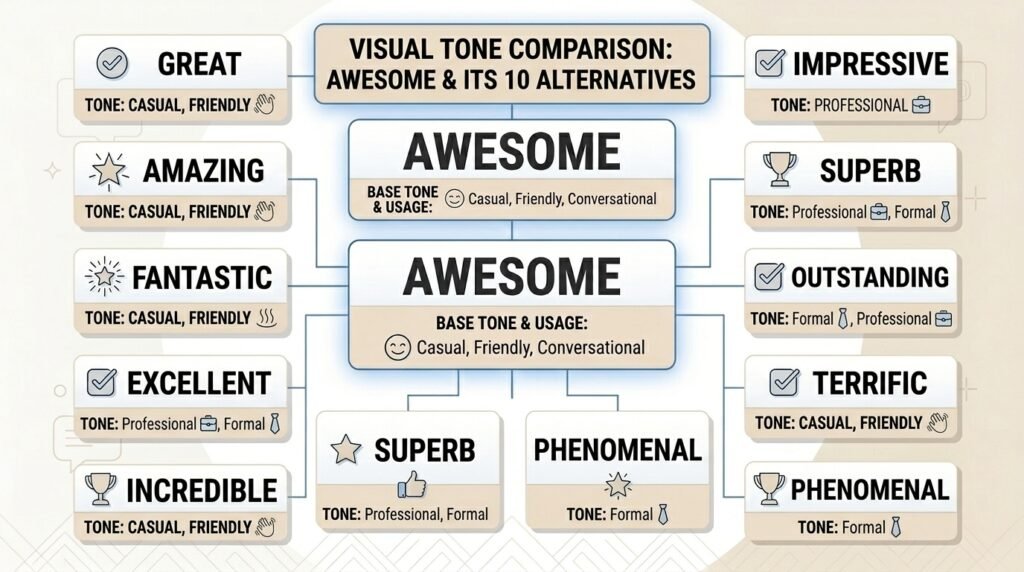
| Alternative | Best Used In | Tone |
| Amazing | Everyday conversations, compliments | Enthusiastic |
| Fantastic | Casual conversations, positive feedback | Upbeat |
| Excellent | Work, emails, formal feedback | Professional |
| Impressive | Achievements, skills, results | Admiring |
| Outstanding | Professional praise, recognition | Strong and formal |
| Incredible | Exciting experiences, achievements | Emotional |
| Phenomenal | Exceptional results or performances | Very strong |
| Terrific | Everyday conversations and compliments | Friendly |
| Superb | Quality, service, food, performance | Refined |
| Great | General everyday communication | Simple and positive |
Common Mistakes
1. Using Casual Phrases in Professional Emails
“Awesome” can sound too informal in some business settings. Words such as excellent, impressive, or outstanding often create a more polished impression.
2. Choosing Overly Formal Language
Not every conversation needs sophisticated vocabulary. Saying “phenomenal” when “great” would feel more natural can make a simple message sound unnecessarily formal.
3. Repeating the Same Compliment
Using “awesome” in every sentence can make your writing repetitive. Rotate between appropriate alternatives to keep your language interesting.
4. Forgetting Context
A word that works for a personal experience may not work for a business report. Consider your audience, purpose, and relationship with the reader before choosing a synonym.
5. Sounding Insincere
Very strong words can lose their impact when used for ordinary situations. Save terms like phenomenal and outstanding for things that genuinely deserve exceptional praise.
Frequently Asked Questions
What is another word for awesome?
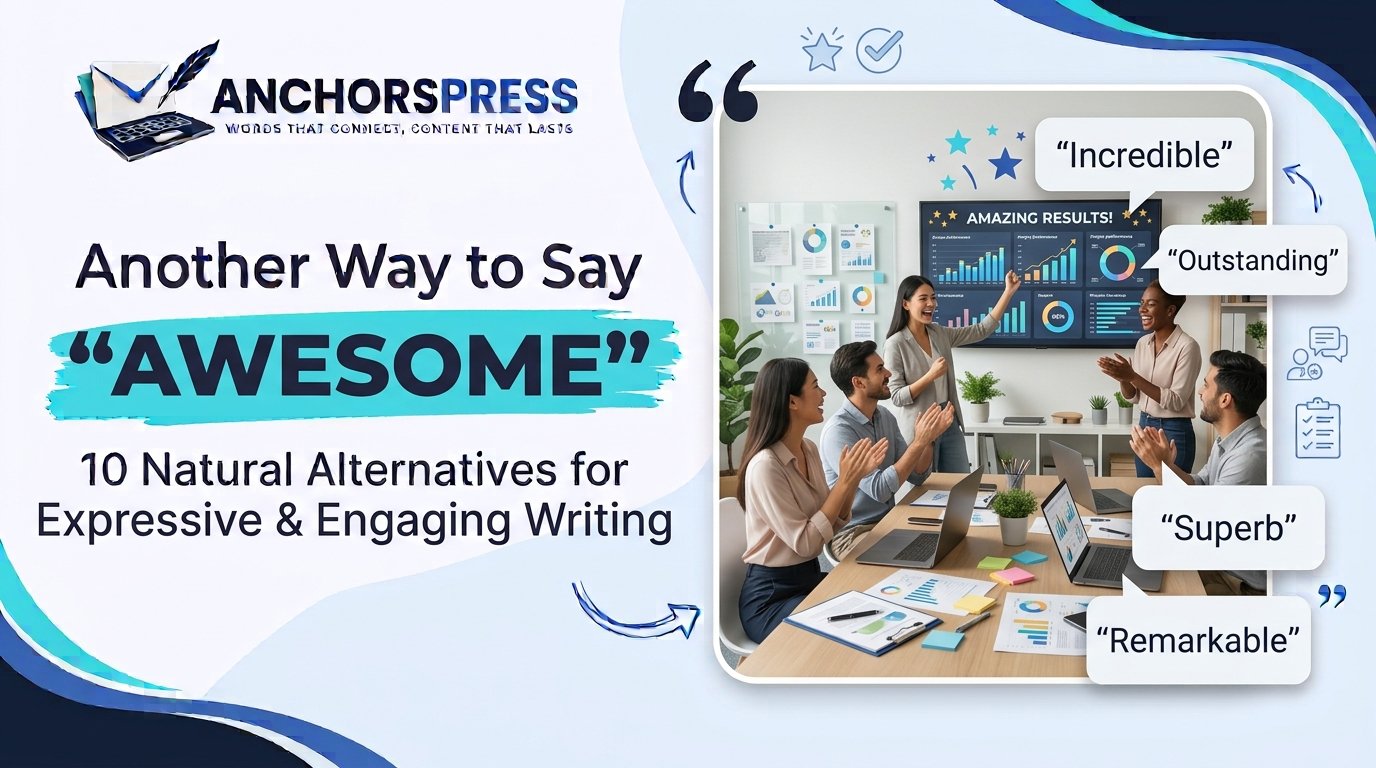
Common alternatives for “awesome” include amazing, fantastic, excellent, impressive, outstanding, incredible, phenomenal, terrific, superb, and great. The best choice depends on context. “Amazing” sounds natural in casual conversations, while “excellent” or “outstanding” is usually more appropriate for professional writing.
What is a professional way to say awesome?
Professional alternatives to “awesome” include excellent, outstanding, impressive, exceptional, and superb. For example, instead of saying “That was an awesome presentation,” you could write, “That was an excellent presentation.” These choices sound more polished while still communicating strong approval.
What is a casual way to say awesome?
For casual conversations, try amazing, fantastic, terrific, incredible, or great. These words sound natural in texts, conversations, social media posts, and friendly messages. “That’s fantastic!” and “That’s amazing!” are especially common ways to express excitement in American English.
What is a stronger word than awesome?
Words such as phenomenal, outstanding, incredible, and exceptional can communicate stronger praise than “awesome.” However, the strongest choice depends on context. “Phenomenal” suggests something is extraordinary, while “outstanding” emphasizes performance or quality that clearly exceeds expectations.
Is amazing better than awesome?
Neither word is always better. Amazing is often more versatile and can fit casual, friendly, and general writing. Awesome is more conversational and energetic, particularly in American English. Choose “amazing” when you want a slightly broader or more neutral expression of admiration.
Can I use awesome in a professional email?
Yes, but it depends on the workplace and relationship with the recipient. In a relaxed workplace, “awesome” may be perfectly acceptable. In formal emails, client communication, reports, or business proposals, alternatives such as excellent, impressive, or outstanding usually sound more professional.
What is another way to say “That’s awesome”?
You can say “That’s amazing,” “That’s fantastic,” “That’s incredible,” “That’s great,” “That’s terrific,” or “That’s excellent.” For professional situations, “That’s excellent” is a safer choice. For an enthusiastic conversation with friends, “That’s incredible!” or “That’s fantastic!” feels more natural.
What is the best synonym for awesome?
There is no single best synonym because the ideal word depends on the situation. Amazing is one of the most versatile choices, excellent works well professionally, and fantastic is friendly and enthusiastic. If you want to emphasize exceptional quality, outstanding or superb may be better.
Conclusion
Knowing another way to say awesome gives you more control over your tone and helps you communicate with greater precision. While “awesome” is perfectly natural in casual American English, different situations may call for a more specific word.
The key is to match the word to the context rather than simply replacing “awesome” every time. The right synonym should sound natural, reflect your genuine reaction, and fit the person you’re speaking to. For additional guidance on English word meanings and usage, a trusted dictionary can help you choose the most appropriate expression.

Daniel Cho writes about professional communication, drawing on years spent training teams on clear, confident workplace writing — from emails to performance reviews.