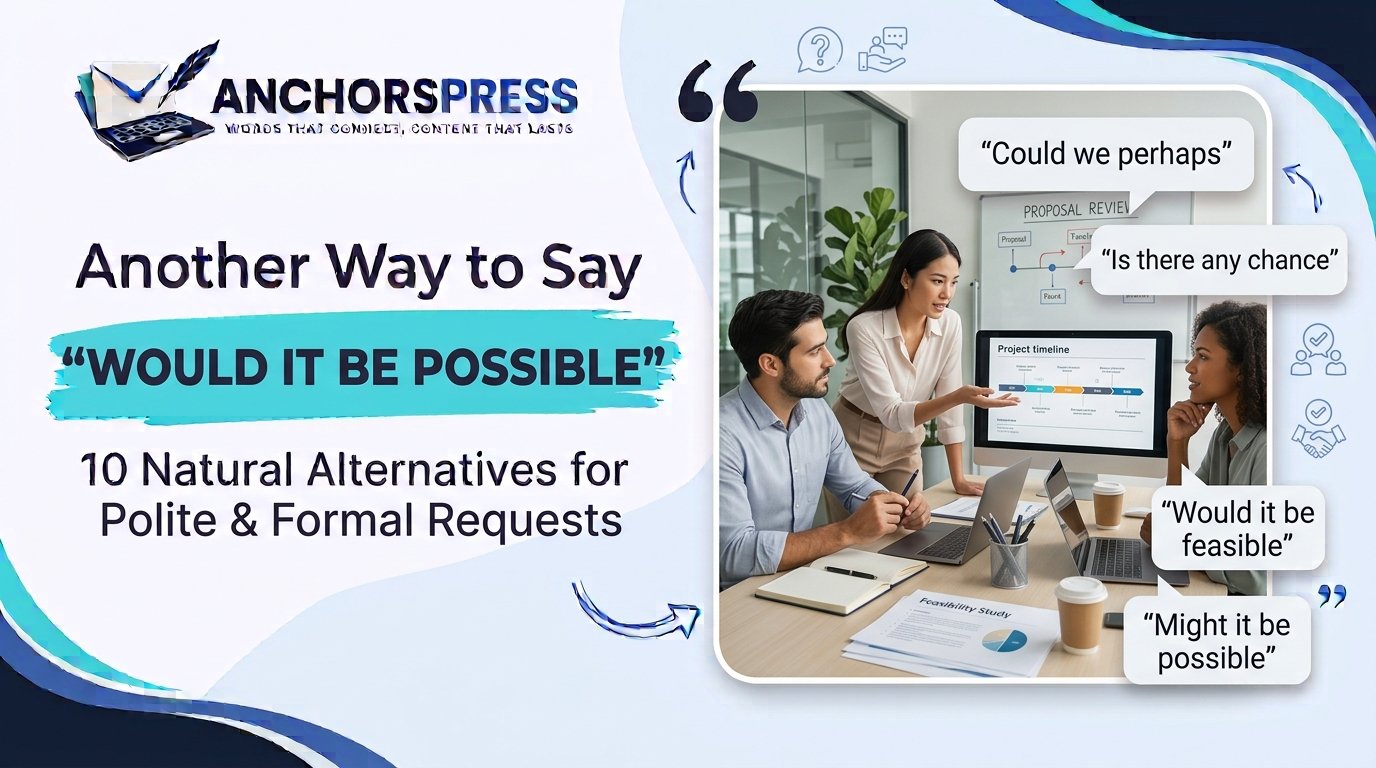
What Does “Another Way to Say Would It Be Possible” Mean?
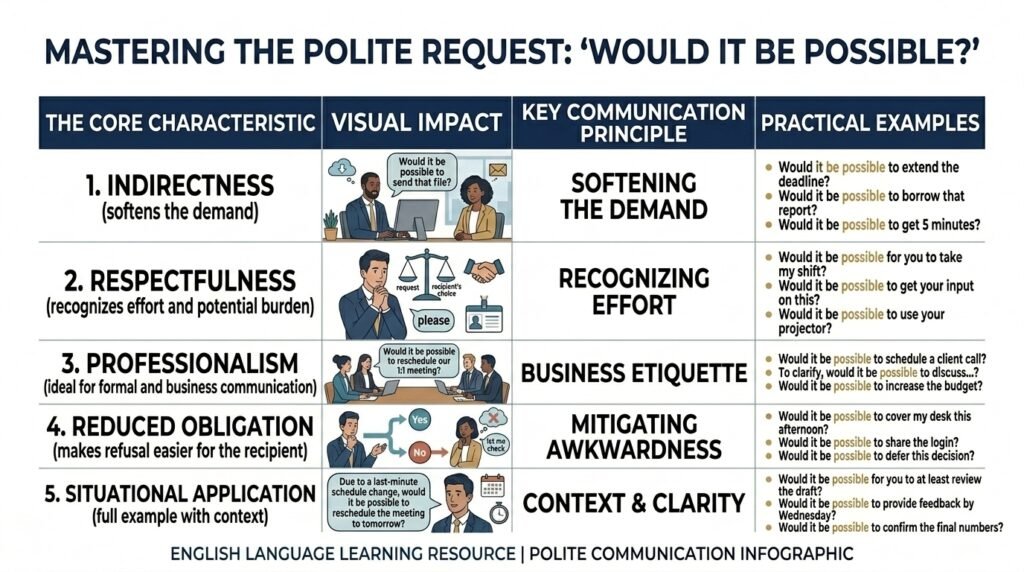
“Would it be possible” is a polite phrase used to ask whether something can be done, arranged, or allowed. It often appears before a request, such as, “Would it be possible to reschedule our meeting?”
People use this phrase because it sounds respectful without being overly demanding. You may hear it in professional emails, customer service conversations, formal requests, and polite everyday interactions.
For example, instead of saying, “Can you send me the report today?” you might write, “Would it be possible to send me the report today?” The second version sounds more tentative and considerate.
Why Use Other Ways to Say “Would It Be Possible”?
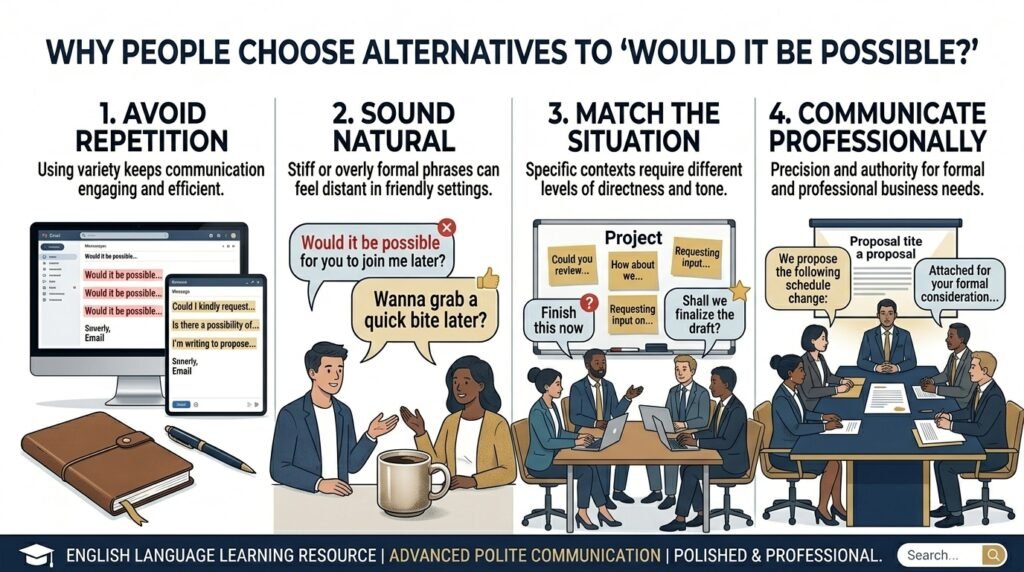
Using different expressions can make your English more natural and help you match the situation more precisely.
Other alternatives can help you:
- Avoid repeating the same phrase in emails and conversations.
- Make a request sound more natural.
- Choose the right level of formality.
- Sound friendly without becoming too casual.
- Make professional requests clear and respectful.
- Express uncertainty or flexibility when needed.
The best alternative is not always the most formal one. In many situations, a simple “Could you” sounds more natural than a longer phrase.
10 Best Other Ways to Say “Would It Be Possible”
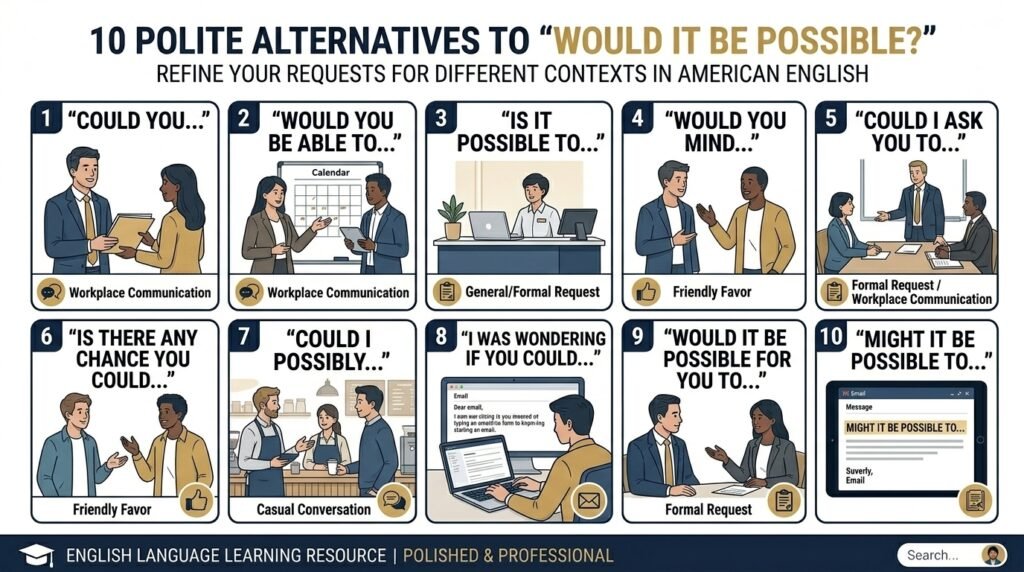
1. Could You
Meaning
“Could you” is one of the most natural ways to make a polite request. It asks whether someone is willing or able to do something without sounding demanding.
Best For
- Professional
- Casual
- Friendly
- Polite
Example 1
Could you send me the updated contract before Friday?
Example 2
Could you let me know which time works best for you?
Quick Tip
Use “Could you” when you want a short, polite request that works in both professional and everyday English.
2. Would You Be Able to
Meaning
“Would you be able to” politely asks whether someone has the ability or opportunity to do something. It is especially useful when you are unsure whether the person has the time or resources.
Best For
- Professional
- Formal
- Polite
Example 1
Would you be able to review the proposal by tomorrow afternoon?
Example 2
Would you be able to join us for a brief call next week?
Quick Tip
Choose this phrase when the person’s availability or ability is an important part of your request.
3. Is It Possible to
Meaning
“Is it possible to” focuses on whether something can happen rather than directly asking a person to do it. This makes it useful when discussing arrangements, policies, schedules, or available options.
Best For
- Professional
- Formal
- Polite
Example 1
Is it possible to change the delivery address before the order ships?
Example 2
Is it possible to move the appointment to Thursday?
Quick Tip
Use this option when you want to emphasize possibility or availability rather than the person’s willingness.
4. Would You Mind
Meaning
“Would you mind” is a polite way to ask someone to do something. It puts emphasis on whether the request would cause inconvenience.
Best For
- Friendly
- Casual
- Polite
- Warm
Example 1
Would you mind checking these figures one more time?
Example 2
Would you mind keeping the door open for a few minutes?
Quick Tip
Remember that “Would you mind” is normally followed by a verb ending in -ing, such as “Would you mind waiting?”
5. Could I Ask You to
Meaning
“Could I ask you to” introduces a request in a respectful and somewhat indirect way. It can soften a request when you want to show consideration.
Best For
- Professional
- Formal
- Polite
Example 1
Could I ask you to forward the receipt when you have a chance?
Example 2
Could I ask you to keep this information confidential?
Quick Tip
This phrase works well when the request may require extra effort or responsibility from the other person.
6. Would It Be Possible for You to
Meaning
“Would it be possible for you to” is a slightly more specific version of the original expression. It clearly identifies the person you are asking while maintaining a respectful tone.
Best For
- Formal
- Professional
- Polite
Example 1
Would it be possible for you to provide a copy of the invoice?
Example 2
Would it be possible for you to extend the deadline by two days?
Quick Tip
Use this wording for formal emails or situations where you want to make a request particularly courteous.
7. Is There Any Chance You Could
Meaning
“Is there any chance you could” makes a request sound flexible and less demanding. It suggests that you understand the request may not be convenient or possible.
Best For
- Casual
- Friendly
- Warm
- Polite
Example 1
Is there any chance you could pick me up after work?
Example 2
Is there any chance you could squeeze us into an earlier appointment?
Quick Tip
This phrase is useful when you are asking for a favor and want to leave room for the person to say no.
8. Could I Possibly
Meaning
“Could I possibly” is a polite way to ask for permission or assistance. It often sounds modest because “possibly” suggests that you understand your request may not be convenient.
Best For
- Formal
- Professional
- Friendly
- Polite
Example 1
Could I possibly borrow your notes from yesterday’s meeting?
Example 2
Could I possibly leave a little early today?
Quick Tip
Use this expression for requests that involve permission, access, or a personal favor.
9. I Was Wondering If You Could
Meaning
“I was wondering if you could” is a soft and indirect way to make a request. It is common in professional communication because it sounds courteous without being excessively formal.
Best For
- Professional
- Friendly
- Polite
- Warm
Example 1
I was wondering if you could take a look at my application.
Example 2
I was wondering if you could recommend a reliable photographer.
Quick Tip
This is a strong choice for emails when you want your request to sound polite and conversational.
10. Might It Be Possible to
Meaning
“Might it be possible to” is a formal and somewhat traditional way to ask whether something can be arranged. It creates a respectful, careful tone.
Best For
- Formal
- Professional
- Polite
Example 1
Might it be possible to arrange a private meeting next week?
Example 2
Might it be possible to receive the documents electronically?
Quick Tip
Reserve this phrase for formal situations because it can sound more formal than necessary in casual conversation.
Comparison Table
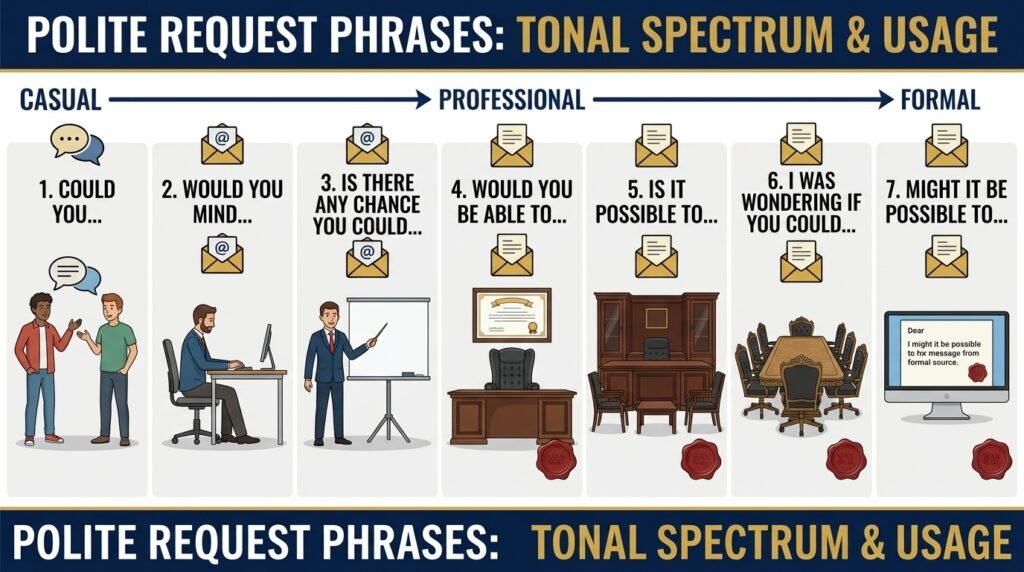
| Alternative | Best Used In | Tone |
| Could you | Everyday requests, work | Polite, natural |
| Would you be able to | Professional requests | Formal, respectful |
| Is it possible to | Arrangements, policies | Neutral, polite |
| Would you mind | Favors, everyday requests | Friendly, considerate |
| Could I ask you to | Professional requests | Respectful, formal |
| Would it be possible for you to | Formal requests | Very polite, formal |
| Is there any chance you could | Favors, flexible requests | Friendly, warm |
| Could I possibly | Permission, personal favors | Polite, modest |
| I was wondering if you could | Emails, workplace requests | Soft, professional |
| Might it be possible to | Formal correspondence | Formal, courteous |
Common Mistakes
1. Using Casual Phrases in Professional Emails
Expressions such as “Can you” are grammatically correct, but they may sound more direct than intended in some formal situations. Consider “Could you” or “Would you be able to” when writing to a client, manager, or unfamiliar professional contact.
2. Choosing Overly Formal Language
Not every request needs sophisticated wording. Saying “Might it be possible” to a close friend can sound unnatural. Choose language that fits the relationship and situation.
3. Repeating the Same Phrase
Using “would it be possible” in every email can make your writing feel repetitive. Rotate between natural alternatives such as “could you,” “is it possible,” and “I was wondering if you could.”
4. Forgetting the Context
Some phrases focus on ability, while others focus on possibility or willingness. For example, “Would you mind” asks about inconvenience, while “Is it possible” focuses on whether something can happen.
5. Sounding Insincere
Too many softening phrases can make a simple request unnecessarily complicated. If “Could you send me the file?” works perfectly, there is no need to turn it into a long formal sentence.
Frequently Asked Questions
What is another way to say “would it be possible”?
Common alternatives include “could you,” “would you be able to,” “is it possible to,” “would you mind,” and “I was wondering if you could.” The best option depends on the situation. For everyday requests, “could you” is usually the most natural, while more formal settings may call for “would you be able to.”
Is “could you” more polite than “can you”?
Generally, “could you” sounds slightly more polite and less direct than “can you.” Both are common in American English, though. “Can you” works well in casual conversations, while “could you” is often a better choice when making a respectful request at work or with someone you do not know well.
What is the most professional alternative to “would it be possible”?
“Would you be able to” is one of the strongest professional alternatives. It sounds respectful while remaining natural. For example, “Would you be able to send the report by Monday?” works well in workplace emails without sounding overly formal or old-fashioned.
Can I use “would you mind” in a business email?
Yes. “Would you mind” is perfectly acceptable in business communication when used appropriately. It can make a request sound considerate and friendly. For example, “Would you mind confirming the meeting time?” is polite, clear, and natural for many professional situations.
Is “I was wondering if you could” polite?
Yes, “I was wondering if you could” is a very polite and common way to introduce a request. It softens the request without making it excessively formal. It is particularly useful in emails when you want to sound professional, approachable, and respectful.
What is a formal way to say “would it be possible”?
For a formal setting, you can use “Would it be possible for you to,” “Would you be able to,” or “Might it be possible to.” The first two are usually more natural in modern American English, while “might it be possible” has a more traditional formal tone.
What is a casual way to say “would it be possible”?
For casual conversations, “Could you” is usually the easiest choice. Depending on the situation, you can also say “Is there any chance you could” or simply “Can you.” Your choice should reflect how close you are to the person and how much politeness the request requires.
How do I choose the right alternative?
Think about three things: tone, relationship, and context. Use “could you” for a simple polite request, “would you be able to” for professional situations, “would you mind” for considerate favors, and “is it possible” when you are asking about whether an arrangement can happen.
Conclusion
Knowing another way to say “would it be possible” gives you more flexibility when making polite requests. Although the original phrase is correct and useful, different alternatives can make your English sound more natural and better suited to the situation.
The key is to match your wording to your audience and purpose. A clear, sincere request will usually sound better than an unnecessarily complicated one.

Sarah Whitfield is the founder and lead editor of Anchors Press. With a background in copyediting and content strategy, she reviews every guide for accuracy, tone, and everyday usefulness before it’s published.