What Does “Another Way to Say Blown Away” Mean?
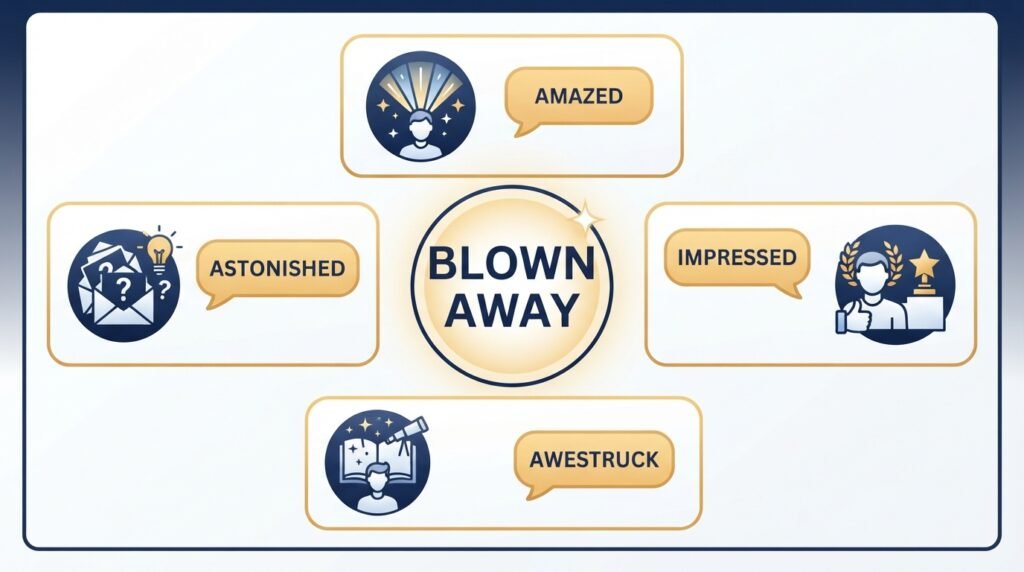
The phrase “blown away” is an informal idiom that usually means extremely impressed, amazed, or surprised by something. For example, you might say, “I was blown away by her performance” when the performance was far better than you expected.
People commonly use this expression when describing impressive achievements, beautiful places, exciting experiences, or unexpected results. Because it is casual and emotional, you may want a different phrase in formal or professional writing.
Why Use Other Ways to Say “Blown Away”?
Finding another way to say “blown away” helps you communicate the exact emotion you want without repeating the same expression. Different alternatives can also make your writing sound more polished or appropriate for a specific audience.
You may want an alternative to:
- Sound more professional or formal.
- Avoid repeating the same phrase.
- Express stronger or softer emotions.
- Match the tone of an email, review, or conversation.
- Describe admiration more precisely.
10 Best Other Ways to Say “Blown Away”
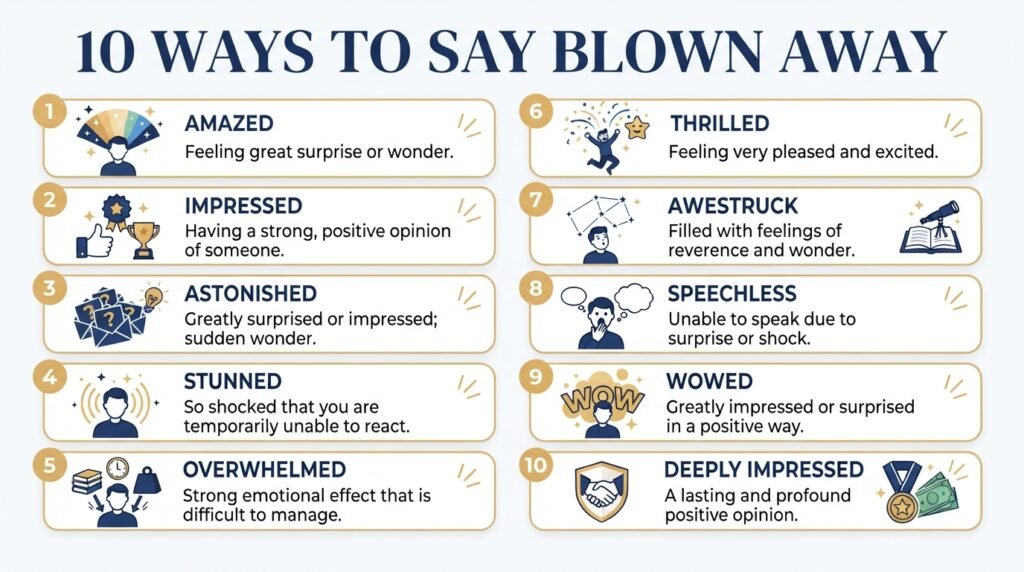
1. Amazed
Meaning
Amazed means extremely surprised or impressed by something. It is one of the closest and most natural alternatives to “blown away,” especially when something exceeds your expectations.
Best For
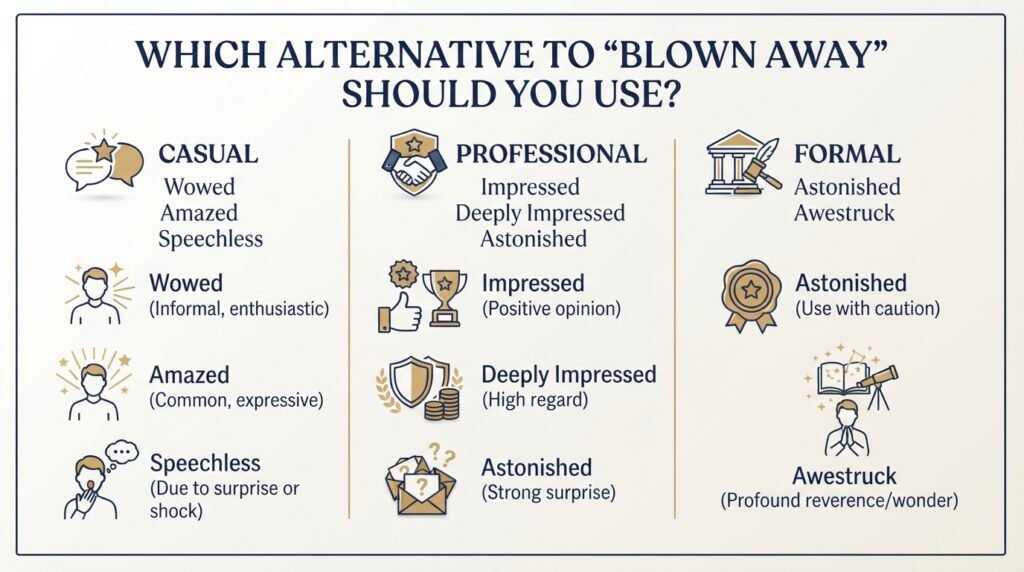
- Casual
- Friendly
- Warm
- Polite
Example 1
I was amazed by how quickly the team completed the project.
Example 2
She was amazed by the incredible view from the mountain.
Quick Tip
Use “amazed” when you want to express strong positive surprise without sounding too dramatic.
2. Impressed
Meaning
Impressed means that something made you admire its quality, skill, or effectiveness. It is more neutral and professional than “blown away.”
Best For
- Professional
- Formal
- Polite
- Casual
Example 1
The client was impressed with our presentation.
Example 2
I was impressed by the way you handled the difficult question.
Quick Tip
Choose “impressed” for workplace conversations, business emails, reviews, and professional feedback.
3. Astonished
Meaning
Astonished describes a very strong feeling of surprise. It suggests that something was so unexpected that it left you genuinely shocked or amazed.
Best For
- Formal
- Warm
- Polite
Example 1
We were astonished by the final results of the competition.
Example 2
He was astonished to discover how much the small business had grown.
Quick Tip
Use “astonished” when the level of surprise is especially high.
4. Stunned
Meaning
Stunned means so surprised or impressed that you have difficulty reacting immediately. It can describe both positive and negative situations, so context matters.
Best For
- Casual
- Friendly
- Warm
Example 1
I was stunned when they announced her name as the winner.
Example 2
The audience was stunned by the unexpected ending.
Quick Tip
Use “stunned” when you want to emphasize an immediate, powerful reaction.
5. Overwhelmed
Meaning
Overwhelmed means experiencing an emotion so strongly that it becomes difficult to process. It can describe excitement, gratitude, admiration, or even stress, so the surrounding words should make your meaning clear.
Best For
- Warm
- Friendly
- Polite
- Formal
Example 1
I was overwhelmed by everyone’s kindness during the celebration.
Example 2
She felt overwhelmed with gratitude after receiving the award.
Quick Tip
Add words such as “with gratitude” or “with emotion” when you want to make the positive meaning clear.
6. Thrilled
Meaning
Thrilled means extremely excited, pleased, or happy about something. Unlike “blown away,” it focuses more on excitement and happiness than surprise.
Best For
- Casual
- Friendly
- Warm
- Polite
Example 1
We were thrilled to hear that our proposal had been accepted.
Example 2
He was thrilled with the final design of his new website.
Quick Tip
Choose “thrilled” when your reaction is mainly excitement rather than amazement.
7. Awestruck
Meaning
Awestruck describes a powerful feeling of wonder, admiration, or amazement. It works particularly well when something feels breathtaking, magnificent, or almost overwhelming.
Best For
- Formal
- Warm
- Friendly
Example 1
We stood awestruck as the northern lights appeared above us.
Example 2
The visitors were awestruck by the cathedral’s stunning architecture.
Quick Tip
Use “awestruck” for extraordinary sights, performances, achievements, or experiences that inspire wonder.
8. Speechless
Meaning
Speechless means so surprised, impressed, or emotional that you do not know what to say. It is conversational and creates a strong sense of personal reaction.
Best For
- Casual
- Friendly
- Warm
Example 1
Your surprise party left me completely speechless.
Example 2
I was speechless when I saw the finished painting.
Quick Tip
“Speechless” works best when you want to highlight the intensity of your reaction rather than describe the thing itself.
9. Wowed
Meaning
Wowed means strongly impressed or excited by something. It is very close in meaning to “blown away” and has a similarly casual, energetic feel.
Best For
- Casual
- Friendly
- Warm
Example 1
The new restaurant really wowed us with its creative menu.
Example 2
Her performance wowed everyone in the theater.
Quick Tip
Use “wowed” when you want to keep the enthusiastic, conversational feeling of “blown away.”
10. Deeply Impressed
Meaning
Deeply impressed expresses strong admiration while maintaining a polished and professional tone. It is useful when you want to communicate sincere appreciation without sounding overly casual.
Best For
- Professional
- Formal
- Polite
- Warm
Example 1
I was deeply impressed by your attention to detail throughout the project.
Example 2
The committee was deeply impressed by her dedication to the community.
Quick Tip
Choose this phrase when writing professional feedback, recommendations, business messages, or formal praise.
Comparison Table
| Alternative | Best Used In | Tone |
| Amazed | Everyday conversations | Strong, positive |
| Impressed | Work and general communication | Professional, neutral |
| Astonished | Formal or dramatic situations | Very surprised |
| Stunned | Casual reactions | Strong, emotional |
| Overwhelmed | Emotional or heartfelt moments | Deep, emotional |
| Thrilled | Exciting news and experiences | Happy, enthusiastic |
| Awestruck | Extraordinary experiences | Wonder-filled |
| Speechless | Personal reactions | Emotional, conversational |
| Wowed | Casual praise and reviews | Energetic, enthusiastic |
| Deeply impressed | Professional praise | Polished, sincere |
Common Mistakes
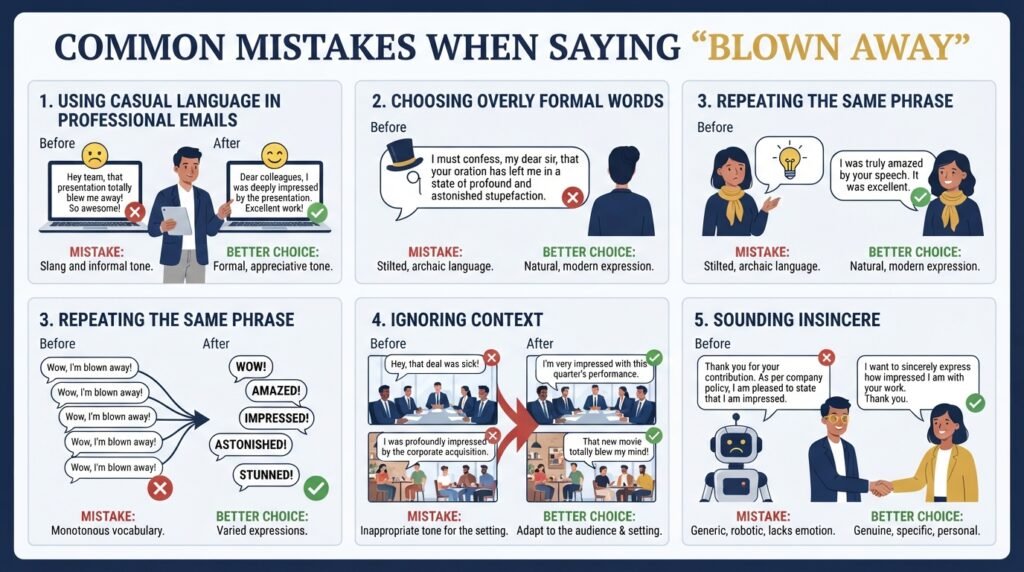
1. Using Casual Phrases in Professional Emails
“Blown away” and “wowed” can sound too informal in some business settings. “Impressed” or “deeply impressed” is usually a safer choice for professional communication.
2. Choosing Overly Formal Language
Words such as “astonished” or “awestruck” may sound unnatural in a simple text message. Match the vocabulary to the relationship and situation.
3. Repeating the Same Phrase
Using “blown away” several times can make your writing feel repetitive. Switching between precise alternatives keeps your language fresh.
4. Forgetting Context
Not every synonym carries exactly the same emotion. For example, “thrilled” emphasizes happiness, while “stunned” emphasizes surprise.
5. Sounding Insincere
Strong words can lose their impact when you use them for ordinary situations. Save expressions such as “awestruck” for experiences that genuinely create a powerful reaction.
Frequently Asked Questions
What is another way to say “blown away”?
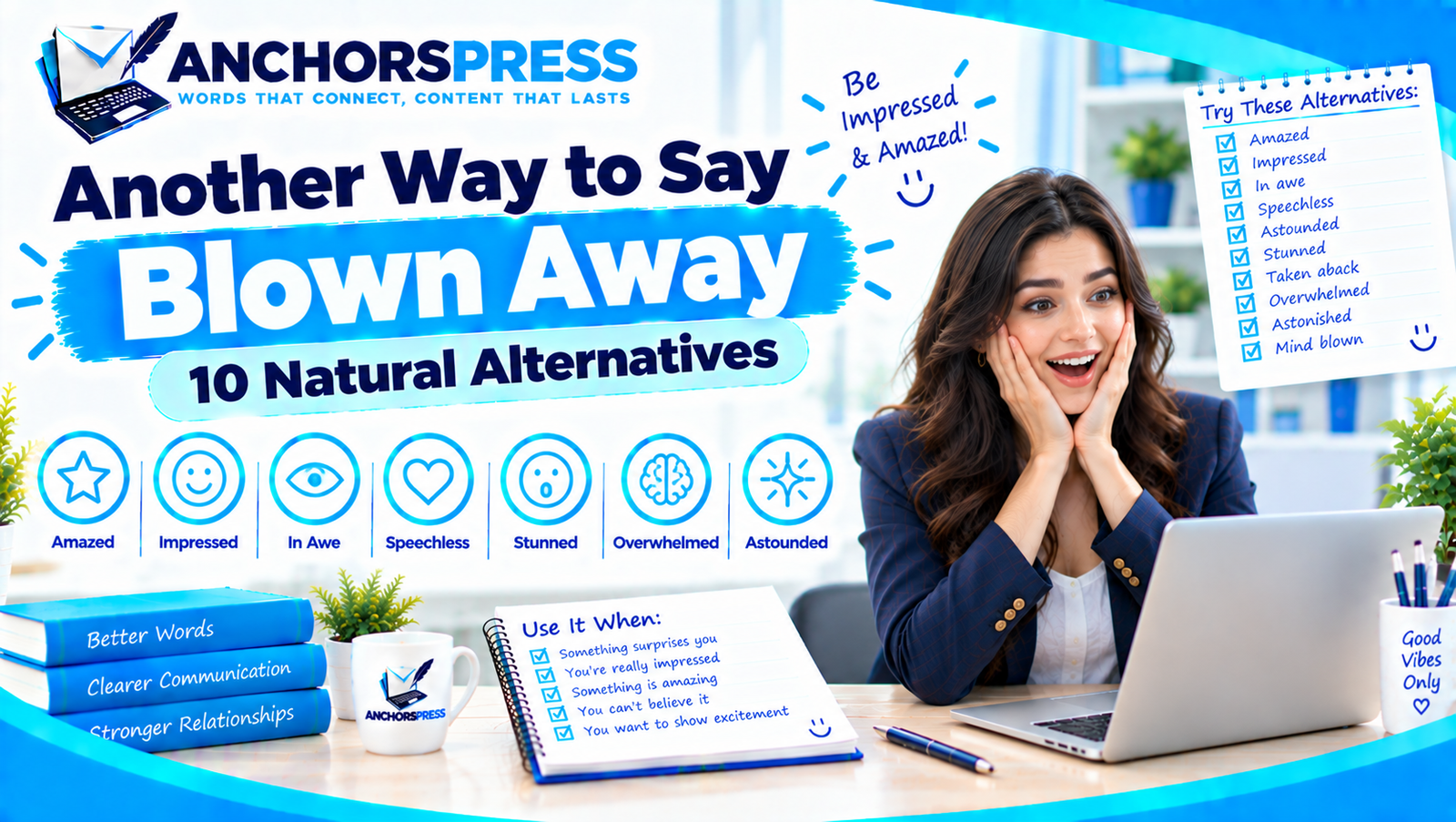
Common alternatives include amazed, impressed, astonished, stunned, thrilled, awestruck, speechless, wowed, overwhelmed, and deeply impressed. The best option depends on the context. “Impressed” is a versatile choice, while “awestruck” suggests wonder and “thrilled” focuses more on excitement.
What is a professional way to say “blown away”?
A professional way to say “blown away” is “impressed” or “deeply impressed.” For example, instead of saying, “I was blown away by your work,” you could write, “I was deeply impressed by the quality of your work.” This sounds polished while still expressing genuine admiration.
Is “amazed” the same as “blown away”?
“Amazed” and “blown away” have very similar meanings when you are describing a strong positive reaction. However, “blown away” is more informal and conversational. “Amazed” works in a wider range of situations, including professional and formal writing.
What is a casual synonym for “blown away”?
“Wowed,” “stunned,” and “speechless” are good casual alternatives. They work well in conversations, texts, social media posts, and informal reviews. “Wowed” is especially close to “blown away” because both expressions communicate strong enthusiasm and admiration.
What is a stronger word for “impressed”?
Depending on the context, “astonished,” “awestruck,” or “stunned” can communicate a stronger reaction than “impressed.” “Awestruck” is best when something creates wonder, while “astonished” emphasizes unexpected surprise. The right word depends on the emotion you want to highlight.
Can I use “blown away” in a professional email?
Yes, but it depends on your workplace and audience. In a relaxed company culture, “blown away” may sound natural. In a formal email, client communication, or business report, “impressed” or “deeply impressed” is usually more appropriate.
What is another way to say “I was blown away”?
You can say “I was amazed,” “I was incredibly impressed,” “I was astonished,” “I was stunned,” or “I was awestruck.” If you want to sound enthusiastic and casual, “I was wowed” is another natural option.
What is the difference between “blown away” and “overwhelmed”?
“Blown away” usually means extremely impressed or amazed. “Overwhelmed” describes an emotion that feels very strong or difficult to process and can be positive or negative. For example, you can be overwhelmed with gratitude, but you can also feel overwhelmed by stress or responsibility.
Conclusion
Knowing another way to say “blown away” gives you more control over how you express surprise, admiration, excitement, or wonder. The best alternative depends on the situation and the emotion you want to communicate.
Choose “impressed” or “deeply impressed” for professional communication, “amazed” for everyday positive reactions, and “wowed” when you want a casual and enthusiastic tone. If something creates an extraordinary sense of wonder, “awestruck” is a stronger and more vivid choice. For emotional moments, “speechless” or “overwhelmed” may fit better.

Daniel Cho writes about professional communication, drawing on years spent training teams on clear, confident workplace writing — from emails to performance reviews.