What Does “Another Way to Say How Much” Mean?

The phrase “how much” is commonly used to ask about an amount, quantity, price, degree, or extent. For example, you might ask, “How much does this cost?” or “How much time do we have?”
Looking for another way to say “how much” usually means finding a phrase that fits a specific situation more naturally. A business email may need a more precise expression, while a casual conversation may sound better with a simple alternative.
Why Use Other Ways to Say “How Much”?
Using different expressions can make your communication clearer and more natural. It also helps you avoid repeating the same question in conversations, emails, and professional writing.
Other alternatives can help you:
- Ask about money more precisely.
- Clarify a quantity or measurement.
- Sound more professional in writing.
- Ask about degree or impact.
- Make everyday conversations feel more natural.
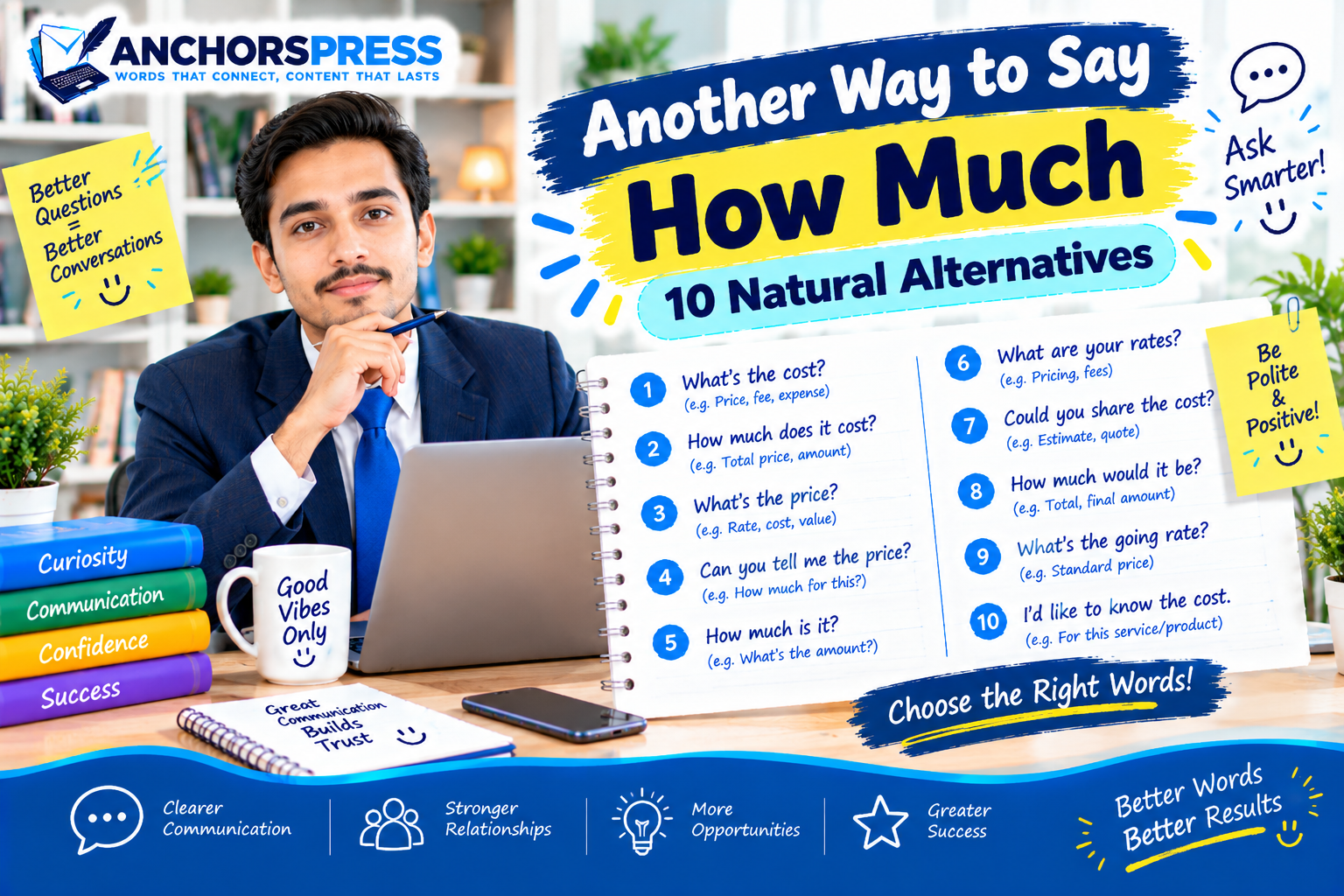
10 Best Other Ways to Say “How Much”
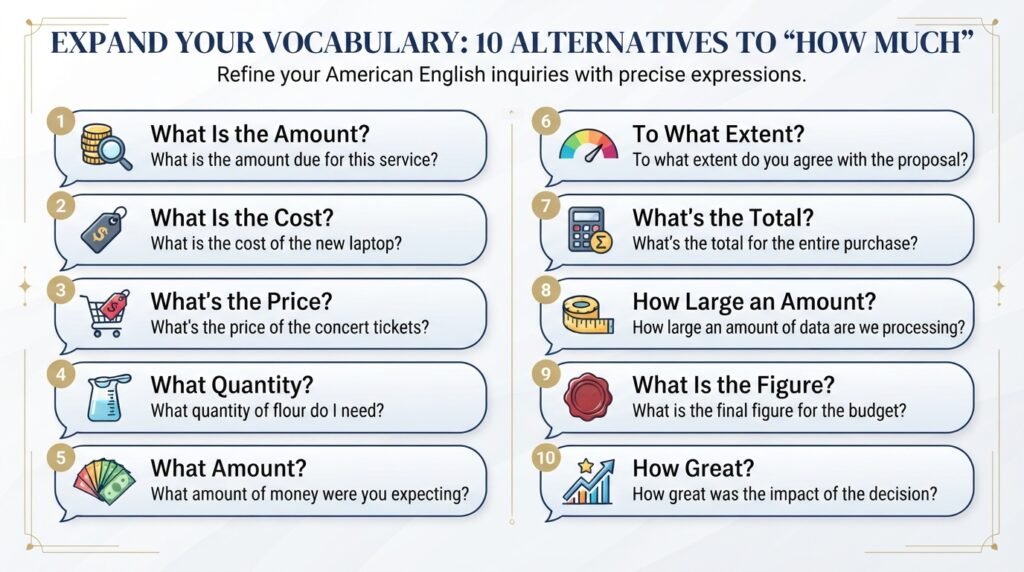
1. What Is the Amount?
Meaning
“What is the amount?” is a clear and slightly formal way to ask about a specific quantity. It works especially well when the exact figure matters.
Best For
- Professional
- Formal
- Polite
Example 1
What is the amount we need to pay before the project begins?
Example 2
Could you confirm what the amount due on the invoice is?
Quick Tip
Use this phrase when you want to sound precise, especially when discussing payments, invoices, or financial records.
2. What Is the Cost?
Meaning
“What is the cost?” is a natural alternative when “how much” refers to the price of something. It focuses specifically on the money required to purchase or complete something.
Best For
- Professional
- Formal
- Polite
Example 1
What is the cost of upgrading the current software package?
Example 2
Before we move forward, I’d like to know what the cost will be.
Quick Tip
Use “what is the cost?” instead of “how much?” when discussing services, projects, repairs, or business expenses.
3. What’s the Price?
Meaning
“What’s the price?” directly asks how much something sells for. It sounds natural and straightforward in everyday American English.
Best For
- Casual
- Friendly
- Polite
Example 1
What’s the price of the blue jacket?
Example 2
I like this table. What’s the price listed on it?
Quick Tip
This works best when asking about the selling price of a specific product or item.
4. What Quantity?
Meaning
“What quantity?” asks about the number or amount of something needed, supplied, or available. It is more specific than the general phrase “how much.”
Best For
- Professional
- Formal
Example 1
What quantity of paper should we order for the office?
Example 2
What quantity of materials will the contractor need?
Quick Tip
Use this expression for inventory, supplies, orders, ingredients, and other measurable items.
5. What Amount?
Meaning
“What amount?” is a concise way to ask about a particular quantity. It can refer to money, time, resources, or other measurable things.
Best For
- Professional
- Formal
- Polite
Example 1
What amount should I transfer to the account?
Example 2
What amount of time should we set aside for the meeting?
Quick Tip
“ What amount?” is useful when the surrounding sentence already makes the type of quantity clear.
6. To What Extent?
Meaning
“To what extent?” is used when “how much” means how greatly, how strongly, or how far something applies. It is common when discussing effects, influence, responsibility, or importance.
Best For
- Formal
- Professional
Example 1
To what extent did the new policy affect employee productivity?
Example 2
The researchers examined to what extent exercise influenced sleep quality.
Quick Tip
Do not use this phrase for simple prices or quantities. It is better for degree, impact, influence, and scope.
7. What’s the Total?
Meaning
“What’s the total?” asks for the final combined amount. It is particularly useful when several individual costs or quantities need to be added together.
Best For
- Casual
- Friendly
- Professional
- Polite
Example 1
We have three items in the cart. What’s the total?
Example 2
After adding tax and shipping, what’s the total?
Quick Tip
Use this phrase when you want the complete final figure rather than the price of one individual item.
8. How Large an Amount?
Meaning
“How large an amount?” provides a more specific and somewhat formal way to ask about the size of a quantity. It is useful when the size of the amount itself matters.
Best For
- Formal
- Professional
Example 1
How large an amount should we reserve for unexpected expenses?
Example 2
The manager asked how large an amount would be required to cover the repairs.
Quick Tip
This phrase is more formal than everyday “how much,” so use it mainly when precision matters.
9. What Is the Figure?
Meaning
“What is the figure?” is a concise expression often used when asking for a specific number or financial amount. It is especially common in business and professional conversations.
Best For
- Professional
- Formal
- Polite
Example 1
What is the figure we agreed on for the annual contract?
Example 2
Could you send me the final figure before the meeting?
Quick Tip
Use “the figure” when everyone already understands what number you are discussing.
10. How Great?
Meaning
“How great?” can replace “how much” when asking about the degree or intensity of something. It is more suitable for abstract ideas such as importance, influence, risk, or change.
Best For
- Formal
- Professional
Example 1
How great is the demand for affordable housing in the area?
Example 2
The survey measured how great the public’s concern was about the issue.
Quick Tip
Use “how great” for degree or intensity, not for ordinary questions about prices or quantities.
Comparison Table
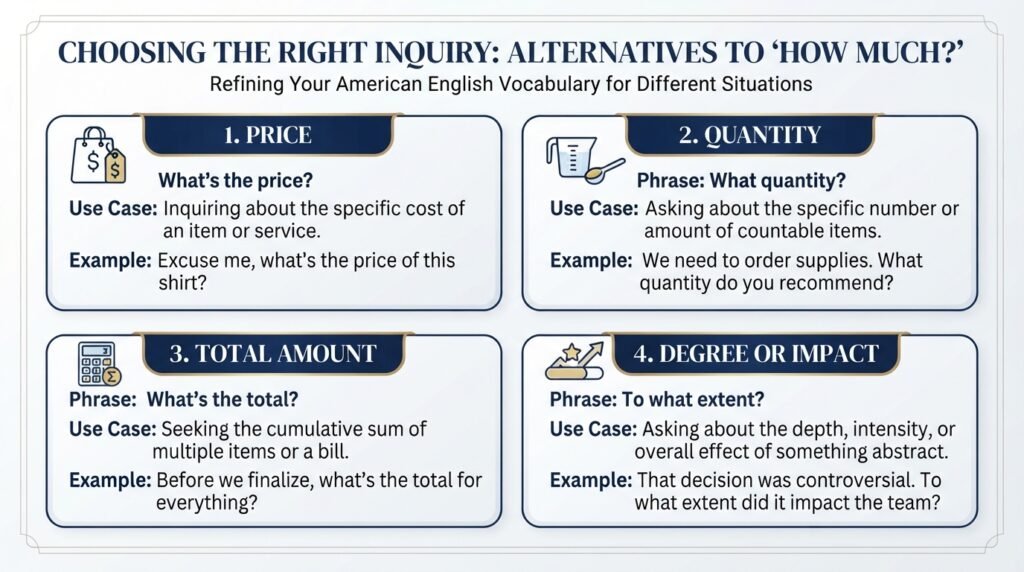
| Alternative | Best Used In | Tone |
| What is the amount? | Payments, quantities, records | Formal |
| What is the cost? | Services, projects, expenses | Professional |
| What’s the price? | Products and purchases | Casual |
| What quantity? | Supplies and inventory | Formal |
| What amount? | Money, time, resources | Professional |
| To what extent? | Degree, impact, influence | Formal |
| What’s the total? | Combined costs or amounts | Casual |
| How large an amount? | Specific quantities | Formal |
| What is the figure? | Business and financial discussions | Professional |
| How great? | Degree, intensity, importance | Formal |
Common Mistakes
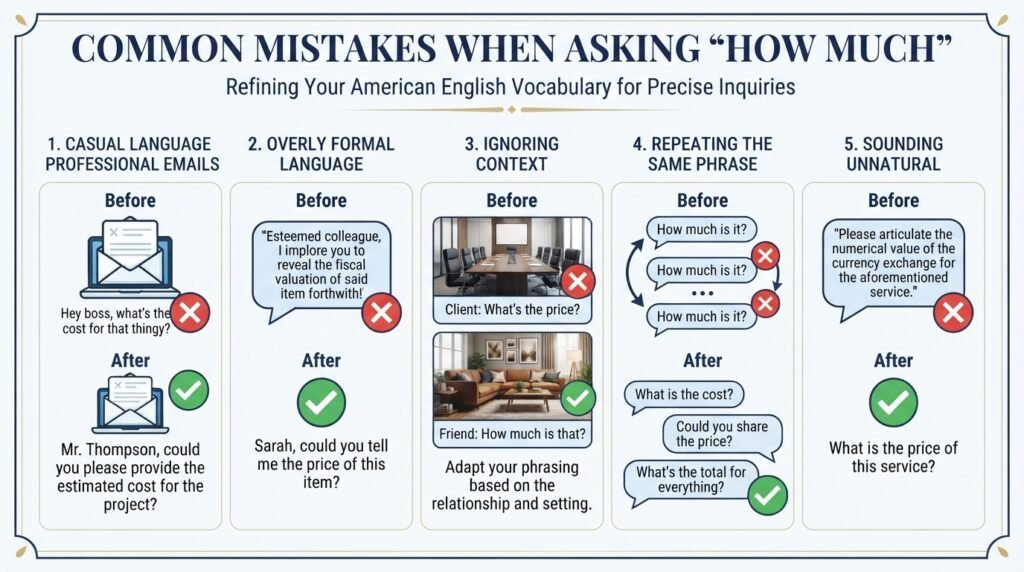
1. Using Casual Phrases in Professional Emails
Writing “What’s the price?” may be fine in everyday conversation, but “What is the cost?” can sound more appropriate in a formal business email.
2. Choosing an Overly Formal Expression
Not every situation requires formal language. Asking a friend “To what extent is dinner going to cost?” would sound unnatural because “How much is dinner?” is much more conversational.
3. Ignoring the Meaning of “How Much”
“How much” can refer to money, quantity, degree, or extent. Choosing an alternative without identifying the intended meaning can make your sentence confusing.
4. Repeating the Same Expression
Using “how much” several times in the same paragraph can make writing feel repetitive. Select alternatives that match the specific context instead of replacing every occurrence automatically.
5. Sounding Insincere or Unnatural
A phrase can be grammatically correct but still sound awkward. Always choose an expression that a native speaker would naturally use in that situation.
Frequently Asked Questions

What is another way to say “how much” professionally?
Professional alternatives include “what is the amount,” “what is the cost,” “what is the figure,” and “what quantity.” The right choice depends on what you are asking about. For example, “What is the cost?” works well for a service, while “What is the figure?” can work in a business or financial discussion.
What is another way to ask how much something costs?
You can say “What’s the price?” “What is the cost?” “What is the total?” or “What is the final figure?” For casual conversations, “What’s the price?” sounds natural. In professional communication, “What is the cost?” is usually clearer and more appropriate.
How do you say “how much” in a formal way?
In formal writing, you can use “what is the amount,” “what is the cost,” “what quantity,” or “to what extent,” depending on the meaning. “To what extent” is appropriate when discussing degree or impact rather than money or a physical quantity.
What is a polite way to ask “how much”?
A polite question could be “Could you tell me what the cost is?” or “Could you let me know the amount?” Adding “could you” or “would you” makes the request softer and more courteous, particularly when speaking with customers, coworkers, or unfamiliar people.
Can “what amount” replace “how much”?
Yes, but only when the context involves a measurable amount. For example, “What amount should I pay?” is understandable and can sound professional. However, in casual American English, “How much should I pay?” is usually more natural.
What is another way to say “how much” when talking about quantity?
When discussing quantity, you can use “what quantity,” “what amount,” or “how large an amount.” For example, “What quantity of flour do we need?” clearly asks about the required amount of a product or material.
What is another way to say “how much” when discussing impact?
“To what extent?” is one of the best choices when asking about impact, influence, or degree. For example, instead of asking “How much did the change affect sales?” you could write, “To what extent did the change affect sales?”
Is “how much” grammatically correct?
Yes. “How much” is completely correct and extremely common in American English. It is used with uncountable nouns and can also ask about price, time, degree, or general quantity. There is no need to replace it unless you want a different tone, greater precision, or less repetition.
Conclusion
Knowing another way to say “how much” gives you more flexibility in everyday conversations, professional emails, and formal writing. The best alternative depends on exactly what you mean.
The key is not to replace “how much” simply for the sake of variety. Choose the phrase that makes your meaning clearest and fits the situation naturally.
Sarah Whitfield is the founder and lead editor of Anchors Press. With a background in copyediting and content strategy, she reviews every guide for accuracy, tone, and everyday usefulness before it’s published.