
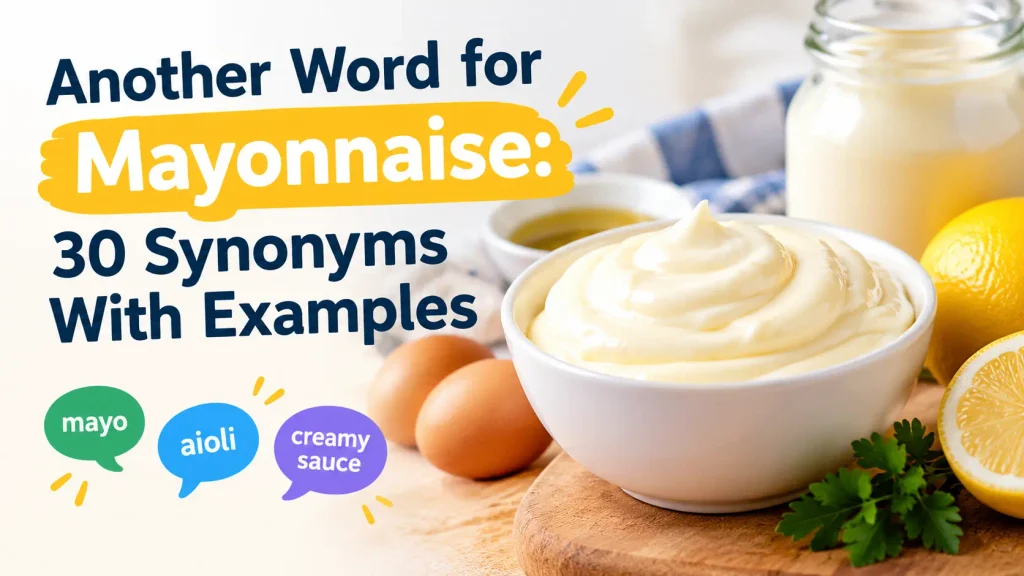
Mayonnaise is a thick, creamy sauce made from oil, egg yolk, and an acid such as lemon juice or vinegar. The closest everyday alternatives include mayo, sandwich spread, creamy dressing, and egg-based sauce. However, these words do not always mean the same thing.
The best choice depends on your meaning and context. For example, mayo works in casual speech, while sandwich spread may refer to a similar product. Other choices include sauces, dips, and plant-based versions of mayonnaise.
Quick list: Mayo, sandwich spread, creamy sauce, salad dressing, aioli, egg-based sauce, vegan mayo, plant-based mayonnaise, garlic mayonnaise, and burger sauce.
This guide explores 30 alternatives with meanings, IPA, usage notes, examples, and context. It also explains common word pairs, food terms, and word-choice mistakes.
At a Glance: Mayonnaise Synonyms and Related Alternatives
| Alternative | Part of Speech | Meaning | Register / Tone | Ideal Context |
| Mayo | Noun | Short name for mayonnaise | Informal | Everyday speech |
| Sandwich spread | Noun phrase | Spread for bread and sandwiches | General | Sandwich recipes |
| Creamy sauce | Noun phrase | Smooth, thick sauce | General | Food descriptions |
| Salad dressing | Noun phrase | Sauce added to salads | General | Salad recipes |
| Aioli | Noun | Garlic sauce, often made with oil | Culinary | Mediterranean food |
| Egg-based sauce | Noun phrase | Sauce made with eggs | Descriptive | Cooking guides |
| Vegan mayo | Noun phrase | Mayonnaise-style sauce without animal products | General | Vegan meals |
| Plant-based mayonnaise | Noun phrase | Mayonnaise made without animal ingredients | Formal | Food labels |
| Garlic mayonnaise | Noun phrase | Mayonnaise flavored with garlic | General | Burgers and fries |
| Burger sauce | Noun phrase | Sauce served with burgers | Casual | Fast food |
Which Word Should You Use?
| If you want to… | Use | Why |
| Speak casually | Mayo | It is the common short form of mayonnaise. |
| Describe a spread for bread | Sandwich spread | It focuses on how people serve the product. |
| Describe texture | Creamy sauce | It highlights a smooth, thick texture. |
| Talk about salad toppings | Salad dressing | It names a broad group of sauces for salads. |
| Name a garlic sauce | Aioli | It refers to a distinct sauce with regional variations. |
| Describe an egg-based sauce | Egg-based sauce | It highlights one key ingredient. |
| Choose a vegan product | Vegan mayo | It signals that the product contains no animal ingredients. |
| Describe a sauce for burgers | Burger sauce | It names the sauce by its common use. |
Exploring the Multiple Meanings of “Mayonnaise”
Mayonnaise has one main meaning, but people use it in several food-related contexts.
1. A Classic Emulsified Sauce
- Meaning; Mayonnaise is a thick sauce made by blending oil with egg yolk and an acid.
- Explanation: The egg yolk helps the oil and liquid stay mixed. Also, mustard may add flavor and help the mixture hold together.
- Example: She made fresh mayonnaise with egg yolk, oil, and lemon juice.
2. A Sandwich Spread
- Meaning: Mayonnaise adds moisture, flavor, and a creamy texture to bread-based meals.
- Explanation: People often spread it on bread before adding meat or vegetables. Also, it pairs well with cheese, eggs, and tuna.
- Example: He spread mayonnaise on the bread before adding sliced chicken.
3. A Salad Ingredient
- Meaning: Mayonnaise works as a creamy base for many cold salads.
- Explanation: Cooks mix it with potatoes, eggs, or chopped vegetables. Also, they may add herbs, mustard, or spices for more flavor.
- Example: We mixed mayonnaise with potatoes to make a simple salad.
4. A Base for Other Sauces
- Meaning: Mayonnaise can form the base of flavored sauces and dips.
- Explanation: Cooks add garlic, herbs, chili, or other ingredients to change its taste. Also, these blends suit burgers, fries, and seafood.
- Example: She stirred garlic and lemon juice into mayonnaise for the dip.
5. A Plant-Based Alternative
- Meaning: Plant-based mayonnaise offers a similar creamy texture without animal ingredients.
- Explanation: Makers may use soy, pea protein, or other plant-based ingredients instead of egg. Also, recipes differ by brand and product type.
- Example: He bought vegan mayonnaise for the plant-based sandwiches.
Sources: Merriam-Webster, Collins Dictionary, and Encyclopaedia Britannica.
Analyzing 30 Mayonnaise Alternatives in Detail
Some choices below refer directly to mayonnaise, while others name similar sauces or specific uses.
Common Names and Direct Alternatives
1. Mayo
IPA: US /ˈmeɪ.oʊ/ · UK /ˈmeɪ.əʊ/
Definition: Mayo is the short, common name for mayonnaise. It also refers to the same creamy sauce in casual speech.
- Usage: This is the closest everyday synonym. Also, it fits menus, recipes, and informal talk.
- Example: I added mayo to my chicken sandwich for extra flavor.
2. Sandwich Spread
IPA: US and UK /ˈsænd.wɪtʃ sprɛd/
Definition: Sandwich spread is a soft food spread for bread. It also refers to products that may contain mayonnaise and other ingredients.
- Usage: It works when discussing sandwich fillings. However, some sandwich spreads differ from plain mayonnaise.
- Example: She chose a tangy sandwich spread for her lunch.
3. Creamy Sauce
IPA: US and UK /ˈkriː.mi sɔːs/
Definition: A creamy sauce has a smooth, rich texture. It also covers many sauces beyond mayonnaise.
- Usage: Use this broad term when texture matters. However, it is not an exact synonym for mayonnaise.
- Example: The cook served a creamy sauce with the grilled chicken.
4. Egg-Based Sauce
IPA: US and UK /ɛɡ beɪst sɔːs/
Definition: An egg-based sauce uses eggs as a key ingredient. It also includes sauces other than mayonnaise.
- Usage: This term suits cooking guides. However, it names a broad group rather than one exact sauce.
- Example: The chef prepared an egg-based sauce for the cold seafood dish.
5. Oil-Based Sauce
IPA: US and UK /ɔɪl beɪst sɔːs/
Definition: An oil-based sauce uses oil as a main ingredient. It also includes dressings and sauces without eggs.
- Usage: This term highlights the oil content. However, it is broader than mayonnaise.
- Example: She chose an oil-based sauce for the fresh vegetable salad.
6. Emulsified Sauce
IPA: US and UK /ɪˈmʌl.sɪ.faɪd sɔːs/
Definition: An emulsified sauce blends liquids that do not mix easily. It also includes sauces made without mayonnaise.
- Usage: This is a technical cooking term. In fact, mayonnaise is a well-known example of an emulsion.
- Example: The cooking class showed us how to make an emulsified sauce.
Sauces With Similar Uses
7. Salad Dressing
IPA: US and UK /ˈsæl.əd ˈdres.ɪŋ/
Definition: Salad dressing adds flavor and moisture to salads. It also includes thin vinaigrettes and creamy blends.
- Usage: Use it for sauces served with salad. However, many salad dressings contain no mayonnaise.
- Example: He poured creamy salad dressing over the chopped vegetables.
8. Cream Dressing
IPA: US and UK /kriːm ˈdres.ɪŋ/
Definition: Cream dressing is a rich sauce for salads or cold dishes. It also may use cream rather than mayonnaise.
- Usage: It fits recipes that focus on a rich texture. However, it is not always a mayonnaise substitute.
- Example: The cafe served cream dressing with its garden salad.
9. Burger Sauce
IPA: US and UK /ˈbɜːr.ɡər sɔːs/
Definition: Burger sauce is a condiment served with burgers. It also may contain mayo, mustard, ketchup, or spices.
- Usage: This name suits burger recipes. However, each recipe can have a different mix.
- Example: He spread burger sauce on the bun before adding the patty.
10. Dipping Sauce
IPA: US and UK /ˈdɪp.ɪŋ sɔːs/
Definition: A dipping sauce adds flavor to food dipped into it. It also covers sauces with many different bases.
- Usage: Use it for fries, snacks, and cooked foods. However, the term does not mean mayonnaise alone.
- Example: We served a creamy dipping sauce with the hot fries.
11. Garlic Sauce
IPA: US and UK /ˈɡɑːr.lɪk sɔːs/
Definition: Garlic sauce is a sauce flavored with garlic. It also comes in many forms, including creamy and oil-based versions.
- Usage: It works when garlic is the main flavor. However, some garlic sauces contain no mayonnaise.
- Example: She dipped her roast potatoes into the garlic sauce.
12. Tartar Sauce
IPA: US and UK /ˈtɑːr.tər sɔːs/
Definition: Tartar sauce is a creamy condiment often made with mayonnaise and chopped pickles. It also may contain herbs or lemon juice.
- Usage: It pairs well with fish and seafood. However, it is a flavored sauce rather than plain mayonnaise.
- Example: He served tartar sauce beside the baked fish.
Named Sauces and Regional Variants
13. Aioli
IPA: US /aɪˈoʊ.li/ · UK /aɪˈəʊ.li/
Definition: Aioli is a garlic sauce linked to Mediterranean cooking. It also refers to mayonnaise-style sauces in many modern menus.
- Usage: Traditional recipes may use garlic and oil without egg. However, many modern versions use mayonnaise as a base.
- Example: The restaurant served garlic aioli with its crispy potatoes.
14. Remoulade
IPA: US /ˌrɛm.əˈlɑːd/ · UK /ˌreɪ.muˈlɑːd/
Definition: Remoulade is a seasoned sauce often based on mayonnaise. It also may contain mustard, herbs, pickles, or spices.
- Usage: It suits seafood and other savory dishes. However, recipes vary across regions.
- Example: The chef added remoulade to the crab cake.
15. Thousand Island Dressing
IPA: US and UK /ˈθaʊ.zənd ˈaɪ.lənd ˈdres.ɪŋ/
Definition: Thousand Island dressing is a creamy sauce with a sweet and tangy taste. It also often contains mayonnaise, tomato, and chopped pickles.
- Usage: Use it for salads and sandwiches. However, it has a more complex flavor than plain mayo.
- Example: She added Thousand Island dressing to her burger.
16. Russian Dressing
IPA: US and UK /ˈrʌʃ.ən ˈdres.ɪŋ/
Definition: Russian dressing is a creamy, tangy sauce often made with mayonnaise and tomato ingredients. It also may include mustard or spices.
- Usage: It suits sandwiches and salads. However, recipes can differ from one place to another.
- Example: He spread Russian dressing over the bread for his sandwich.
17. Ranch Dressing
IPA: US and UK /ræntʃ ˈdres.ɪŋ/
Definition: Ranch dressing is a creamy sauce often flavored with herbs and garlic. It also commonly uses buttermilk or mayonnaise.
- Usage: It is popular with salads and snacks. However, its herb flavor sets it apart from plain mayo.
- Example: We used ranch dressing as a dip for carrots.
18. Caesar Dressing
IPA: US and UK /ˈsiː.zər ˈdres.ɪŋ/
Definition: Caesar dressing is a savory sauce for Caesar salad. It also may contain egg, oil, cheese, lemon, and anchovies.
- Usage: It works best in Caesar salad recipes. However, it is not a direct synonym for mayonnaise.
- Example: The cook tossed the lettuce with fresh Caesar dressing.
Plant-Based and Special Versions
19. Vegan Mayo
IPA: US and UK /ˈviː.ɡən ˈmeɪ.oʊ/
Definition: Vegan mayo is a mayonnaise-style sauce made without animal products. It also offers a creamy choice for vegan meals.
- Usage: Use it for plant-based diets. However, check the label if you have food allergies.
- Example: She used vegan mayo in the chickpea salad.
20. Plant-Based Mayonnaise
IPA: US and UK /plænt beɪst ˌmeɪ.əˈneɪz/
Definition: Plant-based mayonnaise is a creamy sauce made from plant ingredients. It also serves as an egg-free option for many meals.
- Usage: This name suits food labels and formal writing. In fact, it makes the product type clear.
- Example: The shop sells plant-based mayonnaise made with pea protein.
21. Egg-Free Mayo
IPA: US and UK /ɛɡ friː ˈmeɪ.oʊ/
Definition: Egg-free mayo is a mayonnaise-style spread without eggs. It also may contain soy, pea protein, or other plant ingredients.
- Usage: It suits people seeking egg-free foods. However, egg-free does not always mean free from other allergens.
- Example: He chose egg-free mayo for the picnic sandwiches.
22. Light Mayonnaise
IPA: US and UK /laɪt ˌmeɪ.əˈneɪz/
Definition: Light mayonnaise is a version with less fat or fewer calories than a standard product. It also may use extra water or other ingredients.
- Usage: It fits recipes that call for a lighter product. However, the exact nutrition facts vary by brand.
- Example: She used light mayonnaise to make the potato salad.
23. Low-Fat Mayo
IPA: US and UK /loʊ fæt ˈmeɪ.oʊ/
Definition: Low-fat mayo has less fat than a standard version. It also may differ in taste and texture.
- Usage: Use this term when fat content matters. However, check the product label for exact values.
- Example: He bought low-fat mayo for his lunch wrap.
24. Garlic Mayonnaise
IPA: US and UK /ˈɡɑːr.lɪk ˌmeɪ.əˈneɪz/
Definition: Garlic mayonnaise is mayonnaise flavored with garlic. It also may contain lemon juice, herbs, or spices.
- Usage: It suits burgers, fries, and sandwiches. In fact, it gives plain mayo a stronger taste.
- Example: The cafe served garlic mayonnaise with its fish sandwich.
Descriptive and Context-Specific Terms
25. Sandwich Sauce
IPA: US and UK /ˈsænd.wɪtʃ sɔːs/
Definition: Sandwich sauce is a sauce added to a sandwich. It also includes mustard, ketchup, and other blends.
- Usage: This term focuses on the food’s use. However, it does not name one specific recipe.
- Example: She added sandwich sauce to her turkey and lettuce roll.
26. Creamy Condiment
IPA: US and UK /ˈkriː.mi ˈkɑːn.dɪ.mənt/
Definition: A creamy condiment adds flavor and moisture to food. It also includes dips and sauces beyond mayonnaise.
- Usage: Use it in broad food descriptions. However, it is a related term, not an exact synonym.
- Example: The creamy condiment gave the grilled vegetables a richer taste.
27. Cold Sauce
IPA: US and UK /koʊld sɔːs/
Definition: A cold sauce is served without heating. It also includes many dressings and dips.
- Usage: This term fits menus and cooking guides. However, it refers to serving style rather than ingredients.
- Example: The chef paired the cold sauce with fresh seafood.
28. Salad Cream
IPA: US /ˈsæl.əd kriːm/ · UK /ˈsæl.əd kriːm/
Definition: Salad cream is a tangy, creamy condiment popular in the United Kingdom. It also serves as a salad dressing and sandwich spread.
- Usage: It can replace mayonnaise in some meals. However, its sharper taste and recipe make it different.
- Example: He spread salad cream on his cheese sandwich.
29. Eggless Mayonnaise
IPA: US and UK /ˈɛɡ.ləs ˌmeɪ.əˈneɪz/
Definition: Eggless mayonnaise is a mayo-style sauce made without eggs. It also may use milk or plant-based ingredients, depending on the recipe.
- Usage: This term suits egg-free recipes. However, check the ingredients to see whether the product is vegan.
- Example: She made eggless mayonnaise for the family picnic.
30. Flavored Mayonnaise
IPA: US and UK /ˈfleɪ.vərd ˌmeɪ.əˈneɪz/
Definition: Flavored mayonnaise is mayonnaise mixed with extra ingredients. It also comes in forms such as chili, herb, and garlic mayo.
- Usage: Use this term for mayo with added taste. For example, it covers many branded and homemade blends.
- Example: He chose chili-flavored mayonnaise for his spicy chicken burger.
Sources: Merriam-Webster, Collins Dictionary, Encyclopaedia Britannica, and established culinary usage.
Mayonnaise vs. Aioli vs. Salad Cream
These three sauces can look alike, but their ingredients and taste may differ.
| Word | Main Difference | Best Use |
| Mayonnaise | A creamy sauce made with oil, egg, and acid | Sandwiches, salads, and dips |
| Aioli | A garlic sauce with roots in Mediterranean cooking | Fish, vegetables, and fries |
| Salad cream | A tangy, creamy condiment | Salads and sandwiches |
| Ranch dressing | A creamy sauce with herbs and garlic | Salads and vegetable dips |
| Tartar sauce | A creamy sauce with pickles and other seasonings | Fish and seafood |
Mayonnaise is the broad base for many flavored sauces. However, aioli, salad cream, and ranch dressing have their own recipes and tastes. Choose the name that best fits the sauce you mean.
Sources: Merriam-Webster, Collins Dictionary, and Encyclopaedia Britannica.
Mayonnaise and Opposite/Paired Word Pairs
Mayonnaise has no true antonym because it names a food. However, several words form useful contrasts or common food pairs.
| Word | Paired Word | Note |
| Mayonnaise | Mustard | Two common sandwich condiments |
| Mayonnaise | Ketchup | Two popular sauces for burgers and fries |
| Mayonnaise | Vinaigrette | Creamy sauce compared with an oil-and-vinegar dressing |
| Mayonnaise | Butter | Two spreads used on bread |
| Mayonnaise | Vegan mayo | Standard and plant-based versions |
| Mayonnaise | Light mayonnaise | Regular and reduced-fat versions |
| Mayonnaise | Homemade mayonnaise | Homemade and store-bought versions |
| Mayonnaise | Garlic mayonnaise | Plain and flavored versions |
These pairs show differences in ingredients, taste, or use. However, they are not true opposites. The best pair depends on the comparison you want to make.
Sources: Merriam-Webster, Collins Dictionary, and established culinary usage.
Common Word Partners of “Mayonnaise”
Mayonnaise often appears with words about food, taste, texture, and cooking.
| Pattern | Common Partners | Example |
| Adjective + mayonnaise | Creamy, tangy, homemade, light | Homemade mayonnaise tastes fresh and rich. |
| Type + mayonnaise | Garlic, vegan, chili, eggless | Garlic mayonnaise goes well with fries. |
| Verb + mayonnaise | Add, mix, stir, spread | Stir mayonnaise into the potato salad. |
| Mayonnaise + noun | Sauce, dressing, spread, dip | The mayonnaise dressing made the salad creamy. |
| Mayonnaise + food | Sandwich, burger, salad, tuna | She added mayonnaise to her tuna sandwich. |
| Mayonnaise + preparation | Recipe, ingredients, mixture | This mayonnaise recipe needs only a few ingredients. |
| Mayonnaise + storage | Jar, fridge, shelf life | Keep the opened jar in the fridge as directed. |
| Mayonnaise + amount | Spoonful, dollop, tablespoon | Add a spoonful of mayonnaise to the mix. |
These word pairs help writers explain how people make, serve, and store mayonnaise. Also, they make recipes and food descriptions sound more natural.
Sources: Collins Dictionary, Merriam-Webster, and established culinary usage.
Idiomatic Phrases Featuring “Mayonnaise”
Mayonnaise has few widely recognized idioms in English. Still, several established food expressions are useful in everyday writing.
1. Egg Mayonnaise
- Meaning: Egg mayonnaise is a filling made with chopped or mashed eggs and mayonnaise.
- Example: She ordered an egg mayonnaise sandwich for lunch.
2. Mayonnaise-Based Dressing
- Meaning: This phrase refers to a dressing that uses mayonnaise as its main base.
- Example: The cook made a mayonnaise-based dressing for the coleslaw.
3. Mayonnaise Salad
- Meaning: This phrase refers to a salad that uses mayonnaise as a main ingredient.
- Example: We brought a mayonnaise salad to the family picnic.
4. Mayonnaise Sandwich
- Meaning: This phrase refers to a sandwich with mayonnaise as a spread or key filling ingredient.
- Example: He made a mayonnaise sandwich with tomato and lettuce.
These are established food expressions, not idioms with hidden meanings. In everyday English, people mainly use mayonnaise in a literal food sense.
Sources: Collins Dictionary, Merriam-Webster, and established culinary usage.
Word Formation of “Mayonnaise”
Etymology and Structure
Mayonnaise is a noun borrowed into English from French. Its exact origin remains uncertain, although one theory links the name to Mahón, a city on the Spanish island of Menorca.
The word does not have a common English prefix or suffix. People generally use it as a whole noun.
Date and History
English records of mayonnaise date to the early nineteenth century. Merriam-Webster lists 1841 as its first known use in English.
The sauce later became common in home cooking, restaurant meals, and packaged food products. Today, it appears in many traditional and plant-based forms.
Word Class Variations
| Word Form | Part of Speech | Example |
| Mayonnaise | Noun | The mayonnaise tastes fresh. |
| Mayo | Noun | Add mayo to the sandwich. |
| Mayonnaise-based | Compound adjective | We made a mayonnaise-based dip. |
| Mayonnaisey | Informal adjective | The sauce has a mayonnaisey taste. |
Mayonnaise-based is common in food writing. Mayonnaisey is informal and less common. There is no standard everyday verb or adverb formed from mayonnaise.
Sources: Merriam-Webster and Online Etymology Dictionary.
Common Word-Choice Mistakes
1. Wrong: Calling every creamy sauce mayonnaise. Correction: Use creamy sauce for the wider group.
2. Wrong: Treating aioli and mayonnaise as always identical. Correction: Check the recipe because traditional aioli differs from many modern versions.
3. Wrong: Using salad dressing when you mean mayonnaise alone. Correction: Name mayonnaise if you mean the specific sauce.
4. Wrong: Calling every sandwich spread mayonnaise. Correction: Check its ingredients because sandwich spreads vary.
5. Wrong: Calling vegan mayo egg-based mayonnaise. Correction: Vegan mayo contains no animal ingredients.
6. Wrong: Treating salad cream as an exact synonym. Correction: Note its tangier taste and different recipe.
7. Wrong: Calling tartar sauce plain mayonnaise. Correction: Name tartar sauce when the mix includes its usual seasonings.
Frequently Asked Questions
1. What is the closest synonym for mayonnaise?
Mayo is the closest everyday synonym. It is simply a shorter form of mayonnaise.
2. What is another word for mayonnaise in a sandwich?
Sandwich spread may fit, but it can refer to products beyond mayonnaise. Use mayo when you mean the sauce itself.
3. Is aioli the same as mayonnaise?
Not always. Traditional aioli uses garlic and oil, while many modern versions use mayonnaise as a base.
4. What is a formal word for mayo?
Mayonnaise is the standard full form. It suits formal writing, recipes, and food labels.
5. What can I use instead of mayonnaise?
You can try Greek yogurt, hummus, mashed avocado, or a suitable salad dressing. The best choice depends on the meal and taste you want.
6. Is salad cream another word for mayonnaise?
No. Salad cream is a related condiment with a tangier taste and a different recipe.
7. What is vegan mayonnaise called?
People often call it vegan mayo or plant-based mayonnaise. Both names refer to mayonnaise-style products without animal ingredients.
8. What is the difference between mayonnaise and dressing?
Mayonnaise is one specific sauce. Dressing is a broader term for sauces added to salads and other foods.
9. What is the opposite of mayonnaise?
Mayonnaise has no true antonym. However, mustard, ketchup, or vinaigrette can provide useful contrasts in food writing.
10. Can I use mayo and mayonnaise interchangeably?
Yes. Both words refer to the same sauce in common English, although mayo sounds more casual.
Conclusion
The closest alternative to mayonnaise is mayo. Other useful choices include sandwich spread, garlic mayonnaise, aioli, and creamy sauce.
However, these terms differ in their ingredients, flavor, and use. Some name specific sauces, while others refer to a wider group of foods.
For the clearest wording, choose mayo for casual speech and mayonnaise for formal writing. Use a more specific term when you mean a flavored sauce or a plant-based version.

Hi, I’m Qamar, the creator of MediaPostHub. I’m passionate about words, synonyms, and language. My goal is to help readers discover alternative words, explore meanings, improve vocabulary, and communicate clearly through simple, useful, and engaging content that makes writing easier for everyone.